


Eric Lyon
Scorpion Agency LLCTop Member
- Impact
- 30,151
Today, I wanted to analyze the use of a magnetic sign on your vehicle that you can remove easily when not wanting to market anymore without damaging your vehicles paint/body. I've actually use a magnet sign to advertise several times and even obtained a few clients via my signage. Most were from seeing it sitting at a stop-light or in a parking lot while I was shopping, but I even had a client that saw my sign on the way to NamesCon in 2015 on i-10 going through Arizona.
For perspective, this was one of my old signs that converted in 2015:
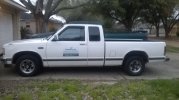

Let's dive right in to see what I found about today's magnetic sign option...
Note: Obviously, just 1 domain name sale may meet or exceed your magnet sign investment and bring in a profit.
Questions for you
What works for one may not work for another and vice versa.
Have a great domain investing adventure.
For perspective, this was one of my old signs that converted in 2015:
Let's dive right in to see what I found about today's magnetic sign option...
Vehicle Magnetic Sign Defined
A vehicle magnetic sign is a type of portable, removable advertisement that uses a strong, magnetized backing to adhere to the metal surfaces of cars, trucks, or vans. These signs are custom printed with your logo, website, contact details, or promotional message, effectively turning your vehicle into a mobile billboard. Because they’re easy to install, remove, and reposition, they provide an affordable, flexible advertising method that can be updated frequently without the permanence (or potential damage) of paint or adhesive decals. Their durable, weather-resistant materials are engineered to maintain vivid graphics under outdoor conditions—making them popular among small businesses and mobile marketers alike.How a Domain Investor Leverage a Magnetic Sign to Promote Their Domain Portfolio
A domain investor, whose business rests on owning and selling valuable digital real estate, can use a magnetic sign as a part of a broader offline–to–online marketing strategy. By displaying a memorable brand name, a clever domain hack, or a striking QR code that links directly to their domain portfolio website, the investor can capture the attention of passersby. This approach not only reinforces the credibility of the investor’s portfolio in the “real world” but also provides a constant stream of brand impressions. Every time the vehicle is on the road or parked in high-traffic areas, it becomes a mobile advertisement that could lead an interested viewer to visit the website, opening up conversations about premium domains, driving inquiries, and facilitating sales.The Average Cost for Different Types and Sizes of Magnetic Vehicle Signs
Pricing for magnetic vehicle signs can vary considerably based on factors such as size, material thickness, design complexity, and finish. Here are some general guidelines based on industry data and common market offerings:- Small Signs (e.g., 9″ x 12″): Typically designed for compact vehicles or as supplementary pieces on personal cars, these can cost anywhere from $50 to $100.
- Medium Signs (e.g., 12″ x 24″ or similar): Ideal for vans or larger cars, medium-sized signs usually range from $150 to $300. They often use a thicker magnetic material (around 0.045″) for enhanced durability and stronger adhesion.
- Large/Custom Signs (Full-side or wrap-style magnets): For full vehicle coverage or custom shapes that require extra design and production work, costs can climb into the $300 to $500 range or more.
The Average Number of People Who Visit a Website or Scan a QR Code on a Magnetic Sign
Determining a precise number for website visits or QR code scans generated by a magnetic sign is challenging because it varies widely by traffic, design, and location. However, here are some industry-based estimates:- Impressions: Vehicle graphics can attract anywhere from 30,000 to 70,000 daily impressions in high-traffic urban settings .
- Engagement: Out-of-home advertising typically sees a very small percentage of viewers acting on the call-to-action. If we assume a conservative scan or visit rate of about 1–3% of those who notice the sign, a well-designed magnetic sign might generate roughly 50–200 unique website visits or QR scans per day in optimal conditions.
- Variables: Factors influencing these numbers include the placement of the QR code, the clarity of the call-to-action, the route followed by the vehicle, and regional mobile behavior trends.
The Average Number of Visitors That Convert After Visiting the Website
Website conversion rates, that is, the percentage of visitors who take a desired action such as making an inquiry or purchasing a domain, vary by industry and campaign quality. Based on aggregated data for digital and offline-to-online traffic:- General Benchmarks: Average website conversion rates for new visitors in many industries are often reported in the 1–3% range, though highly optimized landing pages can improve that to 5–7% in some cases .
- For Domain Portfolios: Since domain investing is often a niche market and the traffic arriving via a magnetic sign may be less targeted than search or email leads, a conservative conversion rate of around 1–2% is realistic. This means that for every 100 visits driven by your magnetic sign, you might convert 1–2 into meaningful leads or sales inquiries.
Domain Name Sales Needed to Break Even on the Magnetic Sign Cost
Breaking even on the investment in your magnetic sign depends on two key variables: the upfront cost of the sign and the net profit per domain name sale.- Assumed Magnetic Sign Cost: Let’s use a mid-range cost of $250.
- Profit per Domain Sale: Suppose your average net profit per domain sale is in the range of $50 to $100.
- If you net $100 per sale: Break-even sales = $250 / $100 ≈ 2.5 → roughly 3 domain sales.
- If you net $50 per sale: Break-even sales = $250 / $50 = 5 domain sales.
Note: Obviously, just 1 domain name sale may meet or exceed your magnet sign investment and bring in a profit.
Top 10 Places to Drive or Park for Maximum Exposure
Maximizing the visibility of your magnetic sign is as much about location as it is about design. Based on research into high-traffic and high-engagement areas, here are the top 10 locations where you should ideally drive or park:- Shopping Center and Mall Parking Lots: High foot traffic and a wide demographic mix increase the chance of impressions.
- Busy Urban Intersections and Downtown Areas: Constant vehicle and pedestrian flow in city centers guarantees ongoing exposure.
- School Zones and Near Sports Grounds: Parents, coaches, and local community members gather here regularly.
- Gas Stations and Service Stations: These are natural pause points where drivers and passengers are more likely to notice nearby ads.
- Major Highway Routes and Commuter Corridors: High-speed, heavy traffic routes can deliver thousands of impressions daily.
- Business Districts and Office Park Areas: Targeted professional drivers and office workers frequently travel through these locations.
- Public Transit Hubs and Train Stations: Parking areas at these hubs see a mix of local residents and visitors.
- Tourist Attractions and Landmark Vicinities: Areas frequented by travelers and tourists offer a diverse audience.
- Event Venues (e.g., concert halls, stadiums, fairs): Large gatherings can offer concentrated exposure during events.
- Local Community Centers or Farmers’ Markets: Repeated exposure in neighborhood settings builds brand familiarity and trust .
Conclusion
Each element of this strategy, from understanding the vehicle magnetic sign’s purpose to calculating the break-even point and selecting high-traffic locations, relies on integrating offline visibility with your domain portfolio’s online presence. As you refine your approach, consider testing variations in design, call-to-action clarity (for example, emphasizing a memorable URL or QR code incentive), and tracking which locations yield the highest engagement. Over time, using these insights can help you optimize both spend and conversion, turning each magnetic sign into a smart, high-ROI asset for your digital real estate business.Questions for you
- Have you ever used a magnetic sign like I have on your vehicle?
- If so, how did it work out for you? Any conversions?
- Are you thinking about a magnetic sign after reading my analysis?
- If so, what part motivated you?
What works for one may not work for another and vice versa.
Have a great domain investing adventure.












