Dynadot — .com Transfer

Should we start a Revolution @ Trademarks ? ™ © ® ™

SpaceshipSpaceship
Watch

☀ Should we start a Revolution @ Trademarks ?

  • This poll is still running and the standings may change.
  • Yes of course

    16 
    votes
    53.3%
  • No of course not

    14 
    votes
    46.7%
  • This poll is still running and the standings may change.

Impact
3,862
Should we start a Revolution @ Trademarks ?

Yes , i think we should

™ © ® ™

Here is my Story

I bought the domain : dsds.tv @ Sedo.de for around 300.-$

A few weeks later RTL germany took the domain away from me
RTL germany has a TV show called : dsds ( Deutschland Sucht den Superstar )

WTF

A trademark, trade mark', or trade-mark is a recognizable sign, design, or expression which identifies products or services of a particular source from those of others, although trademarks used to identify services are usually called service marks.
The trademark owner can be an individual, business organization, or any legal entity. A trademark may be located on a package, a label, a voucher, or on the product itself. For the sake of corporate identity, trademarks are often displayed on company buildings.

What is a trademark and what does it protect?

Trademarks, copyrights, and patents protect different types of intellectual property. A trademark typically protects brand names and logos used on goods and services. A copyright protects an original artistic or literary work. A patent protects an invention.


What does it mean to have a TM ?
Why does a TM include any domain ?

let,s start on the TM : Apple

there are more than 400 TM for the term : Apple ( and these are not only Apple computer )
Should every supermarket now be sued for selling Apples ?

How is it even possible to TM the term Apple ?

what about NOKIA ?

there is a Car named : KIA
there is a company named NOKIA

this is insane

i was so happy when i heard that Rick Schwartz lost his case on DomainKing.biz

first : nobody has the right to be a King
second : that he even got the TM on DomainKing was wrong
third : nobody need,s a King

Did you know that you can delete a TM ?
Did you know that there are so many categries to get a TM ?

for Example : you even can get a TM Facebook for perfume or soap

to the point

What do you think about TM ?

i don,t like any kind of TM and i will fight them !

So , let,s start a Revolution

First come first serve


trademark2.jpg

 
1
•••
The views expressed on this page by users and staff are their own, not those of NamePros.
GoDaddyGoDaddy
...
 
0
•••
maybe we should start a Revolution on TrumpMarks :xf.confused:
™ © ® ™
 
0
•••
German company beats Rubik’s Cube trademark
Rubik president:
"We are baffled that the court finds functionality" in the cube.


rubiks.cube_.1.jpg


Iconic puzzle game Rubik's Cube lost a major trademark battle earlier today, when the European Court of Justice (ECJ) held that a trademark on the shape of Rubik's Cube is invalid.

The court held that there was too much functionality in the shape of the puzzle game, "such as its rotating capability."

The puzzle was invented in 1974 by Hungarian Ernő Rubik, who originally named it the Magic Cube. It was renamed Rubik's Cube in 1980 and exported to the west. More than 350 million cubes have been sold since.

Rubik's Cube received a three-dimensional trademark on its shape in 1999, but that was challenged in 2006, when German company Simba Toys took the case to court. Simba argued that the design, with its nine miniature moving cubes, should be protected with a patent rather than a trademark. It lost in lower court, but the company now has won big with the ECJ ruling.

Having lost to a competing toy company, it seems logical that the market will soon have lower-priced imitations available. However, the president of Rubik's Brand in the UK told The Guardian that while they're disappointed, they have other trademarks and copyright "to ensure [the] exclusivity" of the cube.

"[T]his judgment sets a damaging precedent for companies wishing to innovate and create strong brands and distinctive marks within the EU, and is not what European lawmakers intended when they legislated for 3D trademarks," he added. "We are baffled that the court finds functionality or a technical solution implicit in the trademark."

"In our opinion the Magic Cube involves a technical solution consisting of its rotating capacity," Simba spokeswoman Isabel Weishar told the Financial Times. "Therefore, it may be protected only by a patent and not as a trademark. Now, 10 years after starting this lawsuit, the court decided in our favor."

3D trademarks are allowed under European law, but they don't always hold up when challenged. Most famously, Nestle failed to get a 3D trademark on the shape of its Kit Kat bars in the UK after a court decision last year.
 
2
•••
The entire culture of protecting bogus trademarks needs to be dealt a blow. Domains are unique. Unique phenomena being portrayed as some form of copy, is devoid of reason. Whining about tortious action, I get it, but whining about the existence of a unique phenomena and pretending it's a copy is unethical. In the example above, there seens to be no tortious act, or any act. Auto revert of ownership is a dangerous policy.
 
2
•••
Nightscaping.com survives UDRP


Respondent tried to buy the domain from the complainant, but ended up buying it from Web.com after it expired.

A company that spent $16,000 to acquire the domain name Nightscaping.com can keep the domain name, a World Intellectual Property Organization panel has ruled.

According to the decision, a company called Nightscaping previously owned and used the domain name, as well has had trademark rights to the name. That business eventually shut down and offered its intellectual property for sale.

At the same time, the respondent in the case had been trying to acquire the Nightscaping.com domain name but was unable to directly purchase it from the complainant. The domain name was registered at Network Solutions (a Web.com company) and eventually expired. New Venture Services Corp (another Web.com subsidiary) took over the domain name registration and sold it to the respondent for $16,000 at the end of 2015.

The complainant argued that it inadvertently let the domain name expire.

The three-person WIPO panel determined that the facts suggest the domain name was not registered in bad faith. However, it said this convoluted case could be better suited for court should there be a dispute about what transpired with the trademark and domain name lapse.
 
0
•••
Frank Schilling gets RDNH win


Panel rules that Bernina International is guilty of reverse domain name hijacking over Bernette.com domain name.

Frank Schilling has successfully defended his domain name Bernette.com in a UDRP, and the panel has found BERNINA International AG guilty of reverse domain name hijacking by filing the case.

Bernina is a Swiss company that has sold sewing machines under the Bernette brand since 1985. Schilling acquired the domain name in 2007.

Bernette is a common first and last name, and the parking page at Bernette.com has shown ads related to names, babies, and genealogy.

Bernina tried to buy the domain name between 2010 and 2016. Schilling’s brokers asked for between $26,000-$29,000 on multiple occasions in response to the inquiries.

Despite Schilling’s attorney John Berryhill warning Bernina that a UDRP filing would fail, the company still filed the UDRP. The UDRP certainly showed a lack of knowledge by the complainant.

For example, the complainant argued that Schilling obtained the disputed domain name from “apparently dubious Asian sources”. Schilling actually bought the domain name in an expired domain name auction and had no contact with the prior owner.

Bernina also included the brokers’ offers to sell the domain name to Bernina but did not mention that they were in response to its inquiries. Panelists tend to frown on this sort of trickery.

Bernina also argued:

The Respondent owns over 240,000 domain names. The Respondent and the Registrar are affiliated entities. They are “stockpiling” domain names via a network of companies at an offshore location without disclosing the beneficial owner’s identity. Such circumstances indicate bad faith. The Respondent’s only interest is in selling domain names and by operating offshore the Respondent is trying to hide by erecting legal hurdles against trade mark owners.

The panel found that the domain name wasn’t registered or used in bad faith. It found Reverse Domain Name Hijacking on four grounds:

1. It didn’t mention its inquiries about buying the domain name, instead implying that they were unsolicited.
2. It didn’t do basic research to determine who owned the domain name, and instead said it was a person hiding behind “offshore” entities. As the panel pointed out, “doing a basic Internet search” would reveal the owner and his business model. Additionally, the business in Cayman is certainly not “offshore” as Schilling lives there and runs a large business there.
3. It’s a classic Plan B case in which the complainant filed a UDRP after failing to acquire the domain name through purchase negotiations.
4. Berryhill warned the complainant why it wouldn’t win a UDRP, but Bernina filed it anyway.
 
1
•••
Did you know that there is a TM on the @ ?

Since 23 October 2012, the At-sign is registered as a trade mark by the German Patent and Trade Mark Office—DPMA (registration number 302012038338) for @T.E.L.L.
While company promoters have claimed that it may from now on be illegal for other commercial interests to use the At-sign,[citation needed] this only applies to identical or confusingly similar goods and no court, German or otherwise, has yet ruled on this purported illegality. A cancellation request was filed in 2013.

Source : https://en.wikipedia.org/wiki/At_sign
 
1
•••
Did you know that there is a TM on the @ ?

Since 23 October 2012, the At-sign is registered as a trade mark by the German Patent and Trade Mark Office—DPMA (registration number 302012038338) for @T.E.L.L.
While company promoters have claimed that it may from now on be illegal for other commercial interests to use the At-sign,[citation needed] this only applies to identical or confusingly similar goods and no court, German or otherwise, has yet ruled on this purported illegality. A cancellation request was filed in 2013.

Source : https://en.wikipedia.org/wiki/At_sign
Guess that means every email ever sent that T.E.L.L.'s a story is an infringement on them. They are going to get rich, they can file UDRP against every person on Earth. Yikes!

Does this mean I have to stop using @ for my favicon on one of my mini-sites? :-/
 
1
•••
Guess that means every email ever sent that T.E.L.L.'s a story is an infringement on them. They are going to get rich, they can file UDRP against every person on Earth. Yikes!

Does this mean I have to stop using @ for my favicon on one of my mini-sites? :-/

exactly !
maybe someday we are not able to write an email anymore !! :xf.wink:
 
Last edited:
1
•••
Does this mean I have to stop using @ for my favicon on one of my mini-sites?

No, it does not mean that at all.

Domainers tend to believe that trademarks amount to some sort of monopoly for all uses of the protected mark, and this basic misunderstanding inspires the type of feverish and bizarre commentary exemplified by Mr. Ehrhardt's postings.

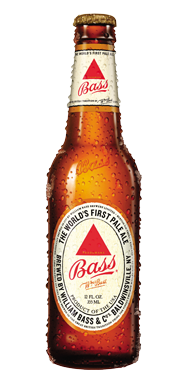
One of the oldest trademarks in continuous use is the red triangle that you see on bottles of Bass Ale:

Bass-Pale-Ale.png


They've been using that red triangle since the late 1700's, and it is pretty well established that a bottle of ale with a red triangle on it comes from them.

Does that mean you can't use red triangles for other things? No. Only in the fevered imaginations of certain ill-informed and prolific domain blog posters does it mean that.

Look, "TIDE" is a common word which refers to the movement of large bodies of water under gravitational influences. Anyone can use the word "tide" to refer to things having to do with its primary meaning.

"TIDE" is also one of the leading global brands of Procter & Gamble for laundry detergent.

Can you use it in a domain name? Well, that simply depends on what the domain name is doing. If the domain name is something like TideDetergent.tld, then it should be pretty obvious that the intended subject matter of the domain name is about trading on P&G's trademark for detergent. If the domain name is something like HighTideClocks.tld, then it is likewise pretty clear that the domain name has more to do with the seashore phenomena than the laundry detergent.

Does P&G have a right to protect their "TIDE" mark for detergent? Sure they do.

If you take a look at the Bernette.com case referenced above, we never disputed that, yes, that company has a trademark right in "Bernette" for sewing machines. The issue was that the domain name wasn't being used for anything having to do with sewing machines, but is being used and offered for sale on the basis of its value as a personal name.

This reasoning doesn't apply to marks which are so famous, well-known and distinctive that there is no conceivable good faith use for the domain name. Something like Coca-Cola-<anything>.tld is clearly valuable only because of the presence of perhaps the most well-known mark on the planet.

But as long as domainers look at trademarks as a binary proposition: i.e. there either is or is not a "trademark", then they are going to continue to misunderstand how trademarks work, and engage in pointless uninformed rants on the subject in general.
 
6
•••
Thank you, Dr. Berryhill for finally clearing that up.

Peace,
Cyberian
 
Last edited:
1
•••
A strange thing is happening to domain names suspended in URS


…they’re being renewed.


Uniform Rapid Suspension (URS) was introduced as an alternative to Uniform Domain-Name Dispute-Resolution Policy (URDP) when new top level domain names were introduced.

URS is a faster, cheaper version of UDRP. A big difference is what happens when a Complainant wins. In the case of a URS, the domain name is merely suspended instead of being transferred to the complainant like it is in a UDRP.

This has always seemed a bit silly to me. A company pays money to suspend a domain name, only to have it expire and drop at a later date so anyone else can register it? (Perhaps I’m looking at it the wrong way since so many domain names won in UDRPs end up being let go at a later date.)

I analyzed the first 50 domain names that were suspended under URS at National Arbitration Forum to see what happened to them after they expired.

All 50 domain names were suspended between March and June of 2014, which is very soon after new top level domain names were released in general availability. Where are these domain names now? Here’s what I found:

50-urs

Let’s get the easy ones out of the way first.

14 of the domain names expired and now have Donuts’ DPML service which blocks them from registration. This makes sense; these first domain names were a wake-up call to brand owners that they need to have a new TLD strategy. Examples include IBM.guru, Accenture.ventures and Lufthansa.company.
10 domain names have expired and become available. Examples include Lipitor.guru, RipOffReport.link and VirginAustralia.holdings.
9 domain names were registered by the complainant after the registrations lapsed. Examples include Spanx.clothing, Telepizza.menu and Netflix.buzz.
2 domain names were registered by another party after the domain expired. This doesn’t necessarily mean a cybersquatter later registered the domain. For example, Watson.company was registered by someone whose last name is Watson.
Here’s where things get interesting. The most common thing that happened to these first 50 domains is that they were renewed. Twice. And they still show the original owner who lost the URS in Whois.

My reading of the URS is that suspended domain names remain suspended until the end of the current registration period. According to the URS rules, the complainant can then renew the domain name for one additional year by contacting the registry. (Yes, registry, not registrar. Who designed this policy?)

This means that domain names suspended over two years ago shouldn’t still be registered to the original registrant.

I reached out to several of the people who lost URS cases. One of them responded, and he told me that he hasn’t renewed the domain name. So I turned to registries and registrars to figure out what’s happening.

It seems that the way URS works doesn’t fit into any existing automated procedures. It’s manual and requires a lot of human intervention, including when it comes time for renewal/expiration. That human intervention can be a problem, especially when you’re talking about the uncommon case of URS suspensions.

In some cases, the domain name registrar might have overlooked a manual process, and in others the registry did.

Of course, the complainants in these cases still win if the domain gets renewed while it’s suspended. Their goal was merely to suspend the domain, not get ownership of it.

Source :

http://domainnamewire.com/2016/11/18/strange-thing-happening-domain-names-suspended-urs/
 
0
•••
Frank Schilling gets RDNH win


Panel rules that Bernina International is guilty of reverse domain name hijacking over Bernette.com domain name.

Frank Schilling has successfully defended his domain name Bernette.com in a UDRP, and the panel has found BERNINA International AG guilty of reverse domain name hijacking by filing the case.

Bernina is a Swiss company that has sold sewing machines under the Bernette brand since 1985. Schilling acquired the domain name in 2007.

Bernette is a common first and last name, and the parking page at Bernette.com has shown ads related to names, babies, and genealogy.

Bernina tried to buy the domain name between 2010 and 2016. Schilling’s brokers asked for between $26,000-$29,000 on multiple occasions in response to the inquiries.

Despite Schilling’s attorney John Berryhill warning Bernina that a UDRP filing would fail, the company still filed the UDRP. The UDRP certainly showed a lack of knowledge by the complainant.

For example, the complainant argued that Schilling obtained the disputed domain name from “apparently dubious Asian sources”. Schilling actually bought the domain name in an expired domain name auction and had no contact with the prior owner.

Bernina also included the brokers’ offers to sell the domain name to Bernina but did not mention that they were in response to its inquiries. Panelists tend to frown on this sort of trickery.

Bernina also argued:

The Respondent owns over 240,000 domain names. The Respondent and the Registrar are affiliated entities. They are “stockpiling” domain names via a network of companies at an offshore location without disclosing the beneficial owner’s identity. Such circumstances indicate bad faith. The Respondent’s only interest is in selling domain names and by operating offshore the Respondent is trying to hide by erecting legal hurdles against trade mark owners.

The panel found that the domain name wasn’t registered or used in bad faith. It found Reverse Domain Name Hijacking on four grounds:

1. It didn’t mention its inquiries about buying the domain name, instead implying that they were unsolicited.
2. It didn’t do basic research to determine who owned the domain name, and instead said it was a person hiding behind “offshore” entities. As the panel pointed out, “doing a basic Internet search” would reveal the owner and his business model. Additionally, the business in Cayman is certainly not “offshore” as Schilling lives there and runs a large business there.
3. It’s a classic Plan B case in which the complainant filed a UDRP after failing to acquire the domain name through purchase negotiations.
4. Berryhill warned the complainant why it wouldn’t win a UDRP, but Bernina filed it anyway.
"Since 1985 been using the name Bernette for their product" Was the name "Bernettee.com" wasn't available back in 1985 to purchased?
 
0
•••
@jberryhill

I was kidding, more of a hypothetical. But it's not so far-fetched one day things could get that bad, if we let it.

What you've described, is exactly right.
 
1
•••
No, it does not mean that at all.

Domainers tend to believe that trademarks amount to some sort of monopoly for all uses of the protected mark, and this basic misunderstanding inspires the type of feverish and bizarre commentary exemplified by Mr. Ehrhardt's postings.

One of the oldest trademarks in continuous use is the red triangle that you see on bottles of Bass Ale:

Bass-Pale-Ale.png


They've been using that red triangle since the late 1700's, and it is pretty well established that a bottle of ale with a red triangle on it comes from them.

Does that mean you can't use red triangles for other things? No. Only in the fevered imaginations of certain ill-informed and prolific domain blog posters does it mean that.

Look, "TIDE" is a common word which refers to the movement of large bodies of water under gravitational influences. Anyone can use the word "tide" to refer to things having to do with its primary meaning.

"TIDE" is also one of the leading global brands of Procter & Gamble for laundry detergent.

Can you use it in a domain name? Well, that simply depends on what the domain name is doing. If the domain name is something like TideDetergent.tld, then it should be pretty obvious that the intended subject matter of the domain name is about trading on P&G's trademark for detergent. If the domain name is something like HighTideClocks.tld, then it is likewise pretty clear that the domain name has more to do with the seashore phenomena than the laundry detergent.

Does P&G have a right to protect their "TIDE" mark for detergent? Sure they do.

If you take a look at the Bernette.com case referenced above, we never disputed that, yes, that company has a trademark right in "Bernette" for sewing machines. The issue was that the domain name wasn't being used for anything having to do with sewing machines, but is being used and offered for sale on the basis of its value as a personal name.

This reasoning doesn't apply to marks which are so famous, well-known and distinctive that there is no conceivable good faith use for the domain name. Something like Coca-Cola-<anything>.tld is clearly valuable only because of the presence of perhaps the most well-known mark on the planet.

But as long as domainers look at trademarks as a binary proposition: i.e. there either is or is not a "trademark", then they are going to continue to misunderstand how trademarks work, and engage in pointless uninformed rants on the subject in general.

TM,s are Nonsense

NOKIA includs KIA ???

what does all these TM,s have to do with Domains ? especially .com domains ??

REVOLUTION
 
0
•••
Police - is a Music Band
Police - is a SunGlass Brand ( ™ )
Police - is a force it is a constituted body of persons empowered by the state to enforce the law

so who has the right to own POLICE.com ?

maybe i should call the Police :xf.rolleyes:

Revolution :xf.wink:
 
1
•••
TM,s are Nonsense

NOKIA includs KIA ???

what does all these TM,s have to do with Domains ? especially .com domains ??

REVOLUTION
Probably because you still misunderstand.

If Kia Motors wants Nokia just because of its last three letters, then the former should demonstrate rights for the latter. Importantly, the South Korean automaker must prove consumers will associate the term with its source---which is the point of trademarks---being the company rather than the phone manufacturer.

A trademark doesn't bestow monopoly for any and all uses of it, albeit that doesn't stop some mark holders from insisting otherwise (as someone named Leo Stoller tried years ago if you wanna check).

Note that a trademark can consist of a word or phrase. A domain name can contain a word or phrase, right? Depending on the context of the domain name, especially how one uses it, it might (not) exploit someone's mark---especially if that's the person's intent.

So if you register something like policeshadesDOtwhatever to exploit the sunglass maker's mark via selling eye shades, then you risk their ire. Likewise, the company should prove it has rights to your domain name if it wants the name instead of maybe buying it from you.

I voted no, by the way, because a revolution isn't necessary when one can know more how trademarks work.

Nobody's born knowing these things as Dr. Berryhill once said. Knowing and understanding this one takes time and patience, but that's if one is willing to understand rather than engage in "pointless uninformed rants".

But, whatever works for whoever.
 
Last edited:
2
•••
Probably because you still misunderstand.

If Kia Motors wants Nokia just because of its last three letters, then the former should demonstrate rights for the latter. Importantly, the South Korean automaker must prove consumers will associate the term with its source---which is the point of trademarks---being the company rather than the phone manufacturer.

A trademark doesn't bestow monopoly for any and all uses of it, albeit that doesn't stop some mark holders from insisting otherwise (as someone named Leo Stoller tried years ago if you wanna check).

Note that a trademark can consist of a word or phrase. A domain name can contain a word or phrase, right? Depending on the context of the domain name, especially how one uses it, it might (not) exploit someone's mark---especially if that's the person's intent.

So if you register something like policeshadesDOtwhatever to exploit the sunglass maker's mark via selling eye shades, then you risk their ire. Likewise, the company should prove it has rights to your domain name if it wants the name instead of maybe buying it from you.

I voted no, by the way, because a revolution isn't necessary when one can know more how trademarks work.

Nobody's born knowing these things as Dr. Berryhill once said. Knowing and understanding this one takes time and patience, but that's if one is willing to understand rather than engage in "pointless uninformed rants".

But, whatever works for whoever.

Thank you

You should read the whole thread

A TM is Nonsense
A TM department doesn,t care about you

They deal individually and superficial

Please try to understand what a TM even is and what does it mean

A TM is an Invention from stupid people to create business

If someone can take away a domain from you ( even when the TM is registered later than the registration ) than you will understand

The Universe has it,s own Law
One day you will understand ❗

There is no need for a TM

Btw

I am fighting the german Government because they stole my idea
( german olympic team )
 
0
•••
I understand what a TM means and does. Meanwhile, you see TM differently for whatever reason (though your fight with the German government seems a hint).

Some people and especially Dr. Berryhill offered a real-world take on TMs, so how you treat this issue is up to you.
 
2
•••
I understand what a TM means and does. Meanwhile, you see TM differently for whatever reason (though your fight with the German government seems a hint).

Some people and especially Dr. Berryhill offered a real-world take on TMs, so how you treat this issue is up to you.

it is a matter of time that you will understand
 
0
•••
Dynadot — .com TransferDynadot — .com Transfer
Appraise.net

We're social

Escrow.com
Spaceship
Rexus Domain
CryptoExchange.com
Catchy
CatchDoms
DomainEasy — Zero Commission
DomDB
  • The sidebar remains visible by scrolling at a speed relative to the page’s height.
Back