5 Everyday Things You Won't Believe Are Copyrighted
Copyrights obviously exist for a reason -- people are simply more motivated to create when they know that they'll get some credit and/or cash for that creation. In the U.S., copyright laws have been in the Constitution since 1787. But since all of human history consists of people thinking of ways to take good ideas and make them terrible, these days copyright laws have been taken to absurd extremes. For instance ...
5
There's a Trademark on the Word "Yup" (and Other Common Phrases)
Getty
As tempting as it would be, you can't actually copyright a word like, for instance, "cray-cray" or "vajayjay" and stop people from saying it forever, because that would be ridiculous. You can, however, put a
trademark on a word, which stops others from using that word commercially ... even if it's something really common, or really stupid.
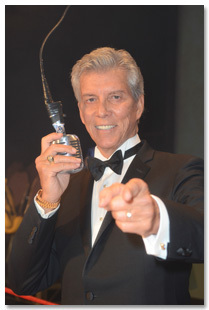
Trademarking phrases is nothing new: The most famous case is sports announcer Michael Buffer, who currently
makes more money from his phrase "Let's get ready to rumble" than he does from actually announcing boxers and letting them know that there might be rumbling. He's reportedly made $400 million by licensing his phrase to movies, commercials, video games and such.
Getty If he coughs on you, you owe him 50 bucks.
But here's where it gets dumb: Dave Hester from A&E's reality show
Storage Wars not only
has a trademark on the word "YUUUP!" but is actually involved in a bitter legal battle over it with rapper Trey Songz, who claims that he's been yupping people since at least 2009. According to Hester's court papers, the main difference is that Songz' version "resembles an animal-like or nonhuman squeal which begins with a distinct 'yeeee' sound before finishing with a squeal-like 'uuuup' sound," as opposed to Hester's own "
monosyllabic sounding guttural auction bidding phrase." Here's a comparison so you can judge for yourself:
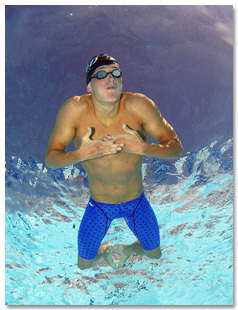
Having carefully analyzed both sounds, we've reached the conclusion that they both sound like dickwads. Also, if Songz decides to agree to Hester's terms, what the hell is he supposed to tell him? "Yeppers"? He could go with "Yeah," but even then he might risk pissing off Olympic athlete Ryan Lochte, who's recently
put in a trademark request for the word "Jeah," a random nonsense word Lochte screamed during the events.
Getty He's just hoping that this way no one will notice that he's dyslexic.
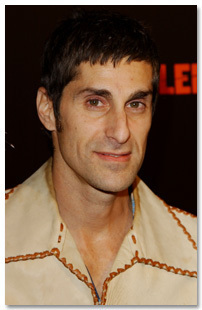
Then there's Jane's Addiction frontman Perry Farrell, who has a trademark on the word "lollapalooza" despite the fact that it had existed for about 100 years before his alternative rock festival of the same name started out in the '90s (and about 105 years before it stopped being relevant). Farrell, however, is cool with letting others use the word as long as they're not actually trying to rip him off, because it simply
cost him too much money on lawyers to sue everyone who put "-palooza" at the end of every word.
Getty You could say it was a
lawsuit-a-thon. Wait, no.
4
The NFL Wants You to Stop Saying "Super Bowl"
Getty
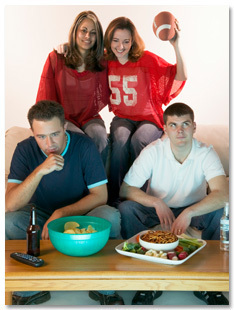
You know that one big football game that happens every year? The one we use as an excuse to sit in front of a TV and stuff our faces with pizza, chicken wings and guacamole? We are, of course, talking about the Super Bowl -- or, as the National Football League would have us call it, "That Football Thing That Must Not Be Named."
Getty "And the Huskies score a touch-thingy!"
You see, the NFL holds a trademark on the phrase "Super Bowl," and each year, their lawyers send out thousands of pre-emptive letters to advertisers, media outlets and even small businesses in the host city reminding them of what can and cannot be said, which are usually followed by
at least a further 100 cease-and-desist letters for those who didn't get the message the first time.
Why? Well, as you probably know, companies pay tens of millions of dollars to air their ads during the Super Bowl. The idea is not to devaluate the event by slapping the words "Super Bowl" everywhere, even by people who are ultimately helping to promote the freaking game, like, say, a local bar that wants to advertise that it's offering $0.99 chili dogs on game day. They can have the promotion; they just can't utter the words "Super Bowl" in the process of telling people about it.
Wikipedia Wouldn't want to piss off the Super Bowl. Super Bowl Super Bowl Super Bowl.
So that's how the league wound up slapping small bars and restaurants with fines for advertising Super Bowl parties or specials -- pay close attention when February rolls around and you'll notice that even your local pizzerias, wing joints and guacamole troughs aren't using the two magic words to advertise. Likewise, if a radio station wants to give out Super Bowl tickets, unless they're officially affiliated with the NFL, they can't even
say the words on the air during the promotion, which is how you end up accidentally winning tickets to the
Puppy Bowl instead.
Even the nicknames of the teams involved and phrases like "Super Sunday" (half of which, you may notice, is a fucking day of the week) are off-limits if the NFL deems that they might suggest the appearance of a commercial relationship. "The Big Game" is the only pseudo-official name we have left, at least until the NFL tries to trademark that too ...
Getty They've also trademarked "potato chips," "cocktail wieners" and "Buffalo chicken dip."
Oh, wait,
they already did. The only reason they didn't get away with it was because the historic college football rivalry between Stanford and Cal is commonly known as the Big Game, and the NFL's proposed trademark would have stopped even them from using the phrase. If it were up to the NFL, they'd probably trademark the words "the," "big," "game" and "football" while they're at it.
↓
Continue Reading Below
3
You Can Patent a Living Species
Getty
We've all had that moment where we're looking at an infomercial on TV and we think, "A blender that's also a hat? I thought of that first!
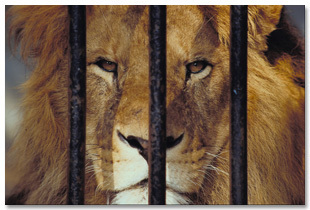
I should have gotten a patent." It takes a special kind of person to proclaim the same thing while visiting a zoo, though.
Getty Dibs!
It turns out that a fair few people have not only taken natural selection to court, but also walked out with a patent for a living organism.
In the case of
the ayahuasca vine, a medicinal plant native to the Amazon rain forest, an American corporation patented it on the grounds that they'd managed to reproduce it asexually, so now
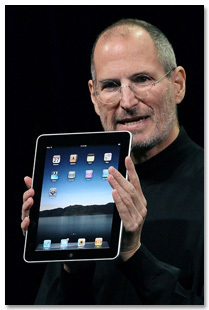
there's a patent that lists some guy as a plant's "inventor." Meanwhile, the indigenous peoples who had known of its healing properties for centuries had to stand by and watch while others made millions off a plant that they considered sacred. If you don't think that's offensive, imagine if someone had patented the sacramental bread if you're Christian, or Steve Jobs' sweater if you're a Mac user.
Getty It belongs to
the world now.
But it's not just plants that are subject to patent law. In 1988, Harvard College was granted a patent for a type of mouse it created through transgenic modification, which is a fancy scientific way of saying they did an X-Men on it. However, rather than eye lasers or tiny rodent claws, this mouse's superpower was getting cancer.
Getty Super intelligence was never part of the deal.
Harvard has an exclusive deal with E.I. DuPont to license the horrifically named OncoMouse, as if it were Selena Gomez or something. DuPont, in turn, reportedly charges
hundreds of thousands of dollars to other companies who want to test cancer drugs on it, heavily restricts the work of university researchers and makes sure they don't try to develop their own knockoff OncoMice.
University researchers say that DuPont is getting way too aggressive, going after scientists whose work has nothing to do with the OncoMouse patent. Imagine what would happen if companies figured out how to patent people. Actually, you don't have to imagine, because ...
2
There's a Copyright on Your DNA
Getty
You can totally stake a copyright claim on the very things that define you as a human being, and we don't mean your shameful Internet browser history (seriously, dude, delete it) -- we're talking about your genes. In fact, it's estimated that
around 20 percent of the genes we all share are already patented by companies.
Getty "Who authorized these tits? Those are
our breasts!"
How the hell is that possible? Well,
it's argued that when a gene is removed from the body and isolated, it becomes a separate chemical entity that can be patented. You know, like when you take someone else's lamp from their house and isolate it, it automatically becomes yours. Then you rent that lamp for thousands of dollars to people trying to do cancer research.
You see, one of the patents someone holds is over a pair of fancy little genes called BRCA1 and BRCA2, which have been linked to both ovarian and breast cancer. These genes have existed for as long as there have been humans, but now the patent on them is owned by Myriad Genetics Inc., who've been adamantly
defending it in court. We're sure that the fact that Myriad Genetics also owns the patent on the $3,000 test that detects these genes (and predicts if women are likely to get cancer) is entirely coincidental.
Getty "That way, if they get a horrible, deadly illness, we win twice!"
The scary thing about being able to patent genes is that mapping or studying the human genome is probably humanity's best chance to
cure cancer -- however, once a company holds a patent on a gene, they can prevent other people from studying it, testing it or so much as looking at it.
That's why in 2010, the American Civil Liberties Union and other organizations representing 150,000 scientists challenged the patent, only to be shot down by a federal court. Even
the freaking guy who discovered DNA thinks that patenting genes should be illegal -- he says someone actually suggested that he should patent the DNA helix way back in 1953, but he thought it was a ridiculous idea.
Getty "You'd have to be a flaming, engorged sack of douchebag to put money ahead of human progress."
Meanwhile, Myriad Genetics argues that restricting the ability to patent genes would actually stifle research, because if you can't make yourself insanely rich discovering new genes, then what's the point of even trying?
↓
Continue Reading Below
1
Cops Sue People for Using Their Trademarks ... Even Other Cops
Getty
Nowadays, even the police can be trademarked. No, we're not talking about the '80s band here -- law enforcement agencies can
absolutely sue the shit out of anyone who tries to use their image without permission, or refuses to pay up enough to acquire said permission, or simply has no idea that displaying some guys in a certain uniform outside their store would result in a lawsuit.
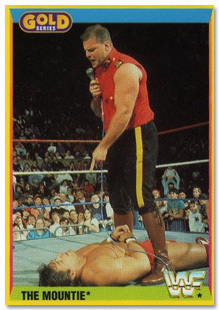
For instance, the Royal Canadian Mounted Police have been enforcing their trademark on the image of the classic Mountie uniform
since 1995, not just in Canada, but all over the world, and with
the occasional help of Disney (because what the hell, those guys pretty much look like cartoon characters already). The objective is to prevent the tarnishing of the RCMP image by way of stuff like Mountie-based professional wrestling or pornography.
Sports World Cards This one could go either way.
However, this
also affects Canadian stores that sell the exact type of innocent Mountie mugs and key chains you'd expect to find while visiting the country. Don't worry, though: The RCMP is more than happy to allow those stores to continue selling merchandise ... as long as they're willing to hand over 10 percent of everything they make.
Meanwhile, the New York City Police Department has gotten so protective about their "brand" that they've sent cease-and-desist letters to everyone from NYPD-themed restaurants to
nonprofit associations run by retired NYPD officers. That's right:
They're going after their own future selves, which we think was the plot of
TimeCop.
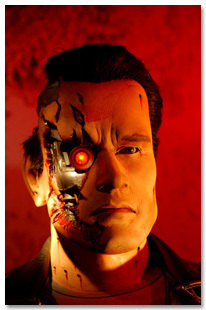
Getty Or, more awesomely,
Terminator 2. If you think about it.
Apparently, the problems started when a fundraiser organized by a retired cop all the way in Florida used the NYPD shield on its flyers -- soon,
retiree clubs all over the country got cease-and-desist letters from the department letting them know that they could no longer use the logo on their websites or their member T-shirts or their anything. And if the former cops refused to stop using the same shield many of them wore for decades? Then it's "Thank you very much for your service, see you in court."
And they totally mean it: In 2005, they
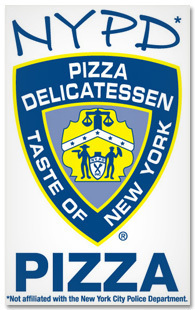
went after an interstate pizzeria chain themed around the New York police, where the servers presumably speak in angry Brooklyn accents and begin macing you in the face if you take too long to order. Even though none of the pizzerias were actually in New York, the NYPD objected to the use of their badge and demanded a logo redesign and a legal disclaimer across all posters stating that the restaurant had absolutely no affiliation to the department.
Twitter "Taste of New York" means that for an extra $5, a hobo spits in your milkshake.









 ️
️