Dynadot โ€” .com Transfer

discuss Science & Technology news & discussion

NamecheapNamecheap
Watch

CraigD

Top Member
Impact
11,745
Post and discuss interesting articles & videos about science and technology.

You don't need to be an expert - just interested in the wonders of modern science, technology, and the history of these fields.

Please keep it rational, and post articles from reputable sources.
Try not to editorialise headlines and keep the copy to just a paragraph with a link to the original source. When quoting excerpts from articles, I think the best method is to italicise the copy, and include a link to the source.

Have some fun with your comments and discussions... just keep the sources legitimate.

Other threads:
The Break Room has a number of other popular threads, so there is no need to post material here that is better suited to these other threads:

- Covid19-Coronavirus updates and news
- Conspiracy Thread Free For All
- The *religious* discussion thread


Please enjoy!
 
Last edited:
13
•••
The views expressed on this page by users and staff are their own, not those of NamePros.
AfternicAfternic
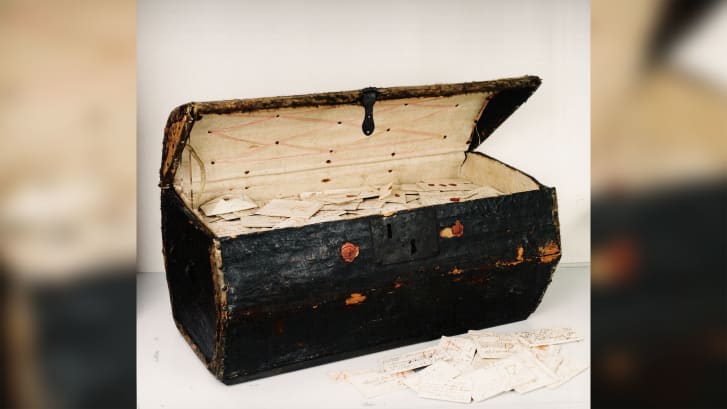
Rare 'locked' letter sealed 300 years ago is finally opened virtually

Three hundred years ago, before envelopes, passwords and security codes, writers often struggled to keep thoughts, cares and dreams expressed in their letters private.

One popular way was to use a technique called letter locking -- intricately folding a flat sheet of paper to become its own envelope. This security strategy presented a challenge when 577 locked letters delivered to The Hague in the Netherlands between 1689 and 1706 were found in a trunk of undelivered mail.

The letters had never reached their final recipients, and conservationists didn't want to open and damage them. Instead, a team has found a way to read one of the letters without breaking its seal or unfolding it in any way. Using a highly sensitive X-ray scanner and computer algorithms, researchers virtually unfolded the unopened letter.


http%3A%2F%2Fcdn.cnn.com%2Fcnnnext%2Fdam%2Fassets%2F210301140538-04-opening-sealed-letters-scn.jpg

 
1
•••
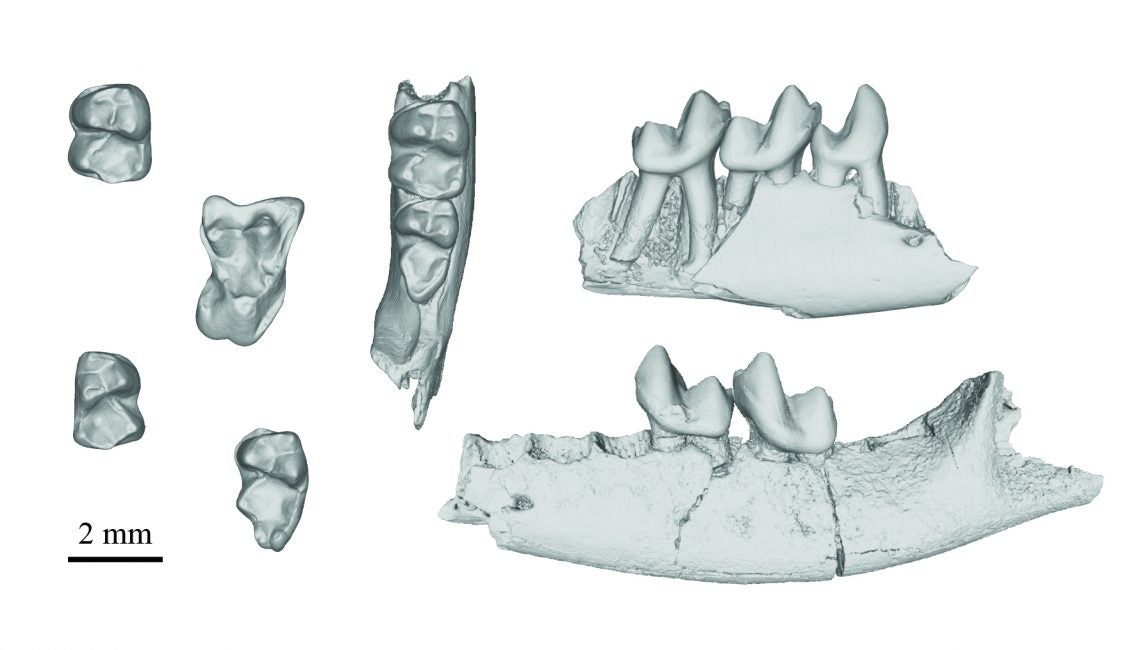
Primates Appeared Almost Immediately After Dinosaurs Went Extinct, New Research Suggests

A formation famous for producing T. rex fossils has now yielded the oldest evidence of primates in the fossil record, in what is being hailed a significant discovery.


bsgla5q6patbwcfia8e5.jpg


Jawbones and an assortment of teeth found in the Hellโ€™s Creek formation of northeastern Montana are the oldest primate fossils ever discovered, according to new research published in Royal Society Open Science.

Dating back to around 65.9 million years ago, these animals lived a mere 105,000 to 139,000 years after the Cretaceousโ€“Paleogene extinction event, in which an asteroid wiped out most plant and animal species on Earth. The new paper was co-led by Gregory Wilson Mantilla from the University of Washington and Stephen Chester of Brooklyn College and the City University of New York.


1
•••
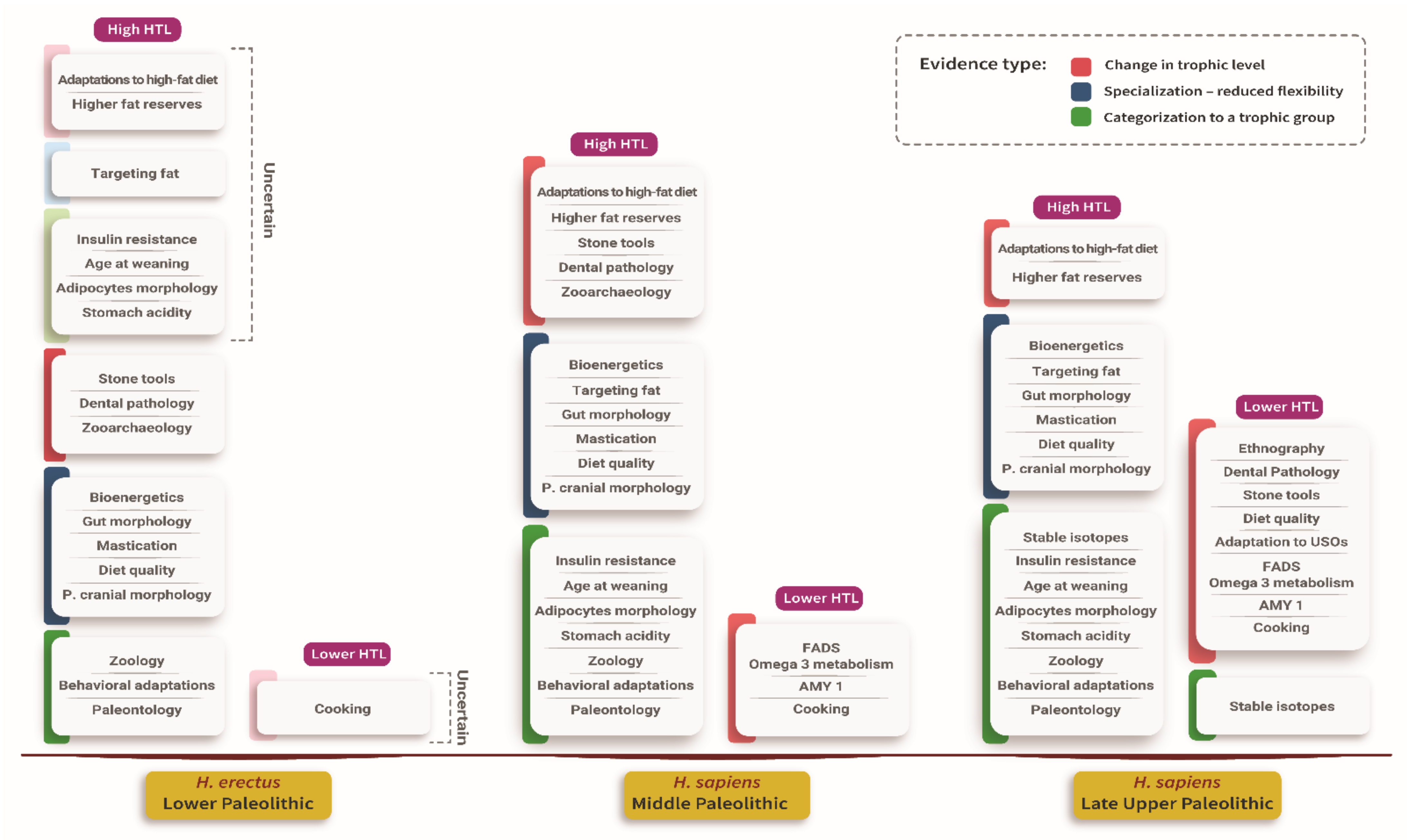
The human brain grew as a result of the extinction of large animals

A new paper by Dr. Miki Ben-Dor and Prof. Ran Barkai from the Jacob M. Alkow Department of Archaeology at Tel Aviv University proposes an original unifying explanation for the physiological, behavioral and cultural evolution of the human species, from its first appearance about two million years ago, to the agricultural revolution (around 10,000 BCE).

257655_web.jpg


According to the paper, humans developed as hunters of large animals, causing their ultimate extinction. As they adapted to hunting small, swift prey animals, humans developed higher cognitive abilities, evidenced by the most obvious evolutionary change - the growth of brain volume from 650cc to 1,500cc. To date, no unifying explanation has been proposed for the major phenomena in human prehistory. The novel theory was published in Quaternary Journal.

quaternary-04-00007-g001.png


https://www.mdpi.com/2571-550X/4/1/7

 
Last edited:
2
•••
Primates Appeared Almost Immediately After Dinosaurs Went Extinct, New Research Suggests

A formation famous for producing T. rex fossils has now yielded the oldest evidence of primates in the fossil record, in what is being hailed a significant discovery.


bsgla5q6patbwcfia8e5.jpg


Jawbones and an assortment of teeth found in the Hellโ€™s Creek formation of northeastern Montana are the oldest primate fossils ever discovered, according to new research published in Royal Society Open Science.

Dating back to around 65.9 million years ago, these animals lived a mere 105,000 to 139,000 years after the Cretaceousโ€“Paleogene extinction event, in which an asteroid wiped out most plant and animal species on Earth. The new paper was co-led by Gregory Wilson Mantilla from the University of Washington and Stephen Chester of Brooklyn College and the City University of New York.


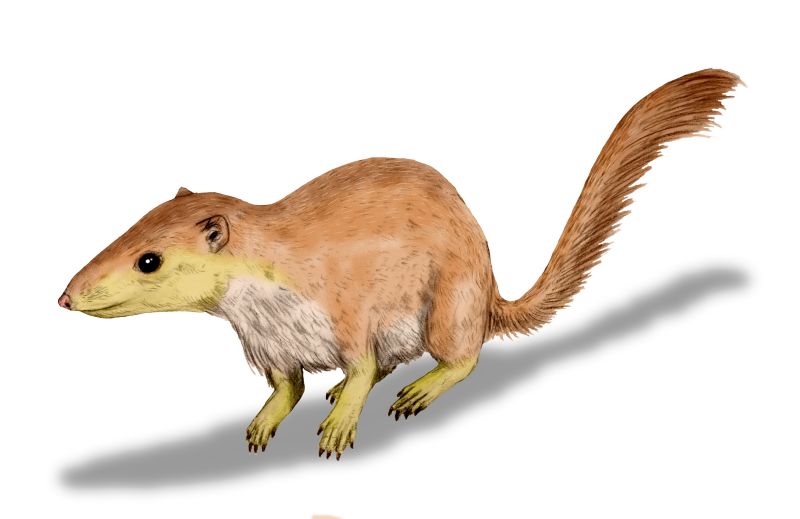
Proto-primates...

Purgatorius_BW.jpg

https://en.wikipedia.org/wiki/Purgatorius


I think someone has taken a great leap with a clickbait headline ;)
 
1
•••
The future lifespan of Earthโ€™s oxygenated atmosphere

The future of Earthโ€™s oxygenated atmosphere: the lifespan of Earthโ€™s atmosphere, with oxygen levels more than 1% of the present atmospheric level, is 1.08 ยฑ 0.14 billion years.

Earthโ€™s modern atmosphere is highly oxygenated and is a remotely detectable signal of its surface biosphere. However, the lifespan of oxygen-based biosignatures in Earthโ€™s atmosphere remains uncertain, particularly for the distant future. Here we use a combined biogeochemistry and climate model to examine the likely timescale of oxygen-rich atmospheric conditions on Earth. Using a stochastic approach, we find that the mean future lifespan of Earthโ€™s atmosphere, with oxygen levels more than 1% of the present atmospheric level, is 1.08โ€‰ยฑโ€‰0.14โ€‰billion years (1ฯƒ). The model projects that a deoxygenation of the atmosphere, with atmospheric O2 dropping sharply to levels reminiscent of the Archaean Earth, will most probably be triggered before the inception of moist greenhouse conditions in Earthโ€™s climate system and before the extensive loss of surface water from the atmosphere. We find that future deoxygenation is an inevitable consequence of increasing solar fluxes, whereas its precise timing is modulated by the exchange flux of reducing power between the mantle and the oceanโ€“atmosphereโ€“crust system. Our results suggest that the planetary carbonateโ€“silicate cycle will tend to lead to terminally CO2-limited biospheres and rapid atmospheric deoxygenation, emphasizing the need for robust atmospheric biosignatures applicable to weakly oxygenated and anoxic exoplanet atmospheres and highlighting the potential importance of atmospheric organic haze during the terminal stages of planetary habitability.
 
Last edited:
1
•••
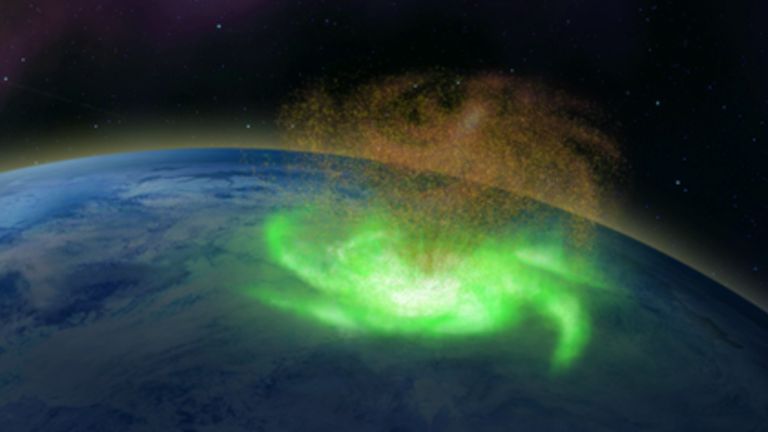
Space plasma hurricanes discovered above North Pole - where it rains electrons

Satellite readings reveal a space hurricane in Earth's upper atmosphere made of plasma and raining electrons instead of water.

skynews-space-hurricane_5289598.jpg


Scientists say they have confirmed the existence of space hurricanes, with a 600 mile-wide mass spotted above the North Pole.

Researchers led by China's Shandong University used satellite data to identify the space hurricane, finding it was not a whirling pattern of air but of plasma - ionised gas.
 
Last edited:
2
•••
Proto-primates...

Purgatorius_BW.jpg

https://en.wikipedia.org/wiki/Purgatorius


I think someone has taken a great leap with a clickbait headline ;)


The paper says,

The newly discovered teeth and jawbones belong to two different species: P. janisae and P. mckeeveri. Both species belong to Purgatorius, the oldest known genus associated with primates. Other members of this group include P. unio and P. ceratops, and theyโ€™re all considered plesiadapiformsโ€”a stem group of primates that includes Purgatorius and from which all modern primates like monkeys, apes (you included), and lemurs are descended.

P. janisae was already known to paleontologists, but P. mckeeveri is a newly described species named in honor of a family that has supported fieldwork in this area.

Three teeth with traits not seen before in Purgatorius allowed the scientists to declare the discovery of a new species.
 
Last edited:

2
•••
3
•••
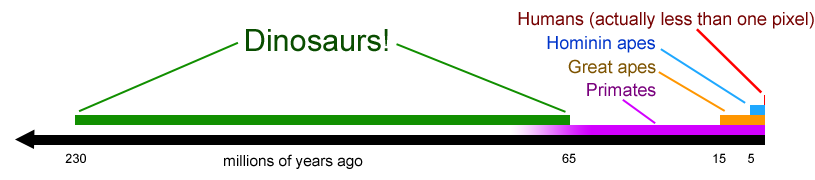
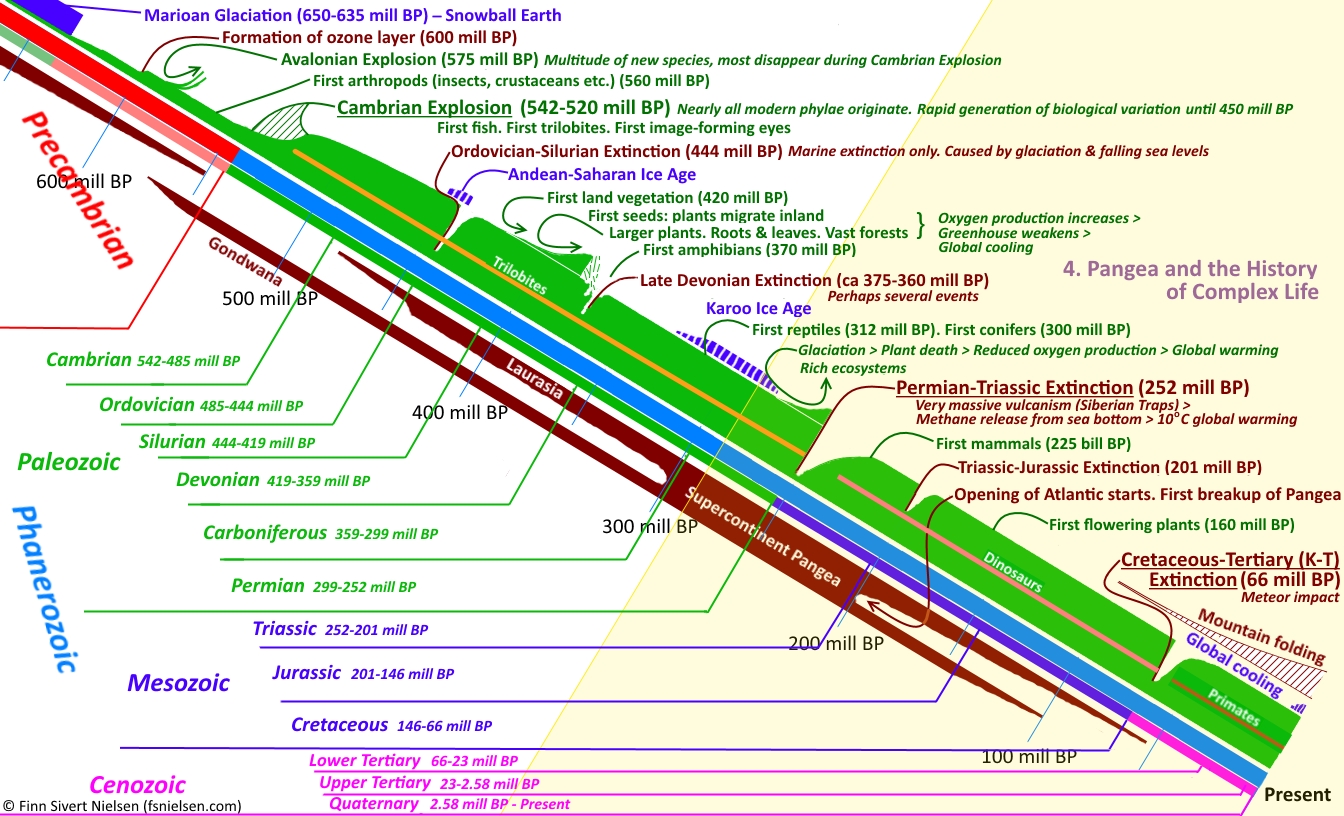
Evolution timeline graphic

It does my head in reading about and trying to picture the evolutionary lineage on these timescales, so I'll leave this here for future reference.

annot2601.png


Timeline0004.jpg
 
Last edited:
4
•••
2
•••

That reminds me, I came across this article a couple of days ago.

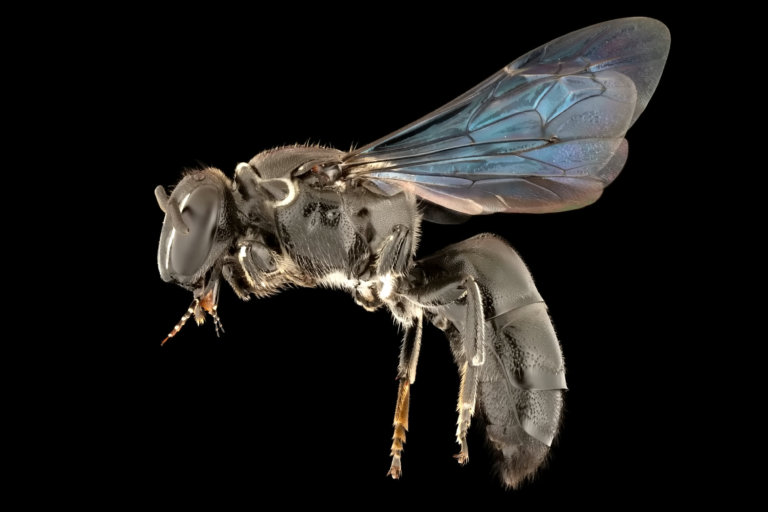
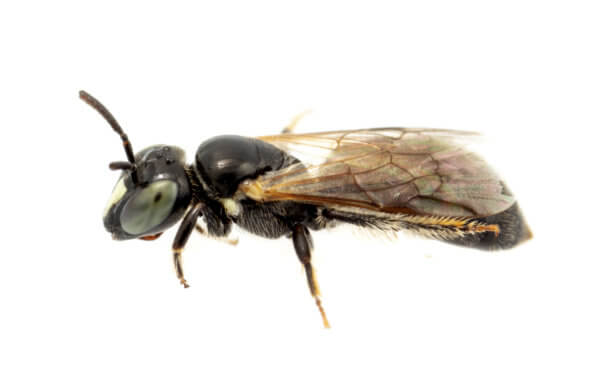
Bee thought to have gone extinct spotted for first time โ€” in nearly a century


un-bee-lievable-641788-768x512.jpg


In recent years, scientists have brought attention to an alarming decline among the worldโ€™s bee population. In a bit of good news, one bee that experts believed went extinct has now been spotted for the first time in nearly a century. The rare pollinator, native to Australia, was in the forests of north Queensland all along, but it is probably under increasing pressure to survive.

The species goes by the regal name of Pharohylaeus lactiferus. Only six of these bees had ever been caught, the last of which came in 1923. Now three separate populations have been discovered feeding on flowers and plants along Australiaโ€™s east coast.

โ€œThis is concerning because it is the only Australian species in the Pharohylaeus genus. Nothing was known of its biology,โ€ says biologist James Dorey, of Flinders University, Adelaide, in a statement. โ€œIt is one of two species in the genus, and the only one in Australia with its sister species in Papua New Guinea. It goes by the regal name of Pharohylaeus lactiferus and I found him in far north Queensland in some remnant forest.โ€

https://www.studyfinds.org/bee-thought-extinct-spotted-first-time-in-century/


un-bee-lievable-641789-604x385.jpg

Pharohylaeus lactiferus (Colletidae: Hylaeinae). A bee that thought to have gone extinct has been spotted for the first time... in almost a century. (Credit: Flinders University)
 
Last edited:
2
•••
Rare 'locked' letter sealed 300 years ago is finally opened virtually

Three hundred years ago, before envelopes, passwords and security codes, writers often struggled to keep thoughts, cares and dreams expressed in their letters private.

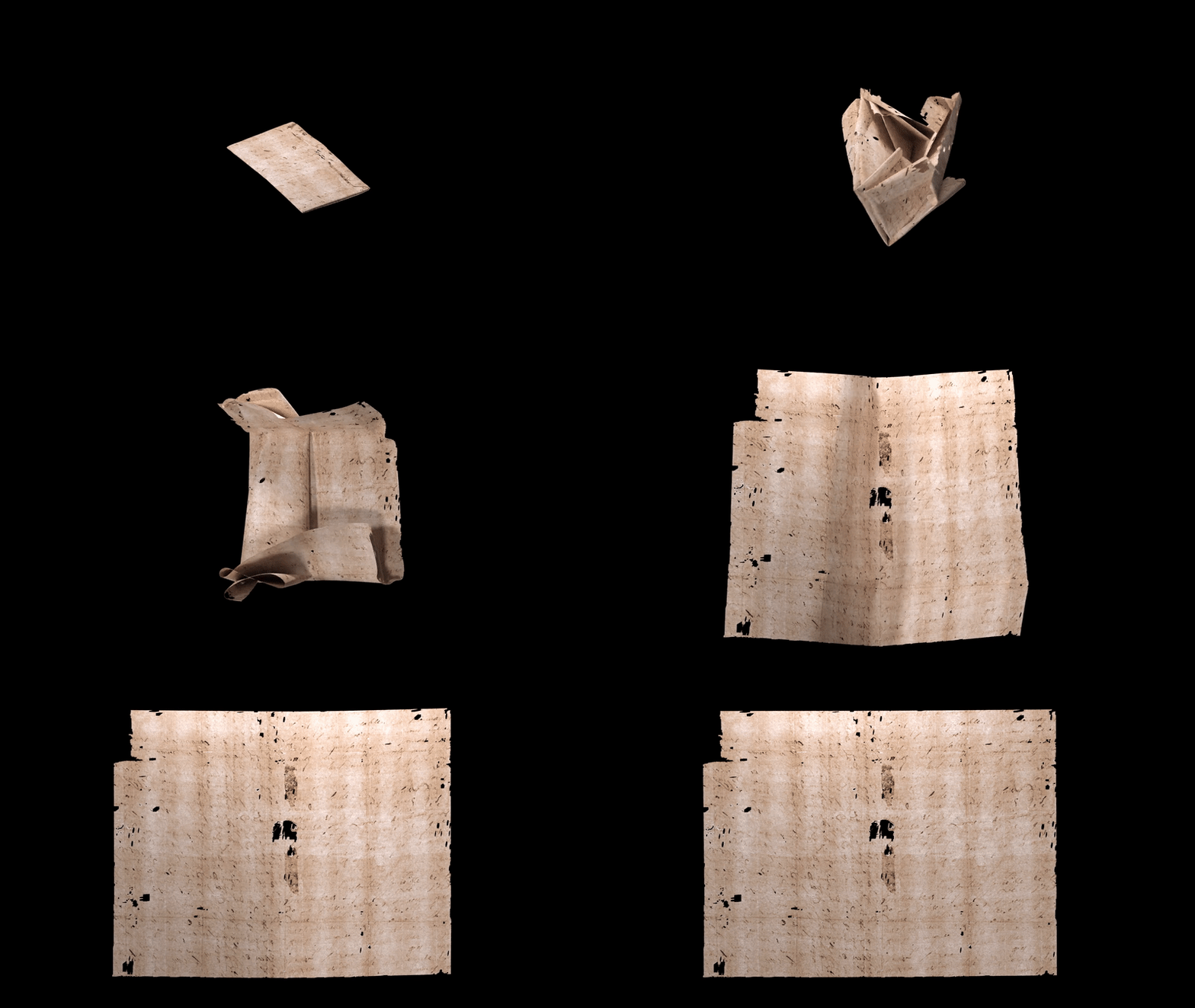
One popular way was to use a technique called letter locking -- intricately folding a flat sheet of paper to become its own envelope. This security strategy presented a challenge when 577 locked letters delivered to The Hague in the Netherlands between 1689 and 1706 were found in a trunk of undelivered mail.

The letters had never reached their final recipients, and conservationists didn't want to open and damage them. Instead, a team has found a way to read one of the letters without breaking its seal or unfolding it in any way. Using a highly sensitive X-ray scanner and computer algorithms, researchers virtually unfolded the unopened letter.


http%3A%2F%2Fcdn.cnn.com%2Fcnnnext%2Fdam%2Fassets%2F210301140538-04-opening-sealed-letters-scn.jpg

C9cDup5fHYJHtqcY6Tk7KK-1024-80.gif


Computer-generated unfolding animation of sealed letter DB-1538. (Image credit: Courtesy of the Unlocking History Research Group archive)
 
1
•••
Last edited:
2
•••
[NASA] CineSpace Short Film Competition 2021

[3 March 2021]

The competition offers creators around the world a chance to share their films inspired by and using NASA imagery, enabling curiosity and fostering creative relationships at the intersection of art and science. Submissions featuring real NASA footage from 60 years of space exploration will be judged on creativity, innovation and attention to detail. As in previous years, filmmakers will compete for $26,000 in cash prizes, with awards going to the top three overall winners and winners of two special categories: Best Educational Film on Space and Science and Film That Best Depicts Unity and Inclusion in Science.

Filmmakers of all experience levels from around the world are welcome to submit their films for consideration. The competition is inclusive of all genres, including narrative, documentary, comedy, drama, animation, experimental and others. Films will be submitted to the content creation platform Tongal. Film entries must be no more than 10 minutes and contain at least 10 percent of publicly available NASA imagery. Finalists are selected from the submissions and reviewed by Academy Award ยฎ nominee Richard Linklater who awards the first, second, and third place prizes.

Partner Organizations: NASA; Houston Cinema Arts Society

Award(s): $26,000 in total prizes

Open Date: March 1, 2021

Close Date: July 14, 2021 at 2 p.m. CDT


Frequency: Annual

Find NASA video and imagery at: http://www.nasa.gov/content/download-nasa-videos-for-cinespace

For more information, visit: cinespace.org
 
1
•••
Study: Comodo Dragon likely originated in Australia

The unusual breeding history of the Earth's largest living lizard - the Komodo dragon - has been laid bare in a new study from The Australian National University.

The Komodo dragon is best known for its size and hunting skills, reaching up to three metres long and preying on buffaloes, deer, and even the occasional human. But that's not all that sets it apart.

0X1A0862.jpg


The new study shows despite famously making its home in Indonesia, the Komodo dragon likely originated in Australia, as predicted by earlier fossil findings
. While here it reproduced with a different species of lizard - an ancestor of the sand monitor, a type of goanna.

Lead author of the study, Mr Carlos Pavรณn Vรกzquez said it's the first clear evidence of this type of interbreeding, known as hybridisation, happening in wild monitor lizards.

"This study proves hybridisation can have a long-lasting effect. In this case it happened millions of years ago, but the signs are still there in the sand monitors. They have more in common with the Komodo dragon than you'd expect," Mr Pavรณn Vรกzquez said.
 
2
•••
Study: Comodo Dragon likely originated in Australia

The unusual breeding history of the Earth's largest living lizard - the Komodo dragon - has been laid bare in a new study from The Australian National University.

The Komodo dragon is best known for its size and hunting skills, reaching up to three metres long and preying on buffaloes, deer, and even the occasional human. But that's not all that sets it apart.

0X1A0862.jpg


The new study shows despite famously making its home in Indonesia, the Komodo dragon likely originated in Australia, as predicted by earlier fossil findings
. While here it reproduced with a different species of lizard - an ancestor of the sand monitor, a type of goanna.

Lead author of the study, Mr Carlos Pavรณn Vรกzquez said it's the first clear evidence of this type of interbreeding, known as hybridisation, happening in wild monitor lizards.

"This study proves hybridisation can have a long-lasting effect. In this case it happened millions of years ago, but the signs are still there in the sand monitors. They have more in common with the Komodo dragon than you'd expect," Mr Pavรณn Vรกzquez said.

I've been charged by a large goanna (smaller cousin of the comodo) that I estimate was over two meters in length.

I'm not sure if he was actually attacking me or thought I was a tree. The trick is to move about so they realise that you are not a tree. They can do some fearful damage if they do manage to mount you as they have very very large razor-sharp claws for climbing trees.

https://en.wikipedia.org/wiki/Goanna
 
Last edited:
2
•••
A Cephalopod Has Passed a Cognitive Test Designed For Human Children

cuttlefren_1024.jpg


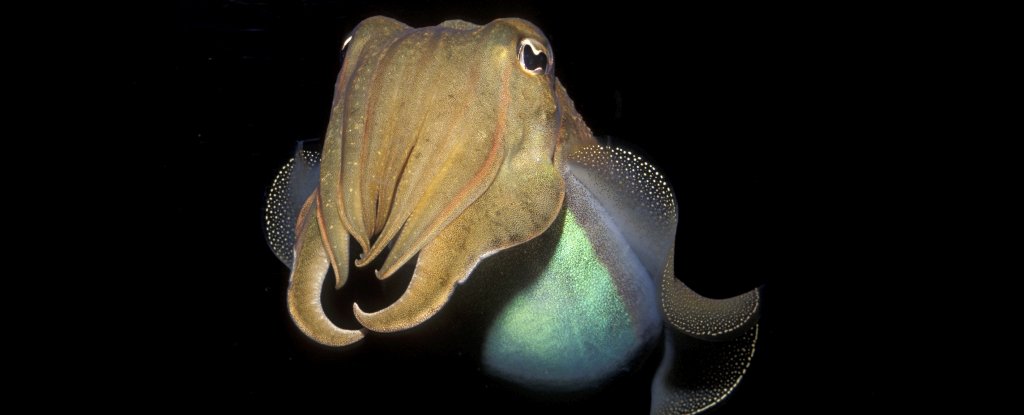
A new test of cephalopod smarts has reinforced how important it is for us humans to not underestimate animal intelligence.

Cuttlefish have been put to a new version of the marshmallow test, and the results appear to demonstrate that there's more going on in their strange little brains than we knew.

Their ability to learn and adapt, the researchers said, could have evolved to give cuttlefish an edge in the cutthroat eat-or-be-eaten marine world they live in.

The marshmallow test, or Stanford marshmallow experiment, is pretty straightforward. A child is placed in a room with a marshmallow. They are told if they can manage not to eat the marshmallow for 15 minutes, they'll get a second marshmallow, and be allowed to eat both.

This ability to delay gratification demonstrates cognitive abilities such as future planning, and it was originally conducted to study how human cognition develops; specifically, at what age a human is smart enough to delay gratification if it means a better outcome later.

Because it's so simple, it can be adjusted for animals. Obviously you can't tell an animal they'll get a better reward if they wait, but you can train them to understand that better food is coming if they don't eat the food in front of them straight away.

Some primates can delay gratification, along with dogs, albeit inconsistently. Corvids, too, have passed the marshmallow test.

https://www.sciencealert.com/cuttlefish-can-pass-a-cognitive-test-designed-for-children
 
2
•••
EMERGENCY FLIGHT TERMINATION SYSTEM FOR SN10 IS IN PLACE; STARSHIP TEST FLIGHT IMMINENT

starship-sn10-high-altitude-flight-nicholas-d-alessandro-nickyx15a-24363.jpeg


On Feb. 28, workers installed the flight termination system, or FTS, on Starship SN10 in what has proven to be the key event in the testing campaign that separates the preflight testing phase from the flight attempt phase.

Hopefully SN10 will stick the landing without need for the use of this safety system, but it is a critical component which helps to safeguard the residents of the area against a potentially out of control experimental rocket. As of right now, SpaceX is targeting sometime today, March 3, for their high-altitude flight test for the vehicle.

https://www.spaceflightinsider.com/...10-is-in-place-starship-test-flight-imminent/


Here is a live feed. Fingers crossed it will fly in the next few hours

 
2
•••
Artemis: We Are Focused
โ€ขMar 3, 2021

The latest promotional video for NASA's Artemis Program.


Deep space exploration begins on American factory floors. The launch of Artemis I will bring together the worldโ€™s most powerful rocket, NASAโ€™s Space Launch System and the Orion Spacecraft, to prepare us to land the first woman and the next man on the lunar surface.
 
Last edited:
1
•••
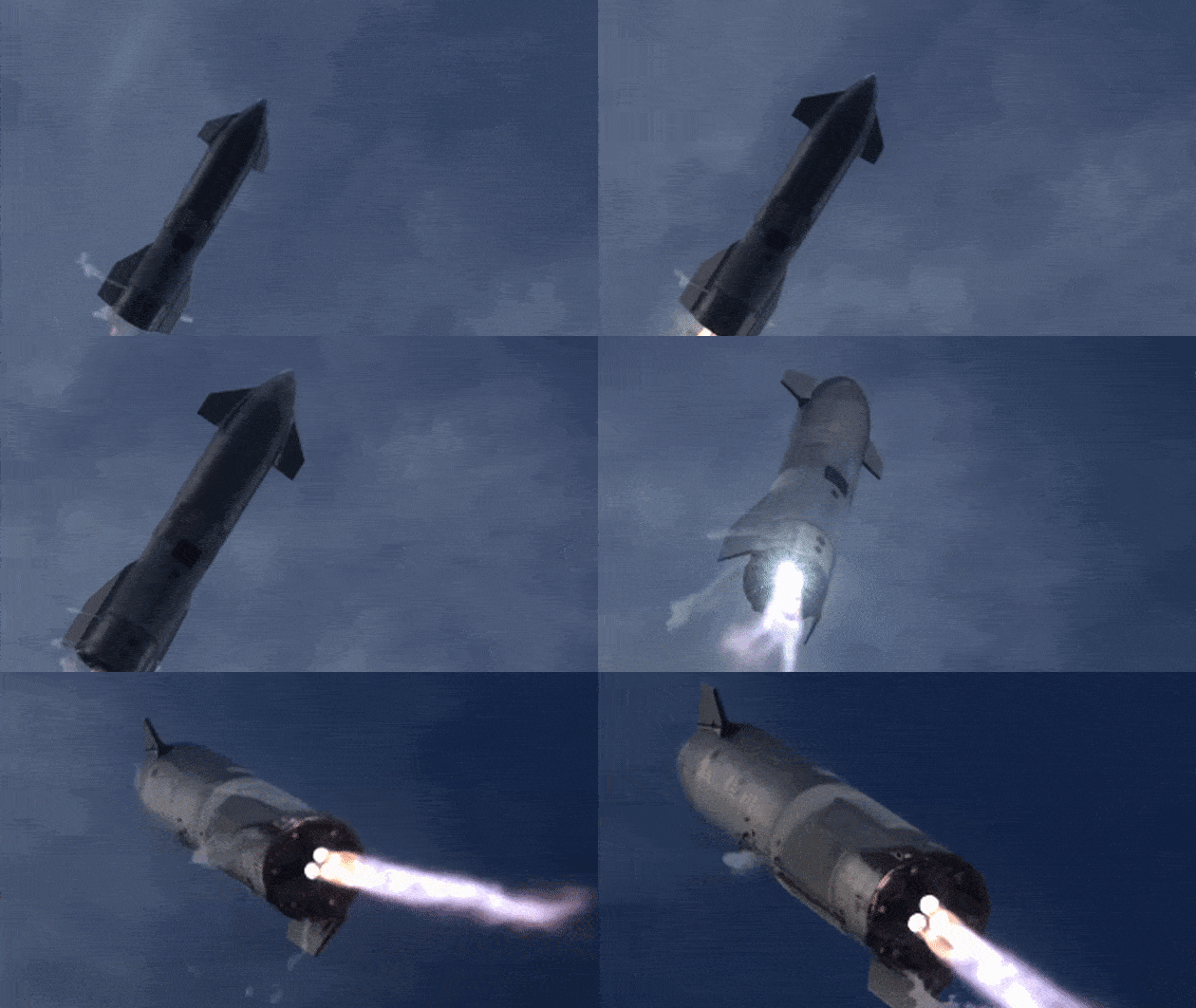
Success!

I also enjoyed the post-landing Rapid Unplanned Disassembly (RUD) ;)

SpaceX Starship prototype rocket [SN10] explodes after successful landing in high-altitude flight test

106848886-1614816969120-sn10_landing_flip_small.gif

  • SpaceXโ€™s latest Starship prototype landed for the first time after a high-altitude flight test but then exploded a few minutes after as it stood on the concrete pad.
  • The cause of the explosion, or whether it was intentional, was not immediately clear.
  • The company test flew Starship rocket Serial Number 10, or SN10, on a flight to about 32,800 feet altitude before returning to land on a concrete pad a few minutes later.
https://www.cnbc.com/2021/03/03/spa...rocket-after-a-high-altitude-flight-test.html


Last edited:
3
•••
Appraise.net
Spaceship
Domain Recover
CatchDoms
DomainEasy โ€” Zero Commission
  • The sidebar remains visible by scrolling at a speed relative to the pageโ€™s height.
Back