Dynadot โ€” .com Transfer

discuss Science & Technology news & discussion

Spacemail by SpaceshipSpacemail by Spaceship
Watch

CraigD

Top Member
Impact
11,745
Post and discuss interesting articles & videos about science and technology.

You don't need to be an expert - just interested in the wonders of modern science, technology, and the history of these fields.

Please keep it rational, and post articles from reputable sources.
Try not to editorialise headlines and keep the copy to just a paragraph with a link to the original source. When quoting excerpts from articles, I think the best method is to italicise the copy, and include a link to the source.

Have some fun with your comments and discussions... just keep the sources legitimate.

Other threads:
The Break Room has a number of other popular threads, so there is no need to post material here that is better suited to these other threads:

- Covid19-Coronavirus updates and news
- Conspiracy Thread Free For All
- The *religious* discussion thread


Please enjoy!
 
Last edited:
13
•••
The views expressed on this page by users and staff are their own, not those of NamePros.
.US domains.US domains
Scientists use Doppler to peer inside cells

Doppler radar improves lives by peeking inside air masses to predict the weather. A Purdue University team is using similar technology to look inside living cells, introducing a method to detect pathogens and treat infections in ways that scientists never have before.

In a new study, the team used Doppler to sneak a peek inside cells and track their metabolic activity in real time, without having to wait for cultures to grow. Using this ability, the researchers can test microbes found in food, water, and other environments to see if they are pathogens, or help them identify the right medicine to treat antibiotic-resistant bacteria.

David Nolte, Purdue's Edward M. Purcell Distinguished Professor of Physics and Astronomy; John Turek, professor of basic medical sciences; Eduardo Ximenes, research scientist in the Department of Agricultural and Biological Engineering; and Michael Ladisch, Distinguished Professor of Agricultural and Biological Engineering, adapted this technique from their previous study on cancer cells in a paper released this month in Communications Biology.

https://phys.org/news/2021-02-scientists-doppler-peer-cells.html
 
2
•••
Falling sperm counts 'threaten human survival', expert warns

Epidemiologist Shanna Swan says low counts and changes to sexual development could endanger human species.

Falling sperm counts and changes to sexual development are โ€œthreatening human survivalโ€ and leading to a fertility crisis, a leading epidemiologist has warned.

Writing in a new book, Shanna Swan, an environmental and reproductive epidemiologist at Icahn School of Medicine at Mount Sinai in New York, warns that the impending fertility crisis poses a global threat comparable to that of the climate crisis.

โ€œThe current state of reproductive affairs canโ€™t continue much longer without threatening human survival,โ€ she writes in Count Down.

It comes after a study she co-authored in 2017 found that sperm counts in the west had plummeted by 59% between 1973 and 2011, making headlines globally.

https://www.theguardian.com/us-news/2021/feb/26/falling-sperm-counts-human-survival


-------


An alarmist article, but it almost sounds like the premise for the book and film The Children of Men.
https://en.wikipedia.org/wiki/Children_of_Men
 
Last edited:
2
•••
Hidden scenes in ancient Etruscan paintings revealed

Scientists using a new technique have uncovered the colorful and once-hidden scenes in paintings of the ancient Etruscans, a group of people who flourished on the Italian peninsula around 2,500 years ago at a time before Rome became powerful.


EParBfnHEAgnWebTsKBhJo-320-80.jpg


For instance, they found new details in a painting from the "Tomb of the Monkey" and scenes of an underworld in another work of art.

The Etruscans created detailed paintings, but the passage of time has meant that many of them are now only partly visible and that much of their color has been lost.
 
Last edited:
2
•••
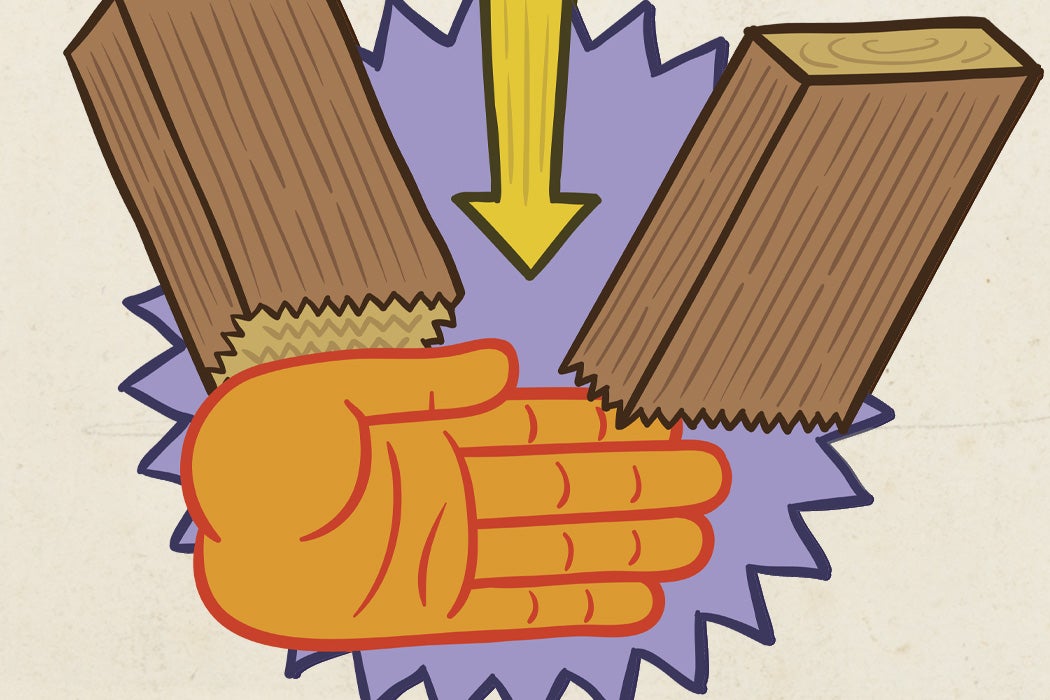
The perfect karate strike is nothing more than a precise application of Newtonโ€™s laws.

In the late 1970s, a team of karate-loving physicists decided to perform an experiment inspired by their collective passion for martial arts. The group was made up of physicist Michael Feld, a brown belt who liked to illustrate the physics of karate via live demonstrations to his classes at the Massachusetts Institute of Technology; Ronald McNair, future astronaut and fifth-degree black belt; and undergraduate Stephen Wilk.

the_physics_of_karate_1050x700.jpg


Feld, McNair, and Wilk placed wood and concrete in a hydraulic press to determine the amount of stress (force) needed to crack the underside of the objects. A wood plank can bend by about one centimeter before it breaks, which requires a force of 500 newtons. Concrete blocks only need to be deflected one millimeter before breaking, but since the material is less bendable than wood, that displacement requires 2,500 to 3,000 newtons. And because some energy is lost upon collision, the fist needs to exert even more force than that in order to actually break the blocks.

Thankfully, the human hand is capable of generating a very high degree of force in a very short period of time. The impact from a typical strike lasts only about five milliseconds. Through a combination of theory and experiment, the team discovered that within this brief flash of time, โ€œthe hand of the karateka, or practitioner of karate, canโ€ฆexert a force of more than 3,000 newtons, a wallop of 675 pounds.โ€ The teamโ€™s model indicates that the hand must reach a speed of 6.1 meters per second to break wood and 10.6 meters per second to break concrete. โ€œSuch speeds agree with our observation that beginners can break wood but not concrete,โ€ they write. โ€œA hand velocity of 6.1 meters per second is within range of the beginner, but a velocity of 10.6 meters per second calls for training and practice.โ€

Feld and McNair were able to show off their martial arts skills during the investigation. Both were photographed striking a pile of wood planks at 120 frames per second. This allowed them to measure the displacement, velocity, and acceleration of different parts of the fist. These photos showed that the fist compresses and distorts โ€œto such an extent that it scarcely behaves like a solid object.โ€


The obvious follow-up question: โ€œHow is it that the hand of the karateka is not shattered by the force of the karate strike?โ€ Here, itโ€™s anatomy to the rescue: Human bone is five times stiffer than concrete and fifty times harder to break (successfully karate-chopping a femur would take more than 25,000 newtonsโ€™ worth of force). The bones in the hand are easily able to absorb the stress of the impact. Of course, itโ€™s technique, not strength, that provides the real power. A successful strike needs to hit the board precisely in the center. With enough training, karate represents the human body at its maximum, the group writes, and โ€œThe precision demandedโ€ฆmakes karate not only an excellent physical discipline but also a mental one.โ€
 
2
•••
People who like cold weather may have a useful genetic mutation

The findings come from the Karolinska Institutet, which found that nearly one out of every five people have muscle fibers lacking the protein ฮฑ-actinin-3. This mutation, which may have been beneficial in the distant past when humans migrated to cold regions, has been found to help keep someone warm.

The protein is only found in fast-twitch muscle fibers โ€” and around 20-percent of the worldโ€™s population lacks this protein as the result of a genetic mutation, according to the new study, which is the first to link the loss of this protein with an increase in cold resilience.

The findings are based on a study of 42 healthy male adults who were tasked with sitting in 57F water until their body temperature dropped down to around 96F. Electromyography was used to measure the electrical activity in the participantsโ€™ muscles during this time. As well, muscle biopsies were taken to study the fiber composition.

The results showed that participants who lacked the protein had more slow-twitch muscle fibers, which enabled them to conserve body heat in a more efficient way. Whereas fast-twitch muscle fibers result in shivering, the slow-twitch fibers experienced more baseline contractions, producing heat.
 
2
•••
The first organism to use oxygen may have appeared surprisingly early

The first organisms to โ€œbreatheโ€ oxygenโ€”or at least use itโ€”appeared 3.1 billion years ago, according to a new genetic analysis of dozens of families of microbes. The find is surprising because the Great Oxidation Event, which filled Earthโ€™s atmosphere with the precious gas, didnโ€™t occur until some 500 million years later.


sky_1280p_0.jpg


โ€œI was pretty thrilled to see this paper,โ€ says Patrick Shih, an evolutionary biologist at the University of California (UC), Davis. The advent of proteins that can use oxygen, Shih and others say, marks a key step in the emergence of aerobic microbes, which are those able to harness oxygen. โ€œThe transition from a world that was mostly anaerobic to one that was mostly aerobic was one of the major innovations in life,โ€ says Tim Lyons, a biogeochemist at UC Riverside.
 
3
•••
How to build a quantum internet


Youโ€™ve probably heard of quantum computers - but what about the quantum internet? Entangling qubits across large distances to form a quantum internet could be one of the most exciting developments in quantum technology, and now a group of researchers claim to have taken one of the first steps to make this possible - the creation of a quantum repeater.

More information:
https://en.wikipedia.org/wiki/Quantum_network#Quantum_repeaters
 
Last edited:
1
•••
FUN TO IMAGINE with Richard Feynman

This is the complete BBC interview from 1983.

Delve into the mind of the brilliant physicist and Nobel laureate Richard Feynman enjoying himself talking about science. In my opinion he was also a very down-to-earth teacher who described complex concepts using layman's terms so that anyone could comprehend them.

A must-watch!

 
Last edited:
2
•••
โ€˜Deep Nostalgiaโ€™ Can Turn Old Photos of Your Relatives Into Moving Videos

m6tbhmlecfbsf5ovycwk.gif


Itโ€™s hard to feel connected to someone whoโ€™s gone through a static photo. So a company called MyHeritage who provides automatic AI-powered photo enhancements is now offering a new service that can animate people in old photos creating a short video that looks like it was recorded while they posed and prepped for the portrait.

gm1hkuqtzdwhkwg4kody.gif


https://www.gizmodo.com.au/2021/02/...-photos-of-your-relatives-into-moving-videos/


MyHeritage offers 'creepy' deepfake tool to reanimate dead
https://www.bbc.com/news/technology-56210053

 
4
•••
It's not just oceans: scientists find plastic is also polluting the air

New research links Delhiโ€™s thick smogs to burning of plastics.

In low-income countries about 90% of waste ends up in open dumps or is burned in the open air. If you set fire to plastic, it rapidly reveals its origins as an oil-based product by producing copious amounts of black smoke. Using data on the contents of rubbish from around the world, researchers from Londonโ€™s Kingโ€™s and Imperial Colleges have estimated that the soot from open waste burning has a global warming impact equivalent to between 2% and 10% of the global emissions of carbon dioxide.

https://www.theguardian.com/environment/2021/feb/26/not-just-oceans-plastic-polluting-air-delhi-smog
 
2
•••
Plastic bottles holding 2.3 litres are least harmful to the planet

Using plastic bottles that contain the most liquid for the lowest packaging weight could help reduce plastic waste.

Plastic pollution is a huge problem for the world, with much plastic waste reaching the oceans where it can affect marine life.

In recognition of this, many researchers are developing strategies to tackle the plastic waste problem. Now, Rafael Becerril-Arreola at the University of South Carolina and his colleagues have come up with a relatively simple method to make a difference: change the packaging size to maximise its capacity for a given weight of plastic.

Becerril-Arreola and his team focused on polyethylene terephthalate (PET), the most common material in plastic bottles. They weighed 187 empty bottles of different sizes from bestselling drink brands to determine the weight of plastic required to produce a bottle of a given capacity. They also compared this against PET waste and drink sales in Minnesota between 2009 and 2013, as the state government there reliably collects waste statistics and its bottled drink consumption is close to the US national average.

The researchers found that the most efficient bottles โ€“ those with the greatest capacity relative to the weight of plastic used to make the bottle โ€“ had a volume between 0.5 and 2.9 litres. Bottles of this size are typically bought for on-the-go use or social gatherings. Bottles that were smaller (under 0.4 litres) or larger (over 3 litres) used more plastic in relation to each bottleโ€™s capacity.


https://www.newscientist.com/articl...g-2-3-litres-are-least-harmful-to-the-planet/


This is a no-brainer. I loathe single-serve plastic packaging and I think we made a big mistake when we stopped using recyclable glass bottles.
 
Last edited:
3
•••
Tim Berners-Leeโ€™s plan to save the internet: give us back control of our data

Releasing his creation for free 30 years ago, the inventor of the world wide web, Tim Berners-Lee, famously declared: โ€œthis is for everyoneโ€. Today, his invention is used by billions โ€“ but it also hosts the authoritarian crackdowns of antidemocratic governments, and supports the infrastructure of the most wealthy and powerful companies on Earth.

Now, in an effort to return the internet to the golden age that existed before its current incarnation as Web 2.0 โ€“ characterised by invasive data harvesting by governments and corporations โ€“ Berners-Lee has devised a plan to save his invention.

This involves his brand of โ€œdata sovereigntyโ€ โ€“ which means giving users power over their data โ€“ and it means wrestling back control of the personal information we surrendered to big tech many years ago.

Berners-Leeโ€™s latest intervention comes as increasing numbers of people regard the online world as a landscape dominated by a few tech giants, thriving on a system of โ€œsurveillance capitalismโ€ โ€“ which sees our personal data extracted and harvested by online giants before being used to target advertisements at us as we browse the web.

Courts in the US and the EU have filed cases against big tech as part of whatโ€™s been dubbed the โ€œtechlashโ€ against their growing power. But Berners-Leeโ€™s answer to big techโ€™s overreach is far simpler: to give individuals the power to control their own data.

https://theconversation.com/tim-ber...ernet-give-us-back-control-of-our-data-154130
 
3
•••
Tim Berners-Leeโ€™s plan to save the internet: give us back control of our data

Courts in the US and the EU have filed cases against big tech as part of whatโ€™s been dubbed the โ€œtechlashโ€ against their growing power. But Berners-Leeโ€™s answer to big techโ€™s overreach is far simpler: to give individuals the power to control their own data.

https://theconversation.com/tim-ber...ernet-give-us-back-control-of-our-data-154130

I'm generally surprised about the many people who happen to be naive and/or willing to give up their data and privacy. With reference to Berners-Lee's book link, I find the claim to Data Sovereignty a credible analogy:

The idea of data sovereignty has its roots in the claims of the worldโ€™s indigenous people, who have leveraged the concept to protect the intellectual property of their cultural heritage.

Applied to all web users, data sovereignty means giving individuals complete authority over their personal data. This includes the self-determination of which elements of our personal data we permit to be collected, and how we allow it to be analysed, stored, owned and used. This would be in stark contrast to the current data practices that underpin big techโ€™s business models as the practice of โ€œdata extractionโ€ or data-driven capitalism.
 
2
•••
I'm generally surprised about the many people who happen to be naive and/or willing to give up their data and privacy. With reference to Berners-Lee's book link, I find the claim to Data Sovereignty a credible analogy:

The idea of data sovereignty has its roots in the claims of the worldโ€™s indigenous people, who have leveraged the concept to protect the intellectual property of their cultural heritage.

Applied to all web users, data sovereignty means giving individuals complete authority over their personal data. This includes the self-determination of which elements of our personal data we permit to be collected, and how we allow it to be analysed, stored, owned and used. This would be in stark contrast to the current data practices that underpin big techโ€™s business models as the practice of โ€œdata extractionโ€ or data-driven capitalism.

Don't be surprised :)

People exchange their (company, personal) password for a bar of chocolate easily.

https://www.sciencedaily.com/releases/2016/05/160512085123.htm
 
3
•••
Last edited:
3
•••
Breathtaking Pic From Hawaii Shows Not One, But Two Rare Sky Phenomena

6037cdccd920880018591f8e_1024.jpg


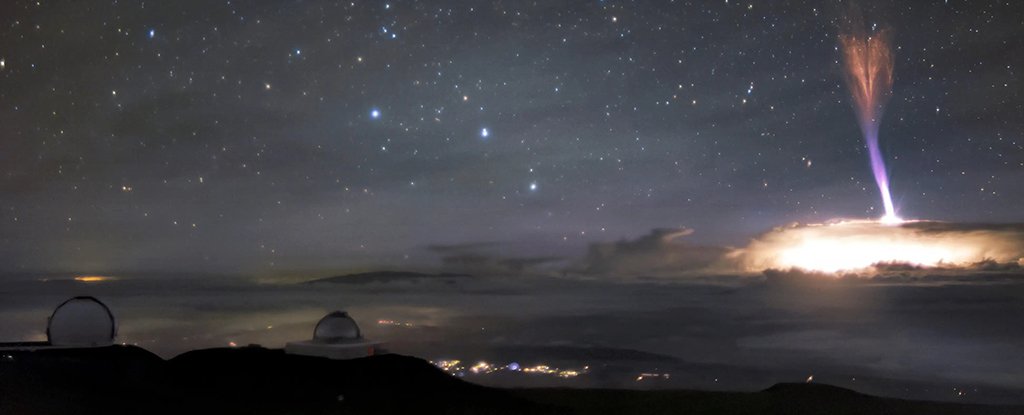
Cameras on the Gemini North telescope at the Gemini Observatory in Mauna Kea snapped a stunning picture of the multi-colored light show. The National Optical-Infrared Astronomy Research Laboratory (NOIRLab) released the photo on Wednesday as its "image of the week".

These colorful lightning phenomena are aptly known as red sprites and blue jets. They're extremely tricky to capture on camera: The flashes last just tenths of a second and can be hard to see from the ground, since they're generally obscured by thunderstorm clouds.


Regular white lightning is different from sprites and jets in several key ways. Whereas regular lightning shoots between electrically charged air, clouds, and the ground during storms, sprites and jets start in different places in the sky, and move toward space. Their distinctive hues also set them apart.

Red sprites are ultrafast bursts of electricity that crackle through the upper regions of the atmosphere โ€“ between 37 and 80 km (23 and 49 miles) up in the sky โ€“ and move spaceward. Some sprites are jellyfish-shaped, while others, like the one in the Gemini Observatory image, are vertical columns of red light with tendrils snaking down. These are called carrot sprites.

https://www.sciencealert.com/a-thunderstorm-in-hawaii-created-a-truly-amazing-mix-of-phenomenon
 
Last edited:
3
•••
NASA Deliberately Made Eerie Glowing Clouds... to Study Eerie Glowing Clouds

supersoaker_launches_timelapse.jpg


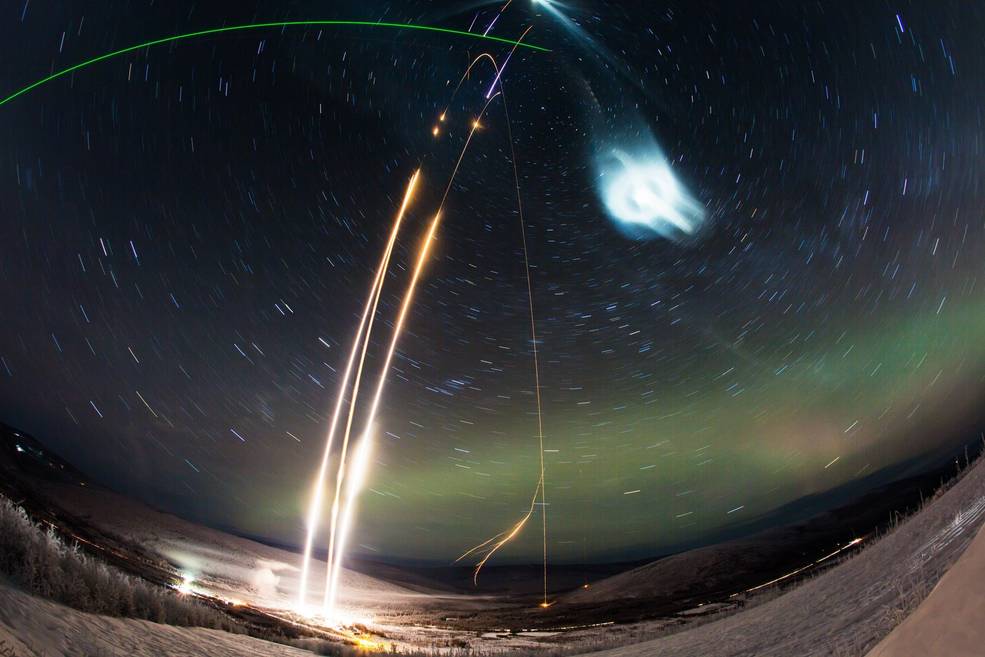
On 26 January 2018, the Super Soaker rocket mission launched, with one sounding rocket carrying 220-kilograms (485-pounds) of water in two canisters. Two other sounding rockets flew in accompaniment, carrying trimethyl aluminium (TMA) tracers to track wind movement.

water-release.gif


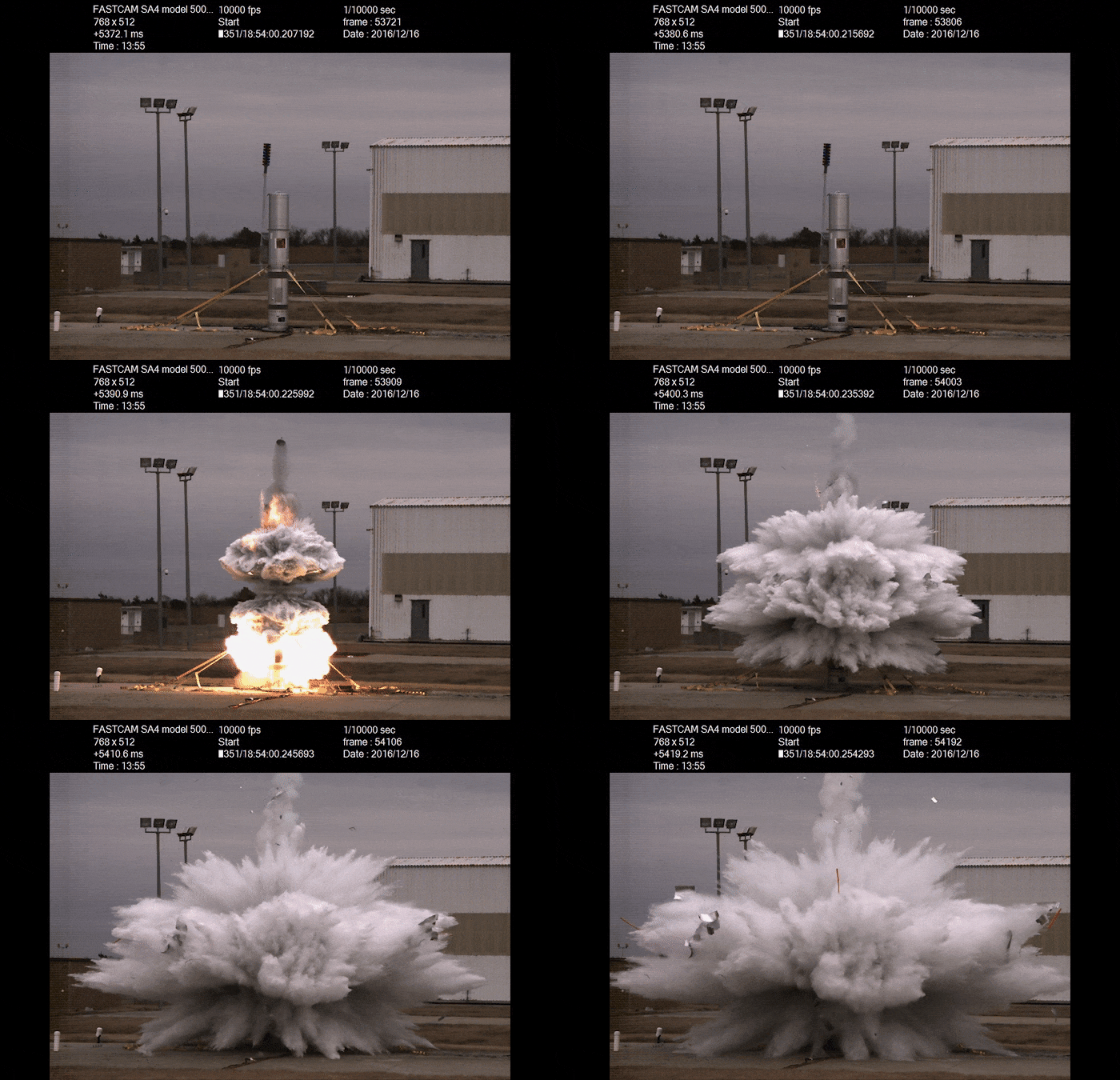
At an altitude of 85 kilometres, the water was released in a tremendous whoosh. Just 18 seconds later, a laser beam from a ground-based Rayleigh LIDAR detected a faint noctilucent cloud. Over three minutes, the cloud seemed to descend from a peak altitude of 92 kilometres (57 miles) down to 78 kilometres (48 miles).

"This is the first time anyone has experimentally demonstrated that polar mesospheric cloud formation in the mesosphere is directly linked to cooling by water vapour itself," said space physicist Irfan Azeem of aerospace company Astra, LLC.

This could explain, the researchers said, why noctilucent clouds seem to follow space launches. Water vapour is a common effluent in spacecraft exhaust, and scientists have observed the connection many times in the Arctic summer.

https://www.sciencealert.com/nasa-is-studying-eerie-glowing-clouds-by-making-eerie-glowing-clouds
 
2
•••
Natureโ€™s power to induce awe might also reduce political polarization, study suggests

Psychologists have found that using nature scenes to experimentally induce a sense of awe can reduce the strength of oneโ€™s ideological convictions. The findings, which appear in the journal Emotion, provide evidence that the mix of wonder, reverence, and dread we feel in response to the vastness of the world can promote intellectual humility and reduce polarization.

woman-in-nature-looking-up-at-forest-in-awe-750x375.jpg


In three studies with 776 participants, the researchers found that inducing a sense of awe was associated with lower levels of conviction in oneโ€™s ideological views.

In the first two studies, which examined attitudes towards capital punishment and racial bias in the criminal justice system, respectively, participants watched either a neutral video clip, a an amusing video clip, or an awe-inducing video clip before reporting how firmly they believed in their views.

In the third study, participants were randomly assigned to either write about a natural scene that caused them to feel awe, a situation that caused them to feel pride, or something they had done recently. They then indicated how much social distance they desired from those who did not share their views on immigration.

https://doi.apa.org/record/2019-46364-001
 
Last edited:
2
•••
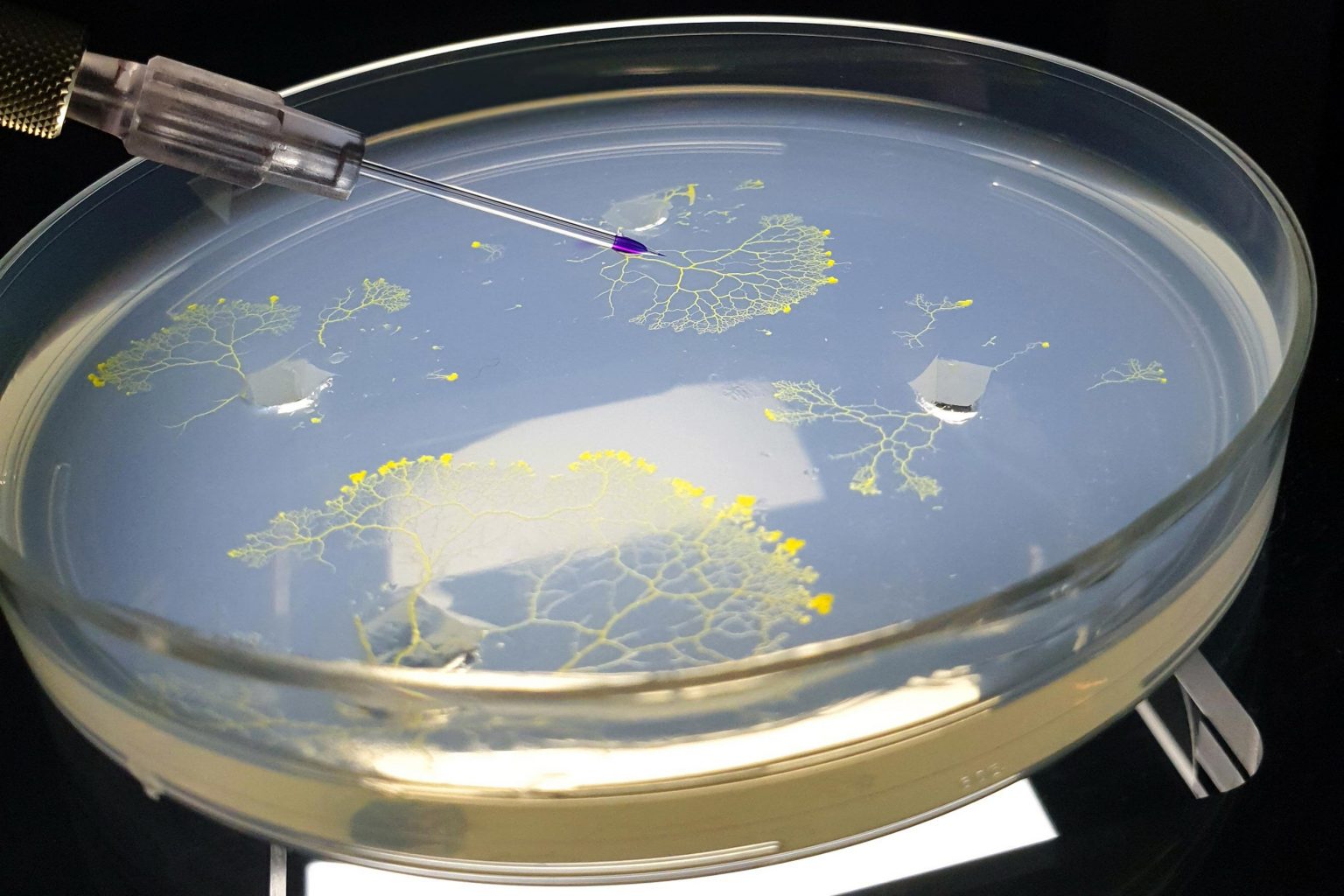
Memory Without a Brain: How a Single Cell Slime Mold Makes Smart Decisions

Physarum-polycephalum-1536x1024.jpg


Having a memory of past events enables us to make smarter decisions about the future. Researchers at the Max-Planck Institute for Dynamics and Self-Organization (MPI-DS) and the Technical University of Munich (TUM) have now identified how the slime mold Physarum polycephalum saves memories โ€“ although it has no nervous system.

The ability to store and recover information gives an organism a clear advantage when searching for food or avoiding harmful environments. Traditionally it has been attributed to organisms that have a nervous system.

A new study authored by Mirna Kramar (MPI-DS) and Prof. Karen Alim (TUM and MPI-DS) challenges this view by uncovering the surprising abilities of a highly dynamic, single-celled organism to store and retrieve information about its environment.

https://scitechdaily.com/memory-without-a-brain-how-a-single-cell-slime-mold-makes-smart-decisions/
 
Last edited:
3
•••
The weird physics of upside down buoyancy

Liquid can levitate and boats can float upside down in this gravity-defying physics experiment. Researchers in Paris have been investigating the effect of vertical shaking, which can be used to suspend a layer of liquid in mid-air. They have discovered a peculiar phenomenon that allows lightweight objects to float on the bottom surface of this liquid, with a kind of reverse-buoyancy. This counter-intuitive behaviour is a result of the constant vibrations which changes the forces acting on the floating objects.

https://www.nature.com/articles/s41586-020-2643-8


3
•••
Dynadot โ€” .com TransferDynadot โ€” .com Transfer
Appraise.net
Spaceship
Domain Recover
CatchDoms
DomainEasy โ€” Live Options
  • The sidebar remains visible by scrolling at a speed relative to the pageโ€™s height.
Back