Dynadot โ€” .com Transfer

discuss Science & Technology news & discussion

SpaceshipSpaceship
Watch

CraigD

Top Member
Impact
11,745
Post and discuss interesting articles & videos about science and technology.

You don't need to be an expert - just interested in the wonders of modern science, technology, and the history of these fields.

Please keep it rational, and post articles from reputable sources.
Try not to editorialise headlines and keep the copy to just a paragraph with a link to the original source. When quoting excerpts from articles, I think the best method is to italicise the copy, and include a link to the source.

Have some fun with your comments and discussions... just keep the sources legitimate.

Other threads:
The Break Room has a number of other popular threads, so there is no need to post material here that is better suited to these other threads:

- Covid19-Coronavirus updates and news
- Conspiracy Thread Free For All
- The *religious* discussion thread


Please enjoy!
 
Last edited:
13
•••
The views expressed on this page by users and staff are their own, not those of NamePros.
GoDaddyGoDaddy
Using light to revolutionize artificial intelligence

An international team of researchers, including Professor Roberto Morandotti of the Institut national de la recherche scientifique (INRS), just introduced a new photonic processor that could revolutionize artificial intelligence, as reported by the journal Nature.

This device performs a type of matrix-vector multiplication known as a convolution for image-processing applications. It shows promising results for real-time massive-data machine learning tasks, such as identifying faces in cameras or pathology identification in clinical scanning applications. Their approach is scalable and trainable to much more complex networks for demanding applications such as unmanned vehicles and real-time video recognition, allowing, in a not-so-far future, a full integration with the up-and-coming Internet of Things.

 
3
•••
Discovery of quantum behavior in insulators suggests possible new particle

In a surprising discovery, Princeton physicists have observed an unexpected quantum behavior in an insulator made from a material called tungsten ditelluride. This phenomenon, known as quantum oscillation, is typically observed in metals rather than insulators, and its discovery offers new insights into our understanding of the quantum world. The findings also hint at the existence of an entirely new type of quantum particle.

The discovery challenges a long-held distinction between metals and insulators, because in the established quantum theory of materials, insulators were not thought to be able to experience quantum oscillations.

https://www.miragenews.com/discover...in-insulators-suggests-possible-new-particle/
 
3
•••
Rolls-Royce and UK Space Agency launch first ever study into nuclear-powered space exploration

This new research contract will see planetary scientists work together to explore the game-changing potential of nuclear power as a more plentiful source of energy, capable of making possible deeper space exploration in the decades to come.

Nuclear propulsion, which would involve channelling the immense energy released in splitting the atom to accelerate propellants, like hydrogen, at huge speeds, has the potential to revolutionise space travel.
By some estimates, this kind of engine could be twice as efficient as the chemical engines that power our rockets today. Spacecraft powered by this kind of engine could, conceivably, make it to Mars in just 3 to 4 months โ€“ roughly half the time of the fastest possible trip in a spacecraft using the current chemical propulsion.

https://www.miragenews.com/rolls-ro...study-into-nuclear-powered-space-exploration/
 
3
•••
Researchers Paint the Mind of a Worm Using Fluorescent Technique

NeuroPAL-worm-696x391.jpg


The human brain contains approximately 86 billion neurons, or nerve cells, woven together by an estimated 100 trillion connections, or synapses. Each cell has a role that helps us to move muscles, process our environment, form memories, and much more.

Given the huge number of neurons and connections, there is still much we don't know about how neurons work together to give rise to thought or behavior.

Now Columbia scientists have engineered a coloring technique, known as NeuroPAL (a Neuronal Polychromatic Atlas of Landmarks), which makes it possible--at least in experiments with Caenorhabditis elegans (C. elegans), a worm species commonly used in biological research--to identify every single neuron in the mind of a worm.


"Being able to identify neurons, or other types of cells, using color can help scientists visually understand the role of each part of a biological system," Yemini said. "That means when something goes wrong with the system, it may help pinpoint where the breakdown occurred."
 
Last edited:
4
•••
IBM Leads in Quantum Computing, Ford in Driverless Car Patents

Artificial intelligence, quantum computers and autonomous vehicles are among the fastest-growing areas of technology, with American companies often in the lead, according to a new study of U.S. patents issued over the past five years.

International Business Machines Corp. received the most patents in machine learning and quantum computers, while Ford Motor Co. is the most active in areas of vehicle navigation and control systems, according to the analysis by Fairview Researchโ€™s IFI Claims Patent Services.


Of the top-10 fastest growing fields, IBM also was No. 1 in areas of quantum computers, machine learning and computer systems using neural networks that imitate how the human brain works. Alphabet Inc.โ€™s Google and Microsoft Corp. also ranked in the top five of those three areas.

 
2
•••
Measurements of pulsar acceleration reveal Milky Way's dark side

measurements.jpg


It is well known that the expansion of the universe is accelerating due to a mysterious dark energy. Within galaxies, stars also experience an acceleration, though this is due to some combination of dark matter and the stellar density.

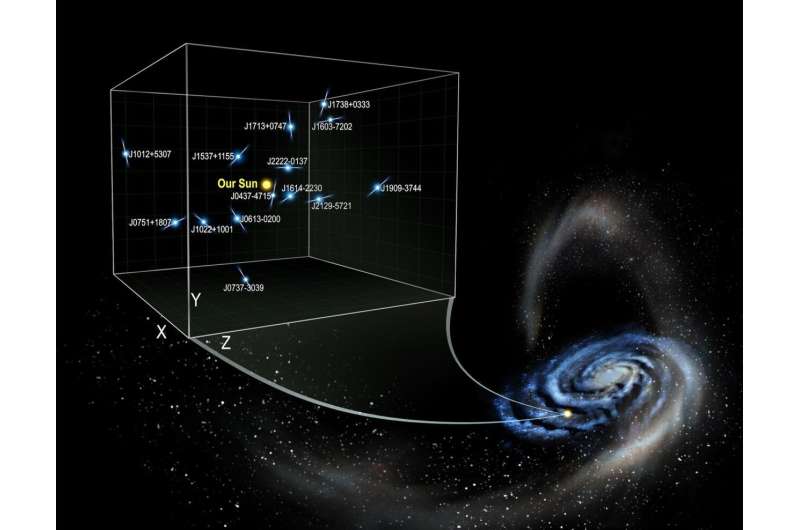
In a new study to be published in Astrophysical Journal Letters researchers have now obtained the first direct measurement of the average acceleration taking place within our home galaxy, the Milky Way. Led by Sukanya Chakrabarti at the Institute for Advanced Study with collaborators from Rochester Institute of Technology, University of Rochester, and University of Wisconsin-Milwaukee, the team used pulsar data to clock the radial and vertical accelerations of stars within and outside of the galactic plane.

Based on these new high-precision measurements and the known amount of visible matter in the galaxy, researchers were then able to calculate the Milky Way's dark matter density without making the usual assumption that the galaxy is in a steady-state.

https://phys.org/news/2021-01-pulsar-reveal-milky-dark-side.html
 
Last edited:
3
•••
Researchers find Mars has a Chandler wobble

2-mars.jpg


A combined team of researchers from the Jet Propulsion Laboratory, California Institute of Technology and the Royal Observatory of Belgium, has found evidence that Mars has a Chandler wobble.

Approximately a century ago, astronomer Seth Carlo Chandler discovered that imperfectly round objects (such as planets) sometimes spin off their axis for periods of time. The phenomenon has come to be known as the Chandler wobble, and has been documented for planet Earth, which veers from its axis for distances up to 30 feet in a pattern that repeats approximately every 433 days. Researchers have suggested that other planets likely have a Chandler wobble, but until now, it has never been observed because measuring it on the planet scale requires precise measurements over many years.

https://phys.org/news/2021-01-mars-chandler.html
 
1
•••
Australian man arrested in Germany over 'world's largest' darknet marketplace

4496.jpg


Police arrest 34-year-old suspected of operating site selling drugs, credit card data and malware

A German-led police sting has taken down the โ€œworldโ€™s largestโ€ darknet marketplace, whose Australian alleged operator used it to facilitate the sale of drugs, stolen credit card data and malware, prosecutors said Tuesday.

At the time of its closure, DarkMarket had nearly 500,000 users and more than 2,400 vendors worldwide, as the coronavirus pandemic leads much of the street trade in narcotics to go online.

A total of at least 320,000 transactions were carried out via the marketplace, with more than 4,650 bitcoin and 12,800 monero โ€“ two of the most common cryptocurrencies โ€“ changing hands, prosecutors said.

At current exchange rates, that represented turnover valued at โ‚ฌ140m (A$220m).

https://www.theguardian.com/technol...rmany-over-worlds-largest-darknet-marketplace
 
1
•••
Programmer has two guesses left to access ยฃ175m bitcoin wallet

Stefan Thomas is not the first person to forget a password, but memory lapses are rarely so potentially costly

Stefan Thomas has just two chances left to get his hands on his $240m (ยฃ175m) fortune.

Thomas is a San Francisco-based computer programmer, and a decade ago he was given 7,002 bitcoins as a reward for making a video explaining how the cryptocurrency works.

At the time he was paid, they were worth $2-$6 each. He stashed them away in his โ€œdigital walletโ€ and forgot about them.

Now each bitcoin is worth $34,000, and the contents of his wallet are valued at $240m. But Thomas has forgotten the password that will unlock his fortune.

German-born Thomas has already entered the wrong password eight times, and if he guesses wrong two more times his hard drive, which contains his private keys to the bitcoin, will be encrypted โ€“ and heโ€™ll never see the money.

https://www.theguardian.com/technol...rammer-locked-out-of-his-130m-bitcoin-account
 
2
•••
World Solar Challenge charges ahead amid fear COVID could reroute overseas teams

13048328-3x2-xlarge.jpg


About 40 teams from around the world, including from the COVID-19 hotspots of the US and Europe, are still planning to be on the start line of the World Solar Challenge in October.

Organisers of the Darwin-to-Adelaide race have set dates and devised several contingency plans, which may include not crossing the SA-NT border, running a national race for only the six Australian teams, quarantining overseas teams, or holding a virtual-only version of the event.

Some teams are already considering organising their own local race if they cannot enter Australia.

The biennial 3,000-kilometre race has run 15 times since 1987 and has attracted teams from all over the world.

https://www.abc.net.au/news/2021-01...enge-in-doubt-as-covid-hampers-teams/13048612


-------------------------------------------

World Solar Challenge: innovation has outstripped what event founder dreamed possible 30 years ago

9019976-16x9-xlarge.jpg

The Quiet Achiever solar car -1982

October 2017:


Three decades ago, Hans Tholstrup was told it would be impossible to cross Australia using only solar power.

Now, he says, the simple fact is: "We can take a human being across a continent on just sunshine, and that is pure magic."

Mr Tholstrup, the founder of the World Solar Challenge, says he never imagined it would become such an innovative and internationally renowned event.

In 1982, in partnership with brothers Garry and Larry Perkins, he became the first person to drive across Australia in a solar-powered car.

It took him under 20 days to travel 4,000 kilometres from Perth to Sydney in The Quiet Achiever, a solar car that by today's standards seems old.

https://www.abc.net.au/news/2017-10...nnovation-technology-outstrips-dreams/9019908


-------------------------------------------

The first trans-australian solar crossing 1982-83

1280px-Australia_Perth_route.jpg

Image Source: https://en.wikipedia.org/wiki/The_Quiet_Achiever

As a kid in December 1982, I'd read the local paper and watch the evening news for the latest progress of the BP Solar Trek - the 'bathtub-on-wheels' made of bike-tubing - that traveled across the desert during the height of an Australian summer. The heat must have been excruciating on the tarmacked road!

The journey started from Scarborough Beach, West Australia, where a bottle of water from the Indian Ocean was to be carried across the continent to Sydney, where it was to be ceremoniously poured into the Pacific Ocean. It was meant as a symbolic gesture joining two great oceans by solar power.

Here's an old archived website documenting that first trans-australian solar crossing:

https://web.archive.org/web/2012032...lartrek/Solar_Trek/Solar_Trek_The_Journey.htm

finish5.JPG


-------------------------------------------


More information:
https://en.wikipedia.org/wiki/World_Solar_Challenge
https://en.wikipedia.org/wiki/Solar_car_racing
https://en.wikipedia.org/wiki/List_of_prototype_solar-powered_cars
https://en.wikipedia.org/wiki/The_Quiet_Achiever
 
Last edited:
2
•••
How Can Slumbering Squirrels Inform Astronauts on Long-term Journeys?

Researchers show the animals have uniquely adapted to their extreme habitat by converting bodily waste products into nutrients


Researchers peered into the deepest of slumbers โ€“ the barely-breathing sleep of arctic ground squirrels โ€“ to better understand how the small mammals can emerge from an eight-month hibernation with a minimal loss of muscle mass.

Using metabolite profiles in the squirrelsโ€™ blood, a recently developed technology, the researchers showed that the animals have uniquely adapted to their extreme habitats by converting bodily waste products into essential nutrients. Despite spending the long winter curled into a ball and breathing only once per minute, the hardy rodents awaken in spring unscathed.

The findings may have implications for improved treatments for the elderly and patients bedridden with long-term illness โ€“ and even astronauts on a nine-month journey to Mars.

https://news.cuanschutz.edu/news-st...rels-inform-astronauts-on-long-term-missions?


2
•••
Last edited:
1
•••
NASA Deep Space Food Challenge Offers Prizes for Sprouting Astronaut Food Systems

NASA and the Canadian Space Agency have coordinated to open the Deep Space Food Challenge, targeted at developing novel food system technologies for long-duration deep space missions.


1
•••
Father of the Web Tim Berners-Lee prepares 'do-over'

With a new startup called Inrupt, Berners-Lee aims to fix some of the problems that have handicapped the so-called open web in an age of huge, closed platforms such as Facebook.

1x1_spacer.png

1x1_spacer.png

Building on ideas developed by an open-source software project called Solid, Inrupt promises a web where people can use a single sign-on for any service and personal data is stored in โ€œpods,โ€ or personal online data stores, controlled by the user.

โ€œPeople are fed up with the lack of controls, the silos,โ€ said Berners-Lee, co-founder and chief technology officer of Inrupt, in an interview at the Reuters Next conference. This new, updated web, Berners-Lee said, will enable the kind of person-to-person sharing and collaboration that has helped make the big social media services so successful while leaving the user in control.


Last edited:
4
•••
Social networks are why independent cultures see the world similarly

How can cultures that developed on opposite sides of the world come to similar understandings about colors, shapes, familial relationships and other categorical systems?

The traditional explanation for this cross-cultural continuity is that humans are born with categories wired into their brains.

Researchers with the Annenberg School for Communication at the University of Pennsylvania, however, have an alternative explanation.

It's not the human brain, exactly, that yields categorical consensus across disparate groups, researchers contend in a new paper, published in the journal Nature Communications, but the dynamics of consensus building among large groups of people.

The phenomenon of "category convergence" has long been recognized by archaeologists in the artistic and cultural preferences of ancient societies, and it continues to manifest itself throughout modernity.

"If a European speaks to someone from Asia, they naturally expect their conversation partner to describe the sky as 'blue' and a plant as 'green,' despite the fact that there is no 'natural' categorical division in the color spectrum that distinguishes between blue things and green things," Damon Centola, researcher with Network Dynamics Group at the Annenberg School, told UPI in an email.

 
2
•••
Ultra Deep Field: Looking Out into Space, Looking Back into Time from Hubble Space Telescope.

This six-minute visual exploration of the Hubble Ultra Deep Field showcases the characteristics and contents of this landmark observation, as well as its three-dimensional nature across both space and time. In particular, galaxies are seen to more than 12 billion light-years away / 12 billion years ago, allowing astronomers to trace the development of galaxies across cosmic time.

A deep field is a long exposure on a small field of view to observe the faintest objects possible. The Ultra Deep Field (UDF) represents the deepest visible light observation of the universe (deeper views are extensions / subsets of this 2004 image). Containing about 10,000 sources, the UDF provides a statistical sample of galaxies across the universe.

In this sequence, the three-dimensional model of the UDF data set uses NASA and other images and source catalogs. More than 5000 galaxies with cross-matched image cutout and distance measure are placed in their correct relative position throughout the long thin pyramid of the observation. To keep the fly-throughs succinct, the depth of the pyramid is shortened by a factor of a few hundred.


Last edited:
2
•••
NASA spacecraft discovers the universe is less crowded than we thought

While we might think of space as a vast sea of blackness, all we have to do is look up at night to see that it's punctuated by countless stars, galaxies and even a few planets visible to the naked eye.

Scientists recently used data from NASA's New Horizons mission out beyond Pluto to measure just how dark the cosmic background really is. What they found has implications for what we thought we knew about the makeup of the entire universe.

In short, space is so dark there can't be as many galaxies out there, adding their faint glow to the backdrop, as astronomers have previously estimated.

"It's an important number to know -- how many galaxies are there?" Marc Postman of the Space Telescope Science Institute said in a statement Tuesday. "We simply don't see the light from 2 trillion galaxies."
 
Last edited:
3
•••
One year on from the Black Summer fires, it's hoped drones will help save the koalas
an-infra-red-image-of-a-koala-in-a-tree-canopy-data.jpg


New research suggests drones are a cheaper and more effective way of counting koalas in the wild โ€” and could ultimately help save the vulnerable species.

Last year, QUT researchers flew AI-enabled drones over forests burnt in the Black Summer fires to estimate the number of koalas that had survived.

By teaching the AI to distinguish possum from koala, researchers are building the foundations of a "dataset for biodiversity," Dr Witt said.

https://www.abc.net.au/news/science...-koalas-drones-monitoring-population/13035820
 
3
•••
Expert prognosis for the planetโ€”we're on track for a ghastly future

expertprogno.jpg


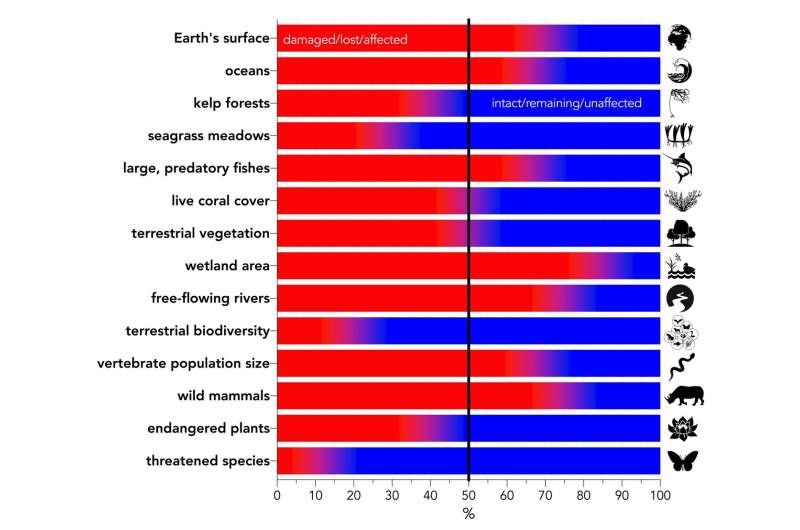
A loss of biodiversity and accelerating climate change in the coming decades coupled with ignorance and inaction is threatening the survival of all species, including our very own, according to the experts from institutions including Stanford University, UCLA, and Flinders University.

The researchers state that world leaders need a 'cold shower' regarding the state of our environment, both to plan and act to avoid a ghastly future.

Lead author Professor Corey Bradshaw of Flinders University in Australia says he and his colleagues have summarised the state of the natural world in stark form to help clarify the gravity of the human predicament.

"Humanity is causing a rapid loss of biodiversity and, with it, Earth's ability to support complex life. But the mainstream is having difficulty grasping the magnitude of this loss, despite the steady erosion of the fabric of human civilization" Professor Bradshaw says.
 
Last edited:

4
•••
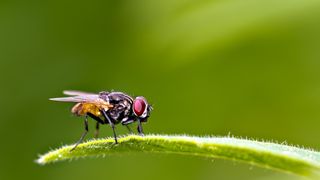
Why are flies so hard to swat?

ekCZeBwh3cUs3Hwuqv3yPm-320-80.jpg


A fly buzzes past your head and lands nearby; you snatch a flyswatter or roll up a magazine and approach cautiously โ€” and you strike!


But no matter how quick you are, the fly is almost always faster, and it usually manages to evade your wallop and escape unharmed. (Is it trying to annoy you?!)

Flies have many adaptations that lend them heightened speed, maneuverability and perception, making them very, very good at detecting and evading even the swiftest swats. And new evidence shows that flies' modified hind wings play an important part in launching them into a speedy takeoff โ€” often just in the nick of time.

Halteres aren't the only secret weapon in a fly's evasive arsenal; once a fly is airborne, it can execute maneuvers that would be the envy of a fighter jet pilot. Fruit flies can change course in under 1/100th of a second โ€” about 50 times faster than an eye can blink, Live Science previously reported. In experiments, perfectly timed wing flaps generated enough force to rapidly propel the flies away from a predator while in mid-air.


2
•••
Dynadot โ€” .com TransferDynadot โ€” .com Transfer
Spaceship
Domain Recover
NameMaxi - Your Domain Has Buyers
  • The sidebar remains visible by scrolling at a speed relative to the pageโ€™s height.
Back