NameSilo

discuss Science & Technology news & discussion

NamecheapNamecheap
Watch

CraigD

Top Member
Impact
11,745
Post and discuss interesting articles & videos about science and technology.

You don't need to be an expert - just interested in the wonders of modern science, technology, and the history of these fields.

Please keep it rational, and post articles from reputable sources.
Try not to editorialise headlines and keep the copy to just a paragraph with a link to the original source. When quoting excerpts from articles, I think the best method is to italicise the copy, and include a link to the source.

Have some fun with your comments and discussions... just keep the sources legitimate.

Other threads:
The Break Room has a number of other popular threads, so there is no need to post material here that is better suited to these other threads:

- Covid19-Coronavirus updates and news
- Conspiracy Thread Free For All
- The *religious* discussion thread


Please enjoy!
 
Last edited:
13
•••
The views expressed on this page by users and staff are their own, not those of NamePros.
AfternicAfternic
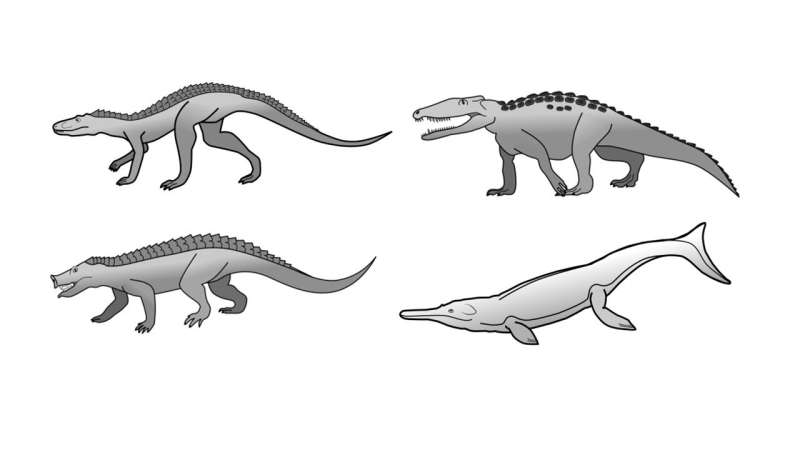
Research explains why crocodiles have changed so little since the age of the dinosaurs

researchexpl.jpg


New research by scientists at the University of Bristol explains how a 'stop-start' pattern of evolution, governed by environmental change, could explain why crocodiles have changed so little since the age of the dinosaurs.

n the new research, published today in the journal Nature Communications Biology, the scientists explain how crocodiles follow a pattern of evolution known as 'punctuated equilibrium'.

The rate of their evolution is generally slow, but occasionally they evolve more quickly because the environment has changed. In particular, this new research suggests that their evolution speeds up when the climate is warmer, and that their body size increases.

The findings show that the limited diversity of crocodiles and their apparent lack of evolution is a result of a slow evolutionary rate. It seems the crocodiles arrived at a body plan that was very efficient and versatile enough that they didn't need to change it in order to survive.

This versatility could be one explanation why crocodiles survived the meteor impact at the end of the Cretaceous period, in which the dinosaurs perished. Crocodiles generally thrive better in warm conditions because they cannot control their body temperature and require warmth from the environment.

 
4
•••
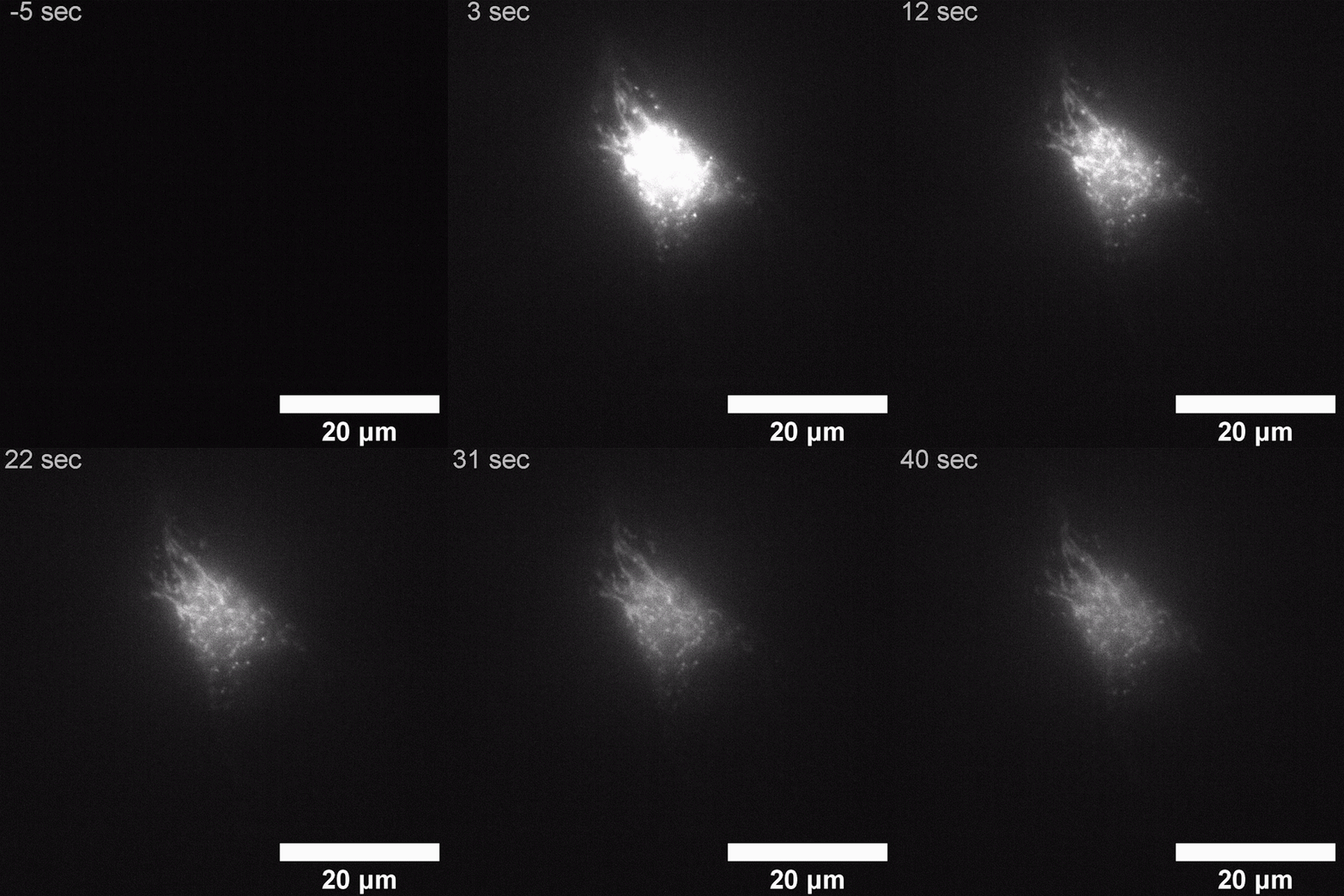
Birds Have a Mysterious 'Quantum Sense'. For The First Time, Scientists Saw It in Action

400152132.gif


Now, for the first time ever, scientists from the University of Tokyo have directly observed a key reaction hypothesised to be behind birds', and many other creatures', talents for sensing the direction of the planet's poles.

Importantly, this is evidence of quantum physics directly affecting a biochemical reaction in a cell - something we've long hypothesised but haven't seen in action before.

Using a tailor-made microscope sensitive to faint flashes of light, the team watched a culture of human cells containing a special light-sensitive material respond dynamically to changes in a magnetic field.

The change the researchers observed in the lab match just what would be expected if a quirky quantum effect was responsible for the illuminating reaction.

"We've not modified or added anything to these cells," says biophysicist Jonathan Woodward.

"We think we have extremely strong evidence that we've observed a purely quantum mechanical process affecting chemical activity at the cellular level."

So how are cells, particularly human cells, capable of responding to magnetic fields?

While there are several hypotheses out there, many researchers think the ability is due to a unique quantum reaction involving photoreceptors called cryptochromes.
 
Last edited:
4
•••
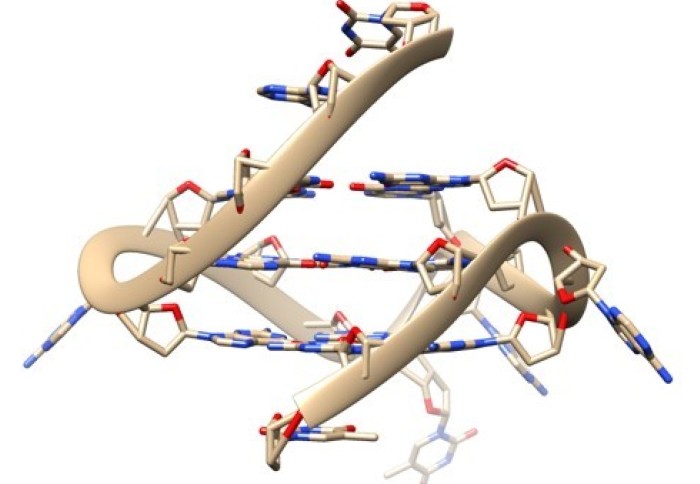
Rare quadruple-helix DNA found in living human cells with glowing probes

DNA usually forms the classic double helix shape of two strands wound around each other. While DNA can form some more exotic shapes in test tubes, few are seen in real living cells.

newseventsimage_1610013798350_mainnews2012_x1.jpg


However, four-stranded DNA, known as G-quadruplex, has recently been seen forming naturally in human cells. Now, in new research published today in Nature Communications, a team led by Imperial College London scientists have created new probes that can see how G-quadruplexes are interacting with other molecules inside living cells.

G-quadruplexes are found in higher concentrations in cancer cells, so are thought to play a role in the disease. The probes reveal how G-quadruplexes are ‘unwound’ by certain proteins, and can also help identify molecules that bind to G-quadruplexes, leading to potential new drug targets that can disrupt their activity.
 
3
•••
The future of quantum biology

Biological systems are dynamical, constantly exchanging energy and matter with the environment in order to maintain the non-equilibrium state synonymous with living. Developments in observational techniques have allowed us to study biological dynamics on increasingly small scales. Such studies have revealed evidence of quantum mechanical effects, which cannot be accounted for by classical physics, in a range of biological processes. Quantum biology is the study of such processes, and here we provide an outline of the current state of the field, as well as insights into future directions.


https://royalsocietypublishing.org/doi/10.1098/rsif.2018.0640
 
Last edited:
3
•••
3
•••
Bacteria can tell the time

Humans have them, so do other animals and plants. Now research reveals that bacteria too have internal clocks that align with the 24-hour cycle of life on Earth.

The research answers a long-standing biological question and could have implications for the timing of drug delivery, biotechnology, and how we develop timely solutions for crop protection.

https://phys.org/news/2021-01-bacteria.html
 
3
•••
Nanosheet-based electronics could be one drop away

Scientists at Japan's Nagoya University and the National Institute for Materials Science have found that a simple one-drop approach is cheaper and faster for tiling functional nanosheets together in a single layer. If the process, described in the journal ACS Nano, can be scaled up, it could advance development of next-generation oxide electronics.

https://phys.org/news/2021-01-nanosheet-based-electronics.html

 
3
•••
Why you’re checking work emails on holidays

Our work is often so closely tied to our sense of who we are, many of us struggle to switch off on holidays. But it’s never too late to hide the laptop, write Associate Professor Dan Caprar and Dr Ben Walker.
Finally, the holidays are here – the break you’ve been waiting for. You want to leave work behind, kick back and enjoy time with family and friends.

But you’re still checking work emails and taking work calls. Even if you are at a remote location that screams holiday, you’re still thinking about work, or even doing work, although you promised yourself this time would be different.

If this sounds familiar, you’re not the only one struggling to switch off on holidays.

One reason is you, like many others, might derive a strong sense of self from your work.

https://www.miragenews.com/why-you-re-checking-work-emails-on-holidays/
 
Last edited:
2
•••
People are cause for one-third of American rivers changing colors since mid-1980s, study claims

A disturbing new study published in Geographical Research Letters reveals that a staggering one-third of the nation’s thousands of river segments are verdant-colored and that humans are responsible for the drastic shift.

The study looked at more than 230,000 NASA satellite images over 35 years, focusing on rivers and reservoirs.

The imagery confirms that the green tributaries — 11,629 miles of them — have changed color in less than four decades, according to the report.

https://www.nydailynews.com/news/na...0210108-duqabttaqzfxnkr55in6oy6zl4-story.html
 
2
•••
NIST publishes a beginner's guide to DNA origami

In a technique known as DNA origami, researchers fold long strands of DNA over and over again to construct a variety of tiny 3D structures, including miniature biosensors and drug-delivery containers. Pioneered at the California Institute of Technology in 2006, DNA origami has attracted hundreds of new researchers over the past decade, eager to build receptacles and sensors that could detect and treat disease in the human body, assess the environmental impact of pollutants, and assist in a host of other biological applications.

...Jacob Majikes and Alex Liddle, researchers at the National Institute of Standards and Technology (NIST) who have studied DNA origami for years, have compiled the first detailed tutorial on the technique. Their comprehensive report provides a step-by-step guide to designing DNA origami nanostructures, using state-of-the-art tools. Majikes and Liddle described their work in the Jan .8 issue of the Journal of Research of the National Institute of Standards and Technology.

https://eurekalert.org/pub_releases/2021-01/nios-npa010821.php
 
3
•••
From squarks to gluinos: It's not looking good for supersymmetry

The future of the theory is in serious doubt.

Supersymmetry is the idea that the fundamental particles of nature are connected through a deep relationship. This theory predicts the existence of brand-new particles in the world's largest collider experiments.

But according to a recent report, there have been no signs of supersymmetry, and the theory is looking a little shaky.

https://www.space.com/no-signs-supersymmetry-large-hadron-collider
 
3
•••
3
•••
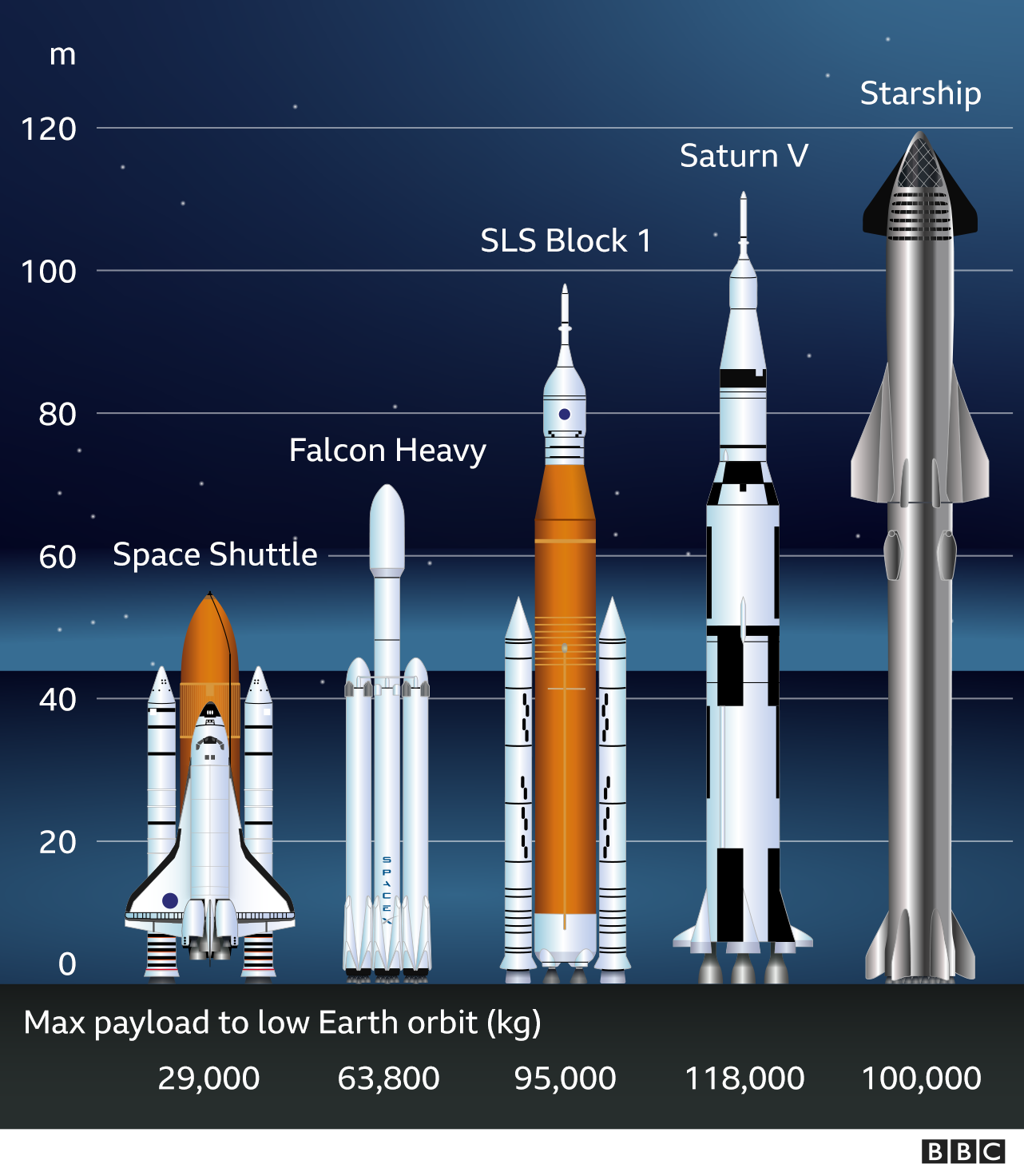
What is Elon Musk's Starship?

Elon Musk is planning to soon launch the prototype of a vehicle that could be a game-changer for space travel. Starship, as it's known, will be a fully reusable transport system capable of carrying up to 100 people to the Red Planet.

_116370061_comparison_of_rockets_-2x_640-nc.png

 
3
•••
SpaceX Dragon Capsule to Make First of Its Kind Science Splashdown


On Jan. 11, the SpaceX cargo Dragon spacecraft carrying out the company’s 21st commercial resupply services (CRS-21) mission for NASA undocks from the International Space Station, heading for splashdown off the coast of Florida about 12 hours later. This upgraded Dragon transports significantly more science back to Earth than possible in previous Dragon capsules and is the first space station cargo capsule to splash down off the coast of Florida.

In addition, science returns from the space station through NASA’s Kennedy Space Center in Florida for the first time since the retirement of the space shuttle.

alt1_50692226687_35f16e392c_o.png


Space station experiments coming back include:


    • Cardinal Heart, which studies how changes in gravity affect cardiovascular cells at the cellular and tissue level using 3D engineered heart tissues, a type of tissue chip. Results could provide new understanding of heart problems on Earth, help identify new treatments, and support development of screening measures to predict cardiovascular risk prior to spaceflight.
    • A Japan Aerospace Exploration Agency study, Space Organogenesis, which demonstrates the growth of 3D organ buds from human stem cells in order to analyze changes in gene expression. Results from this investigation could show advantages of using microgravity for cutting-edge developments in regenerative medicine and may contribute to the establishment of technologies needed to create artificial organs.
    • The Bacterial Adhesion and Corrosion experiment, which identifies the bacterial genes used during biofilm growth, examines whether these biofilms can corrode stainless steel, and evaluates the effectiveness of a silver-based disinfectant. This investigation could provide insight into better ways to control and remove resistant biofilms, contributing to the success of future long-duration spaceflights.
    • Fiber Optic Production, which includes the return of experimental optical fibers created in microgravity using a blend of zirconium, barium, lanthanum, sodium, and aluminum. The return of the fibers, called ZBLAN in reference to the chemical formula, will help verify experimental studies that suggest fibers created in space should exhibit far superior qualities to those produced on Earth.
    • Rodent Research-23, which involves the return of live mice. This experiment studies the function of arteries, veins, and lymphatic structures in the eye and changes in the retina before and after spaceflight. The aim is to clarify whether these changes impair visual function. At least 40 percent of astronauts experience vision impairment known as Spaceflight-Associated Neuro-ocular Syndrome (SANS) on long-duration spaceflights, which could adversely affect mission success.
 
3
•••
Two Failed Stars in Our Cosmic Neighborhood Seem to Have... Stripes?
Never appreciated for what they are, brown dwarfs are often compared to what they are not. Indeed, they’re stuck in a celestial no man’s land, classified neither as stars nor gas giant planets. As new research shows, however, comparing brown dwarfs to gas giants like Jupiter is more appropriate than we realized.


A new paper in The Astrophysical Journal provides evidence of stripes and polar storms on brown dwarfs, similar to the ones seen on Jupiter. Using a space-based satellite, a research team led by planetary scientist Dániel Apai from the University of Arizona was able to construct basic maps showing the upper atmospheric layers of two nearby brown dwarfs. The paper is shedding new light on these enigmatic objects, while paving the way for future research.
 
Last edited:
3
•••
3
•••
Wrinkly 'super peas' could reduce diabetes risk since they contain higher amounts of resistant starch than smooth peas

5f9708f4f21803001222bfb7


There's a new superfood on scientists' minds, and they make wrinkles look good.

Research ... in the journal Nature Food has found a natural mutation to green peas that makes them more shriveled than standard smooth ones also makes them healthier, especially if your aim is staving off diabetes risk.

https://www.insider.com/wrinkly-super-peas-may-cut-type-2-diabetes-risk-study-2020-10

See also:
https://doi.org/10.1038/s43016-020-00159-8
 
3
•••
Indonesian Sriwijaya Air 737-500 goes missing after taking off from Jakarta

Key points:
  • Indonesia's Ministry of Communications confirmed to local media that the flight "lost contact"
  • The aircraft was a 27-year-old Boeing 737-500
  • Several locals claim to have found what appeared to be wreckage of an aircraft
A search is underway after suspected debris from an Indonesian Sriwijaya Air flight SJ182 was found hours after the plane went missing.The plane lost contact after taking off from Indonesian capital Jakarta on Saturday en route to the city of Pontianak in West Kalimantan province.

The Boeing 737-500 flight was carrying 62 people on board.

The 50 passengers included seven children and three babies.

There were also 12 crew members, Indonesian Communications Minister Budi Karya said.

https://www.abc.net.au/news/2021-01...t-sriwijaya-air-flight-sj182-jakarta/13045220
 
0
•••
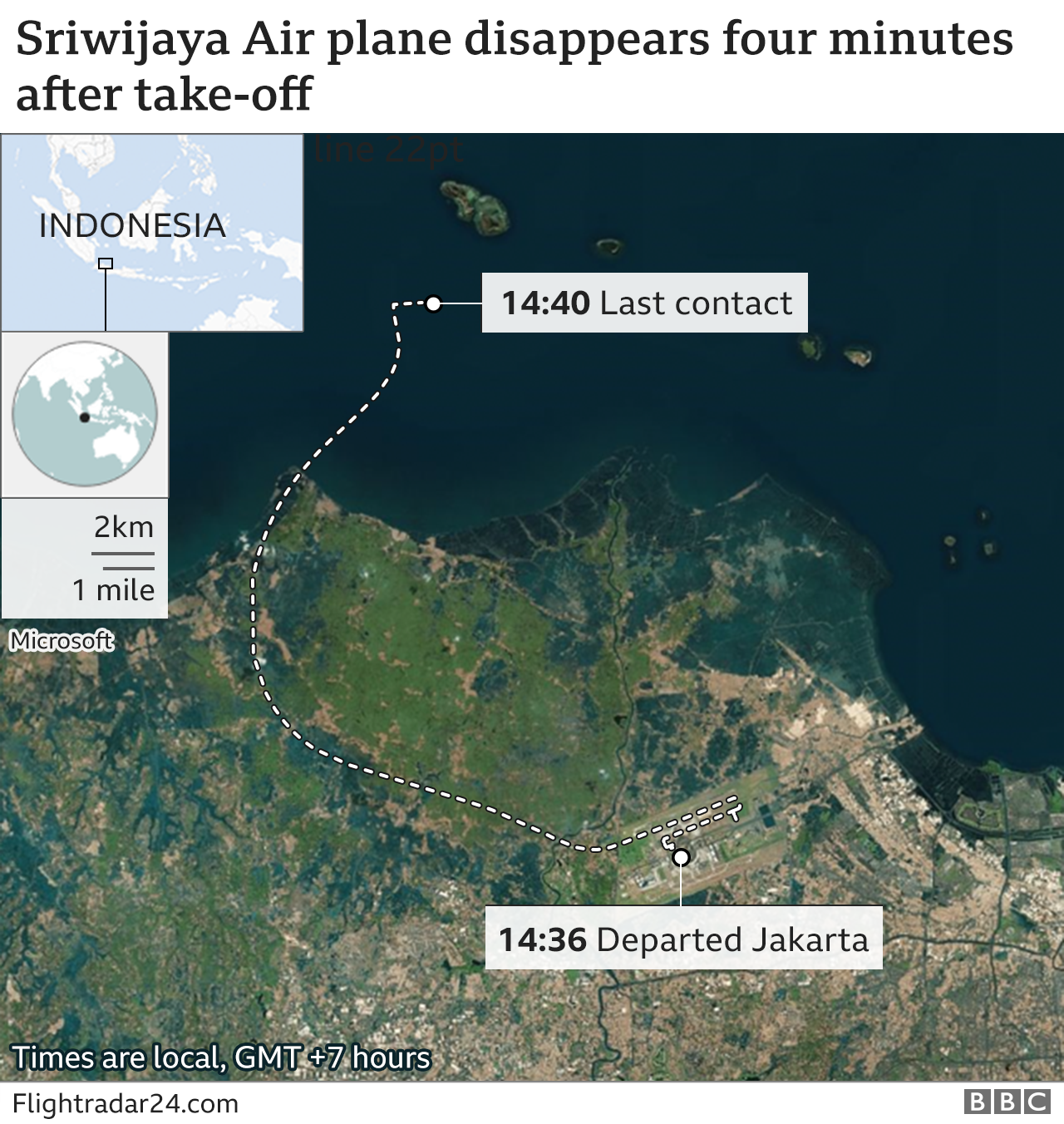
Indonesia Boeing 737 passenger plane crash site found, Navy says

Indonesian authorities say they have found the location where they believe a Boeing 737 passenger plane crashed into the sea shortly after take-off from the country's capital Jakarta on Saturday.

_116407272_sriwijaya_9janmap640-2x-nc.png


The Sriwijaya Air jet was carrying 62 people when it disappeared from radars four minutes into its journey to Pontianak in West Kalimantan province.

More than 10 ships have now been deployed to the site with navy divers.

https://www.bbc.com/news/world-asia-55606599

 
Last edited:

1
•••
Coronavirus: Virus provides leaps in scientific understanding

In January 2020, two scientists published the entire genetic code of a coronavirus that was soon to wreak havoc around the world. It marked the start of a year of intense and rapid scientific endeavour, to work out how we might fight the virus.

To have a better chance of preventing the next pandemic, channels of communication between scientists in every country must remain open.

"Politics can't come into it... otherwise the world will be a far less safe place. I think preventing the next pandemic will be partly about fantastic, whizz-bang technology like genome sequencing and mRNA.

"But it's more importantly about people, scientists, talking to each other freely and openly."


https://www.bbc.com/news/science-environment-55565284
 
2
•••

We're social

Spaceship
Domain Recover
DomainEasy — Payment Flexibility
  • The sidebar remains visible by scrolling at a speed relative to the page’s height.
Back