Dynadot โ€” .com Transfer

discuss Science & Technology news & discussion

SpaceshipSpaceship
Watch

CraigD

Top Member
Impact
11,745
Post and discuss interesting articles & videos about science and technology.

You don't need to be an expert - just interested in the wonders of modern science, technology, and the history of these fields.

Please keep it rational, and post articles from reputable sources.
Try not to editorialise headlines and keep the copy to just a paragraph with a link to the original source. When quoting excerpts from articles, I think the best method is to italicise the copy, and include a link to the source.

Have some fun with your comments and discussions... just keep the sources legitimate.

Other threads:
The Break Room has a number of other popular threads, so there is no need to post material here that is better suited to these other threads:

- Covid19-Coronavirus updates and news
- Conspiracy Thread Free For All
- The *religious* discussion thread


Please enjoy!
 
Last edited:
13
•••
The views expressed on this page by users and staff are their own, not those of NamePros.
GoDaddyGoDaddy
So whatever happened to plasma being the fourth state of matter?
I thought that plasma is liquid crystal.

What is Plasma?

https://www.psfc.mit.edu/vision/what_is_plasma

"Plasma is often called โ€œthe fourth state of matter,โ€ along with solid, liquid and gas. Just as a liquid will boil, changing into a gas when energy is added, heating a gas will form a plasma โ€“ a soup of positively charged particles (ions) and negatively charged particles (electrons)."
 
Last edited:
4
•••
Orange is the new 'block': Structure reveals key features that help block excess light absorption during photosynthesis

Photosynthetic organisms tap light for fuel, but sometimes there's too much of a good thing.
New research from Washington University in St. Louis reveals the core structure of the light-harvesting antenna of cyanobacteria or blue-green algaeโ€”including key features that both collect energy and block excess light absorption. The study, published Jan. 6 in Science Advances, yields insights relevant to future energy applications.

https://phys.org/news/2021-01-orange-block-reveals-key-features.html
 
3
•••
Last year reusable rockets entered the mainstream, and thereโ€™s no going back

The notion of reusing rockets finally went mainstream in 2020. As the year progressed, it became clear that SpaceX launch customers have gotten a lot more comfortable with flying on used, or "flight-proven," first stages of the Falcon 9 rocket. One commercial customer, Sirius, launched its XM-7 satellite on the seventh flight of a Falcon 9 booster in December. Also, the first national security payload flew on a reused booster last month when the US National Reconnaissance Office launched its NROL-108 mission on the fifth flight of a Falcon 9 first stage.

https://arstechnica.com/science/202...ered-the-mainstream-and-theres-no-going-back/
 
3
•••
The Riemann Hypothesis, Explained


The Riemann hypothesis is the most notorious unsolved problem in all of mathematics. Ever since it was first proposed by Bernhard Riemann in 1859, the conjecture has maintained the status of the "Holy Grail" of mathematics. In fact, the person who solves it will win a $1 million prize from the Clay Institute of Mathematics.

So, what is the Riemann hypothesis? Why is it so important? What can it tell us about the chaotic universe of prime numbers? And why is its proof so elusive? Alex Kontorovich, professor of mathematics at Rutgers University, breaks it all down in this comprehensive explainer.
 
Last edited:
3
•••
Voyager 1 And 2 Probes Amaze Us Again With Another Discovery
 
3
•••
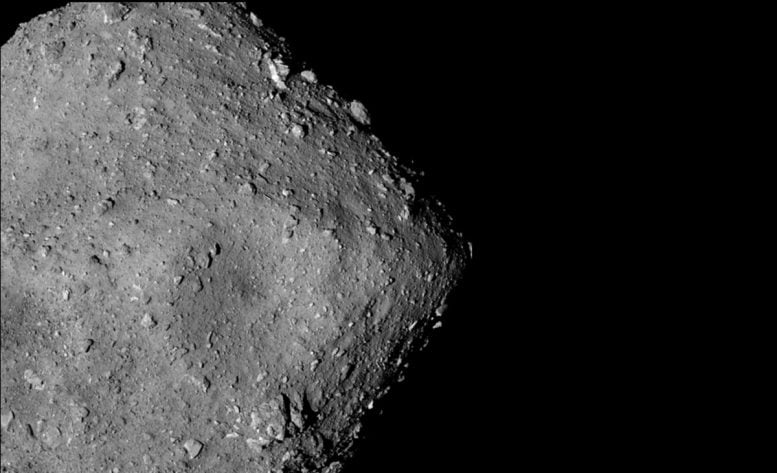
How Did Asteroid Ryugu Lose Its Water? Remote Sensing Data Provides an Explanation

Last month, Japanโ€™s Hayabusa2 mission brought home a cache of rocks collected from a near-Earth asteroid called Ryugu. While analysis of those returned samples is just getting underway, researchers are using data from the spacecraftโ€™s other instruments to reveal new details about the asteroidโ€™s past.

Asteroid-Ryugu-Hayabusa2-Spacecraft-777x473.jpg


In a study published in Nature Astronomy, researchers offer an explanation for why Ryugu isnโ€™t quite as rich in water-bearing minerals as some other asteroids. The study suggests that the ancient parent body from which Ryugu was formed had likely dried out in some kind of heating event before Ryugu came into being, which left Ryugu itself drier than expected.

https://www.nature.com/articles/s41550-020-01271-2

 
2
•••
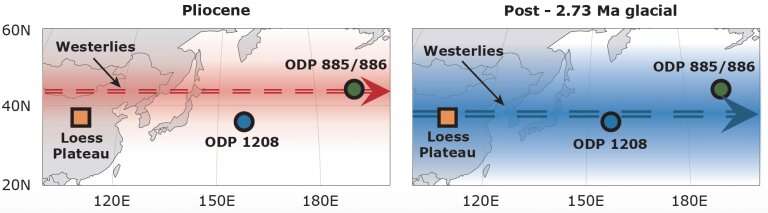
Will global warming bring a change in the winds? Dust from the deep sea provides a clue

Typically, the westerlies blow from west to east across the planet's middle latitudes. But scientists have noticed that over the last several decades, these winds are changing, migrating poleward. Research suggests this is because of climate change. But, scientists have been debating whether the poleward movement of the westerlies will continue as temperatures and atmospheric carbon dioxide (CO2) increase further under future warming scenarios. It's been difficult to resolve this scientific question because our knowledge of the westerlies in past warm climates has until now been limited.

In a paper published January 6 in Nature, climate researchers from Columbia University's Lamont-Doherty Earth Observatory describe a new method of tracking the ancient history of the westerly windsโ€”a proxy for what we may experience in a future warming world. The lead author, Lamont graduate student Jordan Abell and his advisor, Gisela Winckler, developed a way to apply paleoclimatologyโ€”the study of past climateโ€”to the question of the behavior of the westerly winds, and found evidence suggesting that atmospheric circulation patterns will change with climate warming.

2-willglobalwa.jpg


By using dust in ancient, deep sea sediments as an indirect tracer of wind, the researchers were able to reconstruct wind patterns that occurred three to five million years ago. Knowing that windsโ€”in this case the westerliesโ€”transport dust from desert regions to faraway locations, the authors examined cores from the North Pacific Ocean. This area is downwind from Eastern Asia, one of the largest dust sources today and a known dust-generating region for the past several million years. By measuring the dust in cores from two different sites thousands of kilometers apart, the researchers were able to map changes in dust, and in turn the westerly winds.
 
Last edited:
3
•••
In Many Parts of the World, the Ground Is Literally Sinking

Extracting underground natural resources is causing land to sink in on itself, which will put 635 million people at risk by 2040

A team of researchers used spatial and statistical analyses to forecast how subsidenceโ€”the gradual sinking or caving in of the groundโ€”will affect land in the future. Their findings were published in the journal Science.

The model incorporated climate, geologic, flood and drought data to predict the places that will be most affected by subsidence, Bob Yirka reports for Phys.org. According to the study, up to 22 percent of the world's major cities will be affected by subsidence, and 635 million people will be at risk, reports AJ Dellinger for Mic.

382761698_f5b21dac58_c.jpg


When the ground sinks, it becomes more vulnerable to flooding, especially in areas where sea levels are also rising. Additionally, movement underground causes everything sitting atop the landโ€”like buildings, houses and roadsโ€”to also shift, which can cause serious damage, reports Gizmodo.

 
2
•••
Who Invented the Alphabet?

New scholarship points to a paradox of historic scope: Our writing system was devised by people who couldnโ€™t read

untitled-1.jpg


Centuries before Moses wandered in the โ€œgreat and terrible wildernessโ€ of the Sinai Peninsula, this triangle of desert wedged between Africa and Asia attracted speculators, drawn by rich mineral deposits hidden in the rocks. And it was on one of these expeditions, around 4,000 years ago, that some mysterious person or group took a bold step that, in retrospect, was truly revolutionary. Scratched on the wall of a mine is the very first attempt at something we use every day: the alphabet.

In the century since the discovery of those first scratched letters in the Sinai mines, the reigning academic consensus has been that highly educated people must have created the alphabet. But Goldwasserโ€™s research is upending that notion. She suggests that it was actually a group of illiterate Canaanite miners who made the breakthrough, unversed in hieroglyphs and unable to speak Egyptian but inspired by the pictorial writing they saw around them. In this view, one of civilizationโ€™s most profound and most revolutionary intellectual creations came not from an educated elite but from illiterate laborers, who usually get written out of history.

Pierre Tallet, former president of the French Society of Egyptology, supports Goldwasserโ€™s theory: โ€œOf course [the theory] makes sense, as it is clear that whoever wrote these inscriptions in the Sinai did not know hieroglyphs,โ€ he told me. โ€œAnd the words they are writing are in a Semitic language, so they must have been Canaanites, who we know were there from the Egyptiansโ€™ own written record here in the temple.โ€

There are doubters, though. Christopher Rollston, a Hebrew scholar at George Washington University, argues that the mysterious writers likely knew hieroglyphs. โ€œIt would be improbable that illiterate miners were capable of, or responsible for, the invention of the alphabet,โ€ he says. But this objection seems less persuasive than Goldwasserโ€™s accountโ€”if Egyptian scribes invented the alphabet, why did it promptly disappear from their literature for roughly 600 years?
 
3
•••
1
•••
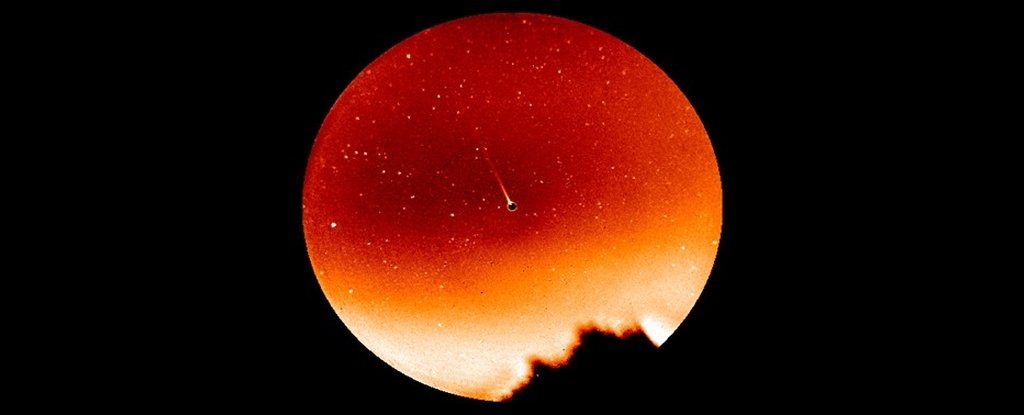
Mercury Is a Planet With a Tail. Here's How That's Possible

The planets of the Solar System look a lot like a family. Jupiter's the bossy dad, keeping everyone in line. Uranus and Neptune are the cool twins who only hang out with each other. Earth is the super-nerd try-hard. Pluto is the black sheep. And Mercury has a tail.

Yep. Almost like a big ol' comet, tail streaming millions of kilometres away from the planet, glowing with faint orange-yellow light.

mercury-tail_1024.jpg


It's all thanks to the planet's position: Mercury is the innermost planet in our Solar System. It's less than half the distance from our star than Earth, an average distance of 58 million kilometres (36 million miles).


Mercury does have ice, but that's not what its tail is made of. The primary ingredient is sodium atoms; these glow when ionised by the Sun's ultraviolet radiation, in a process similar to what drives Earth's auroras.

As a result, the planet has the appearance of a comet, with a tail that's been observed streaming nearly 3.5 million kilometres away from the planet.
 
Last edited:
2
•••
STAY FROSTY! SCIENTISTS HOPE TO SEND COOL ICE ROBOTS TO FROZEN EXOPLANETS

In a new study delivered to the IEEE/RSJ International Conference on Intelligent Robots and Systems (IROS), scientists Devin Carroll and Mark Yim from the University of Pennsylvania's GRASP Lab have put forth a proposal to send robots partially made of frozen H2O to icy exoplanets, where they can make use of local resources to self-fix in the event of a breakdown.


Their intriguing paper examines various methods of manufacturing robotic structural components from ice by employing additive and subtractive manufacturing processes, with the endgame of developing a proof-of-concept for robots that can display โ€œself-reconfiguration, self-replication, and self-repair.โ€
 
3
•••
2
•••
How Much Do Rockets Pollute? Are They Bad For Our Air?


TIMESTAMPS!
00:00 - Intro
06:00 - WHAT ACTUALLY COMES OUT THE FLAMEY END OF A ROCKET?
16:15 - WHAT DO DIFFERENT ROCKETS EMIT?
29:10 - WHY ROCKET EMISSIONS ARE UNIQUE
31:50 - ROCKET VS AIRLINERS
41:50 - ROCKET LAUNCHES VS AIRLINER FLIGHTS TOTALS
45:10 - ROCKETS VS EVERYTHING
48:20 - HOW CAN ROCKETS BE IMPROVED?
51:35 - SUMMARY
 
1
•••
Identical twins don't share 100% of their DNA

Identical twins form from the same egg and get the same genetic material from their parents โ€” but that doesn't mean they're genetically identical by the time they're born.

That's because so-called identical twins pick up genetic mutations in the womb, as their cells weave new strands of DNA and then split into more and more cells. On average, pairs of twins have genomes that differ by an average of 5.2 mutations that occur early in development, according to a new study.

https://www.livescience.com/identical-twins-dont-share-all-dna.html
 
3
•••
Boeing ordered to pay US$2.5 billion in compensation, penalties two years after deadly crashes

The world's largest aerospace company Boeing has been fined US$2.5 billion over two plane crashes that killed 346 people, but will not be forced to plead guilty to criminal charges, the US Justice Department says.

The department said the settlement included a criminal monetary penalty of US$243.6 million, compensation payments to Boeing's 737 MAX airline customers of US$1.8 billion, and the establishment of a US$500 million crash-victim beneficiaries fund to compensate the heirs, relatives, and legal beneficiaries of the passengers.

The 737 Max crashes in Indonesia in 2018 and Ethiopia in 2019 killed all passengers and crew on board, triggered a slew of investigations and cost Boeing about US$20 billion.

Key points:
  • US aviation authorities charged Boeing with conspiracy and ordered it to ground its 737 Max planes for almost two years
  • Two crashes killed 346 people, slashed Boeing's profit and led to lawsuits and investigations
  • US Federal Aviation Administration chief Steve Dickson said last year he was "100 per cent confident" in the plane's safety
https://www.abc.net.au/news/2021-01...ce-department-747-max-deadly-crashes/13041586
 
Last edited:
3
•••
Scientists aim to understand bone-conducted speech transmission process

The perception of our own voice depends on sound transmission through air (air-conducted) as well as through the skull bone (bone-conducted or BC). The transmission properties of BC speech are, however, not well understood.

Now, scientists from Japan Advanced Institute of Science and Technology report their latest findings on BC transmission under the influence of oral cavity sound pressure, which can boost BC-based technology and basic research on hearing loss and speech impairment.

https://www.news-medical.net/news/2...ne-conducted-speech-transmission-process.aspx
 
5
•••
How Did Asteroid Ryugu Lose Its Water? Remote Sensing Data Provides an Explanation

Last month, Japanโ€™s Hayabusa2 mission brought home a cache of rocks collected from a near-Earth asteroid called Ryugu. While analysis of those returned samples is just getting underway, researchers are using data from the spacecraftโ€™s other instruments to reveal new details about the asteroidโ€™s past.

Asteroid-Ryugu-Hayabusa2-Spacecraft-777x473.jpg


In a study published in Nature Astronomy, researchers offer an explanation for why Ryugu isnโ€™t quite as rich in water-bearing minerals as some other asteroids. The study suggests that the ancient parent body from which Ryugu was formed had likely dried out in some kind of heating event before Ryugu came into being, which left Ryugu itself drier than expected.

https://www.nature.com/articles/s41550-020-01271-2
The article abstract states:
The strength and shape of the OH feature suggests that the subsurface material experienced heating above 300 ยฐC, similar to the surface. In contrast, thermophysical modelling indicates that radiative heating cannot increase the temperature above 200โ€‰ยฐC at the estimated excavation depth of 1โ€‰m, even at the smallest heliocentric distance possible for Ryugu. This supports the hypothesis that primary thermal alteration occurred on Ryuguโ€™s parent body.

I would expect that a big hit from an impactor - that likely split apart the parent body - would create at least that much kinetic heat.
 
3
•••
SpaceX Falcon 9 launch set for Thursday night

SpaceX+T%C3%BCrksat+5A+Infographic

SpaceX Falcon 9 Tรผrksat 5A Infographic with rocket render by Stanley Creative


Turksat 5A is the first of two next-generation broadcasting birds that SpaceX will boost to orbit from Cape Canaveral Space Force Station in Florida as soon as Thursday night.

https://www.cnet.com/news/first-spacex-falcon-9-launch-of-2021-set-for-thursday-night/

SpaceX has launched its 50th previously flown rocket.

This launch continues the trend of SpaceX using increasingly experienced first stages.

SpaceX's Falcon 9 rocket successfully launched on Thursday evening from Florida, sending a communications satellite - Turksat 5A - toward geostationary transfer orbit. The rocket's first stage then returned to Earth and made a safe landing on the Just Read the Instructions droneship.

Notably, this was the 50th launch of previously flown Falcon 9 first stage. It has only been five years and a few days since they landed their first one, and less than four years since the company re-flew one. The company's next Falcon 9 launch attempt may come as soon as January 14, with the Transporter-1 smallsat rideshare mission.

https://arstechnica.com/science/2021/01/spacex-to-begin-its-2021-launch-campaign-thursday-evening/
 
3
•••
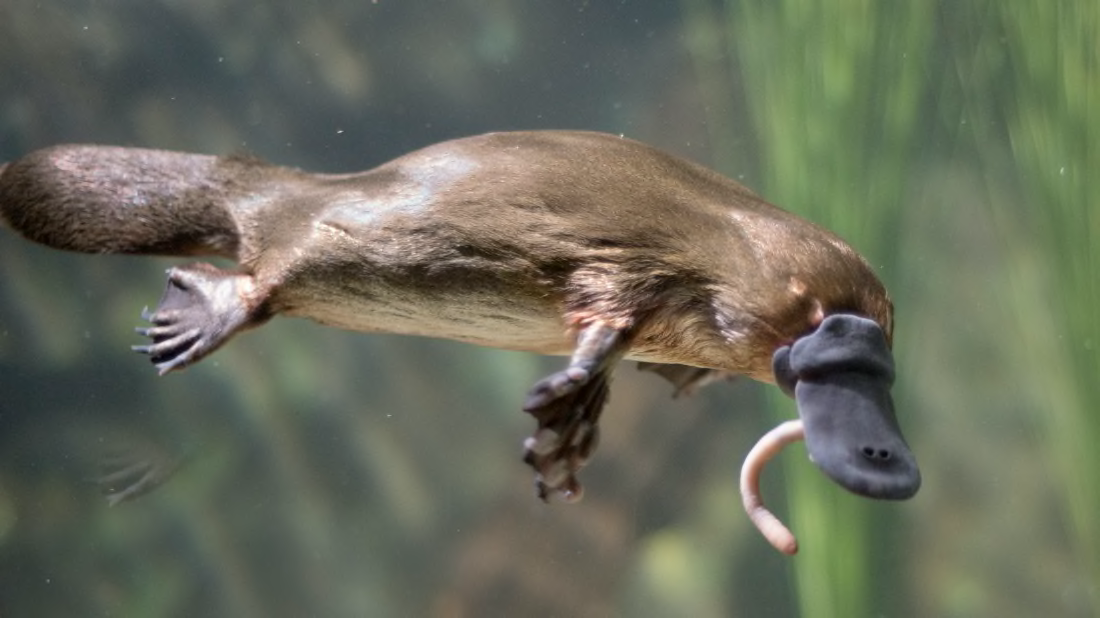
Researchers Sequence Platypus and Echidna Genomes

63062-istock-658344164.jpg


Monotremes (egg-laying mammals) are the only extant mammalian outgroup to therians (marsupial and eutherian animals) and provide key insights into mammalian evolution. An international team of scientists has sequenced and analyzed the genomes of the platypus (Ornithorhynchus anatinus) and the short-beaked echidna (Tachyglossus aculeatus), the two extant monotreme lineages, and compared them to those of chickens, humans, rats, Tasmanian devils, and lizards. Their results appear in the journal Nature.


http://www.sci-news.com/genetics/platypus-echidna-genomes-09227.html


-----
Nature:
Platypus and echidna genomes reveal mammalian biology and evolution
https://www.nature.com/articles/s41586-020-03039-0

-----

Wikipedia:

The platypus (Ornithorhynchus anatinus), sometimes referred to as the duck-billed platypus, is a semiaquatic, egg-laying mammal endemic to eastern Australia, including Tasmania. The platypus is the sole living representative of its family (Ornithorhynchidae) and genus (Ornithorhynchus), though a number of related species appear in the fossil record.

Together with the four species of echidna, it is one of the five extant species of monotremes, the only mammals that lay eggs instead of giving birth to live young. Like other monotremes, it senses prey through electrolocation. It is one of the few species of venomous mammals, as the male platypus has a spur on the hind foot that delivers a venom, capable of causing severe pain to humans. The unusual appearance of this egg-laying, duck-billed, beaver-tailed, otter-footed mammal baffled European naturalists when they first encountered it, and the first scientists to examine a preserved platypus body (in 1799) judged it a fake, made of several animals sewn together.

Source: https://en.wikipedia.org/wiki/Platypus
 
Last edited:
5
•••
Spaceship
Domain Recover
DomainEasy โ€” Payment Flexibility
  • The sidebar remains visible by scrolling at a speed relative to the pageโ€™s height.
Back