Unstoppable Domains โ€” AI Assistant

discuss Science & Technology news & discussion

Spacemail by SpaceshipSpacemail by Spaceship
Watch

CraigD

Top Member
Impact
11,745
Post and discuss interesting articles & videos about science and technology.

You don't need to be an expert - just interested in the wonders of modern science, technology, and the history of these fields.

Please keep it rational, and post articles from reputable sources.
Try not to editorialise headlines and keep the copy to just a paragraph with a link to the original source. When quoting excerpts from articles, I think the best method is to italicise the copy, and include a link to the source.

Have some fun with your comments and discussions... just keep the sources legitimate.

Other threads:
The Break Room has a number of other popular threads, so there is no need to post material here that is better suited to these other threads:

- Covid19-Coronavirus updates and news
- Conspiracy Thread Free For All
- The *religious* discussion thread


Please enjoy!
 
Last edited:
13
•••
The views expressed on this page by users and staff are their own, not those of NamePros.
.US domains.US domains
Neutron stars scanned for signals of dark matter turning into light

Dark matter is thought to outnumber the regular stuff by a ratio of five to one, yet it remains frustratingly elusive. But there might be ways to potentially spot it, if you know where to look, and now astronomers have scanned neutron stars for telltale signals of a proposed dark matter particle called an axion.

Experiments have been run in the past to try to detect axions as they produce electric or magnetic fields in certain conditions, or by affecting the spin of electrified neutrons. But for the new study, the researchers turned their gaze away from the lab and up to the stars.

Another predicted property of axions is that when they encounter a strong electromagnetic field, they should sometimes spontaneously convert into photons โ€“ particles of light that are easily detectable.

Neutron stars have some of the strongest magnetic fields in the universe, and their huge masses should attract large numbers of axions. So the researchers reasoned that these objects would be the perfect places to scan for axions converting into photons.


Phys. Rev. Lett. 125, 171301 (2020) - Green Bank and Effelsberg Radio Telescope Searches for Axion Dark Matter Conversion in Neutron Star Magnetospheres (aps.org)

Thanks, very interesting!

I first had to get my head around the hypothetical axion.

Photons are massless, so I assume that if they spontaneously convert into photons, other particles with mass are also produced, or perhaps some form of energy is given off to balance the math?

Highschool background in physics here ;)
 
3
•••
Could Carbon Dioxide Be Turned Into Jet Fuel?

A team at Oxford University has reverse engineered fuel from the greenhouse gasโ€”but so far just in the lab.

Now a team at Oxford University in the United Kingdom has come up with an experimental process that might be able to turn carbon dioxideโ€”a greenhouse gas emitted by all gas-burning enginesโ€”into jet fuel. If successful, the process, which uses an iron-based chemical reaction, could result in โ€œnet zeroโ€ emissions from airplanes.

The experiment, reported today in the journal Nature Communications, was conducted in a laboratory and still needs to be replicated at a larger scale. But the chemical engineers who designed and performed the process are hopeful that it could be a climate game-changer.


www.nature.com/articles/s41467-020-20214-z
 
2
•••
Neutron stars scanned for signals of dark matter turning into light

Dark matter is thought to outnumber the regular stuff by a ratio of five to one, yet it remains frustratingly elusive. But there might be ways to potentially spot it, if you know where to look, and now astronomers have scanned neutron stars for telltale signals of a proposed dark matter particle called an axion.

Experiments have been run in the past to try to detect axions as they produce electric or magnetic fields in certain conditions, or by affecting the spin of electrified neutrons. But for the new study, the researchers turned their gaze away from the lab and up to the stars.

Another predicted property of axions is that when they encounter a strong electromagnetic field, they should sometimes spontaneously convert into photons โ€“ particles of light that are easily detectable.

Neutron stars have some of the strongest magnetic fields in the universe, and their huge masses should attract large numbers of axions. So the researchers reasoned that these objects would be the perfect places to scan for axions converting into photons.


Phys. Rev. Lett. 125, 171301 (2020) - Green Bank and Effelsberg Radio Telescope Searches for Axion Dark Matter Conversion in Neutron Star Magnetospheres (aps.org)
Thanks very interesting to read. First time I read about "axions".
Although they haven't found those axions on their research, as they say: "With more and more experiments of different types hunting for candidates with different masses and properties, each one potentially brings us closer to an answer".

"That conversion would be expected to produce an ultra-narrow peak of radio waves at a particular frequency, depending on the axionโ€™s mass. The team analyzed data from two radio telescopes โ€“ the Robert C. Byrd Green Bank Telescope in the US and the Effelsberg 100-m Telescope in Germany โ€“ as they observed two nearby neutron stars, as well as a wider scan of the Milky Way center, where there should be an estimated 500 million others.

The researchers sampled radio frequencies of around 1 GHz at these locations, which is the range expected to be produced by axions of masses between 5 and 11 micro electron-volts. And they detected no such signals.

A null result isnโ€™t a washout though โ€“ it allows the researchers to rule out axions existing in that mass range. With more and more experiments of different types hunting for candidates with different masses and properties, each one potentially brings us closer to an answer."
 
3
•••
Nuclear-Powered Rockets Get a Second Look for Travel to Mars


MzczOTY0MA.jpeg


For all the controversy they stir up on Earth, nuclear reactors can produce the energy and propulsion needed to rapidly take large spacecraft to Mars and, if desired, beyond. The idea of nuclear rocket engines dates back to the 1940s. This time around, though, plans for interplanetary missions propelled by nuclear fission and fusion are being backed by new designs that have a much better chance of getting off the ground.

Crucially, the nuclear engines are meant for interplanetary travel only, not for use in the Earthโ€™s atmosphere. Chemical rockets launch the craft out beyond low Earth orbit. Only then does the nuclear propulsion system kick in.

The challenge has been making these nuclear engines safe and lightweight. New fuels and reactor designs appear up to the task, as NASA is now working with industry partners for possible future nuclear-fueled crewed space missions. โ€œNuclear propulsion would be advantageous if you want to go to Mars and back in under two years,โ€ says Jeff Sheehy, chief engineer in NASAโ€™s Space Technology Mission Directorate. To enable that mission capability, he says, โ€œa key technology that needs to be advanced is the fuel.โ€
 
2
•••
CERN: discovery sheds light on the great mystery of why the universe has less โ€˜antimatterโ€™ than matter

If antimatter and matter are truly identical but mirrored copies of each other, they should have been produced in equal amounts in the Big Bang. The problem is that would have made it all annihilate. But today, thereโ€™s nearly no antimatter left in the universe โ€“ it appears only in some radioactive decays and in a small fraction of cosmic rays. So what happened to it? Using the LHCb experiment at CERN to study the difference between matter and antimatter, we have discovered a new way that this difference can appear.

By
Lars Eklund, Professor of Particle Physics, University of Glasgow

https://theconversation.com/cern-di...iverse-has-less-antimatter-than-matter-147226
 
Last edited:
2
•••
3
•••

Thanks @Cal2

I remember the original competition (1996?) but didn't realise that the Xprize Foundation were still holding competitions!

----

The XPRIZE mission is to bring about "radical breakthroughs for the benefit of humanity" through incentivized competition. It fosters high-profile competitions to motivate individuals, companies and organizations across all disciplines to develop innovative ideas and technologies that help solve the world's grand challenges.

- https://en.wikipedia.org/wiki/X_Prize_Foundation

-----

A nonprofit 501(c)(3) since 1994, the XPRIZE Foundation has designed and operated seventeen competitions in the domain areas of Space, Oceans, Learning, Health, Energy, Environment, Transportation, Safety and Robotics.

... Each of these prizes has created an industry-changing technology that brings us closer to a better, safer, more sustainable world.


- https://www.xprize.org/about/mission
 
Last edited:
4
•••
I posted a video a while back concerning the planck length and the scale of the universe (orders of magnitude). Curious Droid has just released an interesting new video concerning this:

The Scale of Everything - The Big, the Small and the Planck


Living on our little planet and looking up at the night sky it's easy to forget just how big the scale of the universe really is not only on the grand scale but also on the microscopic one too, so for this video we look at the scale of everything from the size of the universe to the smallest distance we can conceive that doesn't collapse our mathematical models put in place by Einstein and Planck. This is Scale of Everything - The Big, the Small and the Planck.
 
3
•••
 
1
•••
I posted a video a while back concerning the planck length and the scale of the universe (orders of magnitude). Curious Droid has just released an interesting new video concerning this:

The Scale of Everything - The Big, the Small and the Planck


Living on our little planet and looking up at the night sky it's easy to forget just how big the scale of the universe really is not only on the grand scale but also on the microscopic one too, so for this video we look at the scale of everything from the size of the universe to the smallest distance we can conceive that doesn't collapse our mathematical models put in place by Einstein and Planck. This is Scale of Everything - The Big, the Small and the Planck.
This reminds me of the famous "Powers of Ten" (1977) - film:

 
Last edited:
2
•••
4 Ways Quacks Manipulate Their Audiences

 
2
•••
This reminds me of the famous "Powers of Ten" (1977) - film:


Thanks, have not seen that before!

It would have been quite amazing at the time, especially the Earth zoom predating Google Maps by decades.
 
Last edited:
2
•••
The ashes of James Doohanโ€” Scotty from Star Trekโ€” are aboard the International Space Station

The ashes of the late James Doohan, who played chief engineer Montgomery Scott on the original Star Trek television series, have been aboard the International Space Station for 12 yearsโ€” and the Times of London has the fascinating backstory of how it happened. Doohan died in 2005 at the age of 85, and his family wanted to fulfill his wish of getting on the ISS.

Official requests to bring Doohanโ€™s ashes on the ISS were denied, but Richard Garriottโ€” one of the first private citizens to travel on the space stationโ€” managed to smuggle some of Doohanโ€™s ashes into the space stationโ€™s Columbus module. Garriott says he took a laminated a picture of Doohan and some of his ashes and put it in under the floor of the Columbus. He didnโ€™t tell anyone about the schemeโ€” only he and Doohanโ€™s family knew until now.


475867632.0.jpg
 
2
•••
The ashes of James Doohanโ€” Scotty from Star Trekโ€” are aboard the International Space Station

The ashes of the late James Doohan, who played chief engineer Montgomery Scott on the original Star Trek television series, have been aboard the International Space Station for 12 yearsโ€” and the Times of London has the fascinating backstory of how it happened. Doohan died in 2005 at the age of 85, and his family wanted to fulfill his wish of getting on the ISS.

Official requests to bring Doohanโ€™s ashes on the ISS were denied, but Richard Garriottโ€” one of the first private citizens to travel on the space stationโ€” managed to smuggle some of Doohanโ€™s ashes into the space stationโ€™s Columbus module. Garriott says he took a laminated a picture of Doohan and some of his ashes and put it in under the floor of the Columbus. He didnโ€™t tell anyone about the schemeโ€” only he and Doohanโ€™s family knew until now.


475867632.0.jpg

This clandestine action by Garriott could actually result in civilians facing further hurdles or even being barred from the ISS and future space programs.

Not cool defying procedure on billion dollar space programs.

IMO
 
1
•••
This clandestine action by Garriott could actually result in civilians facing further hurdles or even being barred from the ISS and future space programs.

Not cool defying procedure on billion dollar space programs.

IMO

A brief history of booze in low Earth orbit

On a chilly morning in early November last year, a Northrop Grumman Antares rocket blasted off from NASAโ€™s Wallops Flight Facility in Virginia. It was a routine cargo resupply mission bound for the International Space Station, but the Cygnus spacecraft perched atop the rocket included a rather unusual payload. Tucked away in its cargo hold were a dozen bottles of red Bordeaux wine individually sheathed in specially designed metal canisters. It wasnโ€™t the first time wine has left the planet, but it is by far the most alcohol that has ever been in space at once.


In the early days of its human spaceflight program, astronauts would often prank each other by stashing small amounts of booze on a spacecraft before launch. When Wally Schirra blasted into orbit in 1962 as one of the original seven astronauts chosen for NASAโ€™s Mercury program, he discovered that someone had stashed a pack of smokes and a small bottle of scotch in the capsule before launch. (Schirra waited until he was safely back on Earth to indulge.) And during the Apollo 8 mission around the moon, astronaut Deke Slayton had stashed a few small bottles of brandy in the astronautsโ€™ holiday meal kit. It was all in good fun, but Frank Borman, the Apollo 8 commander, wasnโ€™t having it. โ€œI didnโ€™t think it was funny at all,โ€ he later said. โ€œIf weโ€™d have drunk one drop of that damn brandy and the thing would have blown up on the way home, theyโ€™d have blamed it on the brandy.โ€
 
Last edited:
1
•••
A brief history of booze in low Earth orbit

On a chilly morning in early November last year, a Northrop Grumman Antares rocket blasted off from NASAโ€™s Wallops Flight Facility in Virginia. It was a routine cargo resupply mission bound for the International Space Station, but the Cygnus spacecraft perched atop the rocket included a rather unusual payload. Tucked away in its cargo hold were a dozen bottles of red Bordeaux wine individually sheathed in specially designed metal canisters. It wasnโ€™t the first time wine has left the planet, but it is by far the most alcohol that has ever been in space at once.


In the early days of its human spaceflight program, astronauts would often prank each other by stashing small amounts of booze on a spacecraft before launch. When Wally Schirra blasted into orbit in 1962 as one of the original seven astronauts chosen for NASAโ€™s Mercury program, he discovered that someone had stashed a pack of smokes and a small bottle of scotch in the capsule before launch. (Schirra waited until he was safely back on Earth to indulge.) And during the Apollo 8 mission around the moon, astronaut Deke Slayton had stashed a few small bottles of brandy in the astronautsโ€™ holiday meal kit. It was all in good fun, but Frank Borman, the Apollo 8 commander, wasnโ€™t having it. โ€œI didnโ€™t think it was funny at all,โ€ he later said. โ€œIf weโ€™d have drunk one drop of that damn brandy and the thing would have blown up on the way home, theyโ€™d have blamed it on the brandy.โ€

The Apollo 12 crew found their notebooks contained porn during their moon walk!

image.jpg


image.jpg


Dave Scott, the backup commander for Apollo 12 who would have stepped in if Conrad were unable to go, saw to it that some other material made its way into those little wire-bound flip books.

โ€œIt was about two and a half hours into the extravehicular activity,โ€ Bean told Playboyโ€™s D.C. Angle 25 years later in 1994. โ€œI flipped the page over and there she was. I hopped over to where Pete was and showed him mine, and he showed me his.โ€

They didnโ€™t say anything out loud, Bean said, for fear that taxpayers wouldnโ€™t thrill to the idea of Playboy hitching a ride on an Apollo mission. But, he added, โ€œWe giggled and laughed so much that people accused us of being drunk or having โ€˜space rapture.'โ€

Scott had picked up several issues of Playboy from a newsstand, copied them, then printed them on NASAโ€™s fireproof, plastic-coated paper. Once finished, he squirreled them away in the checklists without telling the astronauts.

https://www.businessinsider.com.au/nasa-moon-porn-apollo-12-2016-10
 
Last edited:
4
•••
Scientists find the traces of a possible ancient dwarf planet in the meteorite

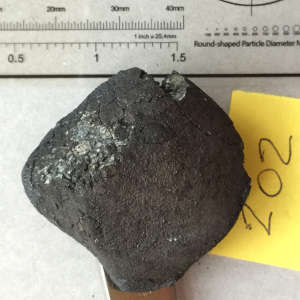
On October 6, 2008, ground-based telescopes noticed the approach of a small (two to five meters across) asteroid, and the next day it fell in northern Sudan. Thus, 2008 TC3 was the first (out of three so far) cases when a meteorite fall was predicted in advance. After entering the atmosphere, it collapsed, but local residents and scientists managed to collect hundreds of small fragments with a total weight of just over 10 kilograms.

300.jpg

The study of the samples continues to this day, and recently experts showed that 2008 TC3 was formed from a massive and as yet unknown body that existed in the early solar system and had dimensions comparable to at least the dwarf planet Ceres. A group led by a professor at the Department of Space Studies, Southwest Research Institute, Victoria Hamilton writes about this in an article published in the journal Nature Astronomy.


The authors examined a 50-milligram sample of AhS 202 by taking a polished section and examining it in infrared with a microscope and spectrometer. As a result, they discovered that the fragment contains tremolite, a calcium-magnesium silicate from the amphibole group.

Tremolite-Crystals.jpg


Meteoritic evidence for a Ceres-sized water-rich carbonaceous chondrite parent asteroid | Nature Astronomy
 
Last edited:
4
•••
A brief history of booze in low Earth orbit

On a chilly morning in early November last year, a Northrop Grumman Antares rocket blasted off from NASAโ€™s Wallops Flight Facility in Virginia. It was a routine cargo resupply mission bound for the International Space Station, but the Cygnus spacecraft perched atop the rocket included a rather unusual payload. Tucked away in its cargo hold were a dozen bottles of red Bordeaux wine individually sheathed in specially designed metal canisters. It wasnโ€™t the first time wine has left the planet, but it is by far the most alcohol that has ever been in space at once.


In the early days of its human spaceflight program, astronauts would often prank each other by stashing small amounts of booze on a spacecraft before launch. When Wally Schirra blasted into orbit in 1962 as one of the original seven astronauts chosen for NASAโ€™s Mercury program, he discovered that someone had stashed a pack of smokes and a small bottle of scotch in the capsule before launch. (Schirra waited until he was safely back on Earth to indulge.) And during the Apollo 8 mission around the moon, astronaut Deke Slayton had stashed a few small bottles of brandy in the astronautsโ€™ holiday meal kit. It was all in good fun, but Frank Borman, the Apollo 8 commander, wasnโ€™t having it. โ€œI didnโ€™t think it was funny at all,โ€ he later said. โ€œIf weโ€™d have drunk one drop of that damn brandy and the thing would have blown up on the way home, theyโ€™d have blamed it on the brandy.โ€

During an Apollo 11 pre-flight press interview on July 5, 1969, Neil Armstrong was asked "Will you take personal mementos to the Moon, Neil?" and he replied "If I had a choice, I would take more fuel".

As it turned out, Armstrong landed on the Moon with barely 15-seconds of fuel allowance on hand. If they had burnt through that allowance, the mission would have been aborted (Bingo).

I watched most of that interview today but unfortunately could not locate that exact question or answer. I may have skipped through it or it may be one of the questions where the audio is missing from the footage.

A very interesting press conference!


Edited
 
Last edited:
2
•••
A bit of light comedy from the surface of the Moon


Last edited:
3
•••
Scientists find the traces of a possible ancient dwarf planet in the meteorite

On October 6, 2008, ground-based telescopes noticed the approach of a small (two to five meters across) asteroid, and the next day it fell in northern Sudan. Thus, 2008 TC3 was the first (out of three so far) cases when a meteorite fall was predicted in advance. After entering the atmosphere, it collapsed, but local residents and scientists managed to collect hundreds of small fragments with a total weight of just over 10 kilograms.

300.jpg

The study of the samples continues to this day, and recently experts showed that 2008 TC3 was formed from a massive and as yet unknown body that existed in the early solar system and had dimensions comparable to at least the dwarf planet Ceres. A group led by a professor at the Department of Space Studies, Southwest Research Institute, Victoria Hamilton writes about this in an article published in the journal Nature Astronomy.


The authors examined a 50-milligram sample of AhS 202 by taking a polished section and examining it in infrared with a microscope and spectrometer. As a result, they discovered that the fragment contains tremolite, a calcium-magnesium silicate from the amphibole group.

Tremolite-Crystals.jpg


Meteoritic evidence for a Ceres-sized water-rich carbonaceous chondrite parent asteroid | Nature Astronomy

It must be a geologists dream job to examine extraterrestrial rocks!

Extraterrestrial Mineral Never Before Seen on Earth Found Inside a Famous Meteorite
September 04, 2019
https://www.livescience.com/new-extraterrestrial-mineral-edscottite-meteorite.html


This Extraterrestrial Stone Contains Compounds Not Found Anywhere Else in Our Solar System
January 10, 2018
https://www.sciencealert.com/hypati...-composition-like-nothing-in-the-solar-system

Extraterrestrial materials
https://en.wikipedia.org/wiki/Extraterrestrial_materials
 
3
•••
Spaceship
Domain Recover
CatchDoms
NameMaxi - Your Domain Has Buyers
  • The sidebar remains visible by scrolling at a speed relative to the pageโ€™s height.
Back