Unstoppable Domains โ€” Expired Auctions

discuss Science & Technology news & discussion

SpaceshipSpaceship
Watch

CraigD

Top Member
Impact
11,745
Post and discuss interesting articles & videos about science and technology.

You don't need to be an expert - just interested in the wonders of modern science, technology, and the history of these fields.

Please keep it rational, and post articles from reputable sources.
Try not to editorialise headlines and keep the copy to just a paragraph with a link to the original source. When quoting excerpts from articles, I think the best method is to italicise the copy, and include a link to the source.

Have some fun with your comments and discussions... just keep the sources legitimate.

Other threads:
The Break Room has a number of other popular threads, so there is no need to post material here that is better suited to these other threads:

- Covid19-Coronavirus updates and news
- Conspiracy Thread Free For All
- The *religious* discussion thread


Please enjoy!
 
Last edited:
13
•••
The views expressed on this page by users and staff are their own, not those of NamePros.
GoDaddyGoDaddy
Hammer vs Feather falling experiment on moon.


At the end of the last Apollo 15 moon walk, Commander David Scott (pictured above) performed a live demonstration for the television cameras. He held out a geologic hammer and a feather and dropped them at the same time. Because they were essentially in a vacuum, there was no air resistance and the feather fell at the same rate as the hammer, as Galileo had concluded hundreds of years before - all objects released together fall at the same rate regardless of mass. Mission Controller Joe Allen described the demonstration in the "Apollo 15 Preliminary Science Report":

During the final minutes of the third extravehicular activity, a short demonstration experiment was conducted. A heavy object (a 1.32-kg aluminum geological hammer) and a light object (a 0.03-kg falcon feather) were released simultaneously from approximately the same height (approximately 1.6 m) and were allowed to fall to the surface. Within the accuracy of the simultaneous release, the objects were observed to undergo the same acceleration and strike the lunar surface simultaneously, which was a result predicted by well-established theory, but a result nonetheless reassuring considering both the number of viewers that witnessed the experiment and the fact that the homeward journey was based critically on the validity of the particular theory being tested. Joe Allen, NASA SP-289, Apollo 15 Preliminary Science Report, Summary of Scientific Results, p. 2-11
 
Last edited:
4
•••
NASA in 2020.

 
3
•••
A bit of light comedy from the surface of the Moon


And nuts still believe this was faked, despite 400,000 people who worked on it.
 
Last edited:
3
•••
4
•••
And nuts still believe this was faked, despite 400,000 people who worked on it.

LOL Yes!

Anyone with a rudimentary understanding of physics would have a very hard time denying that some of that footage is obviously of low gravity mishaps.

No slowing down the footage, no wires, and it's the same footage I've seen hundreds of times on television as a kid in the '70's before digital manipulation even existed.

I think this is my favourite proof. John Young (whom I met about 25-years ago) falling over and then bouncing back onto his feet following some un-earthly gymnastics.


But then again, there will always be doubters who cherry pick what suits their agenda.
 
Last edited:
3
•••
Discovery Supports a Surprising New View of How Life on Earth Originated

Chemists at Scripps Research have made a discovery that supports a surprising new view of how life originated on our planet.

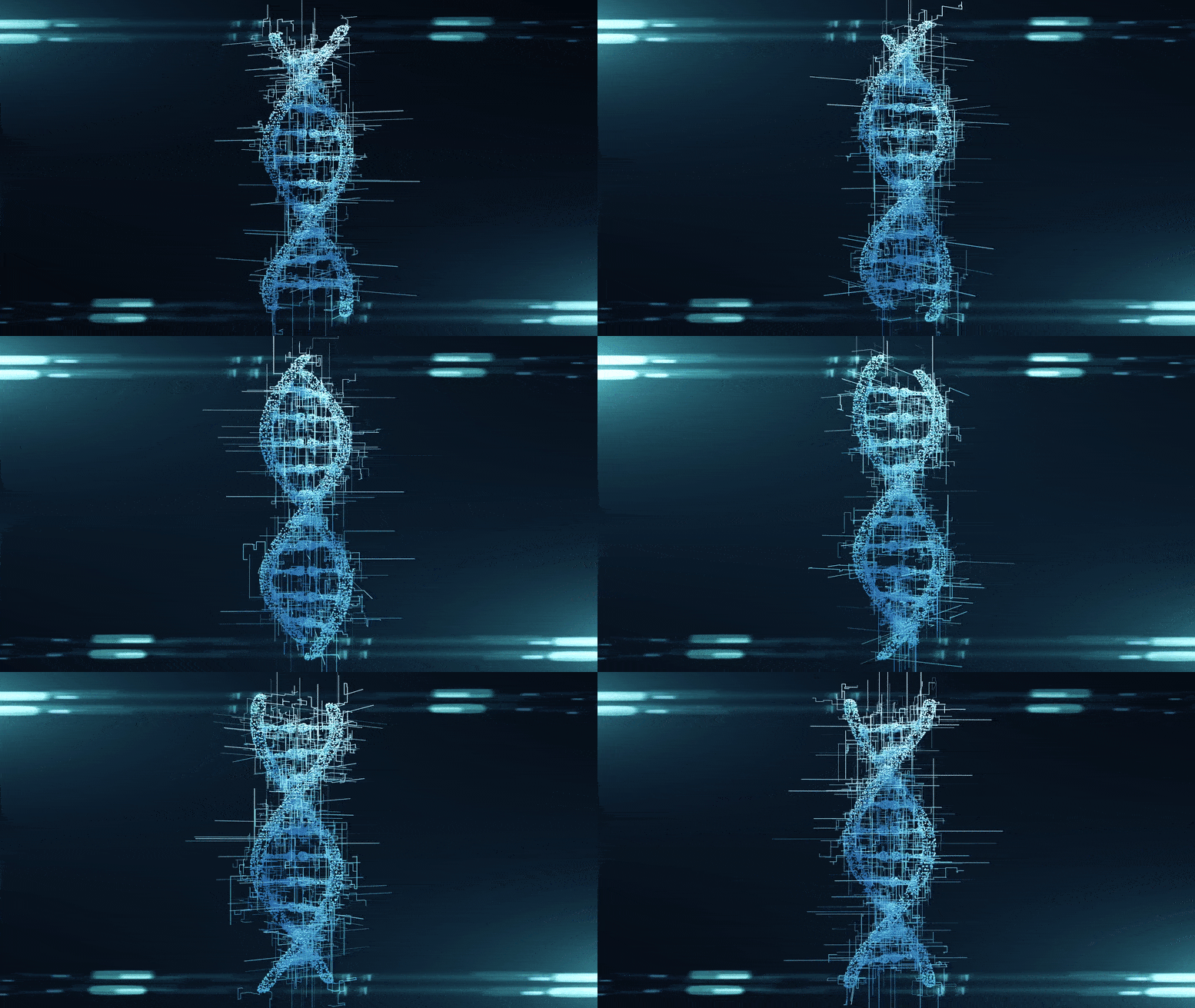
Genetic-Sequencing-Concept.gif


In a study published in the chemistry journal Angewandte Chemie, they demonstrated that a simple compound called diamidophosphate (DAP), which was plausibly present on Earth before life arose, could have chemically knitted together tiny DNA building blocks called deoxynucleosides into strands of primordial DNA.

The finding is the latest in a series of discoveries, over the past several years, pointing to the possibility that DNA and its close chemical cousin RNA arose together as products of similar chemical reactions, and that the first self-replicating molecules โ€” the first life forms on Earth โ€” were mixes of the two.


The discovery may also lead to new practical applications in chemistry and biology, but its main significance is that it addresses the age-old question of how life on Earth first arose. In particular, it paves the way for more extensive studies of how self-replicating DNA-RNA mixes could have evolved and spread on the primordial Earth and ultimately seeded the more mature biology of modern organisms.


He notes that the work may also have broad practical applications. The artificial synthesis of DNA and RNA โ€” for example in the โ€œPCRโ€ technique that underlies COVID-19 tests โ€” amounts to a vast global business, but depends on enzymes that are relatively fragile and thus have many limitations. Robust, enzyme-free chemical methods for making DNA and RNA may end up being more attractive in many contexts, Krishnamurthy says.


https://onlinelibrary.wiley.com/doi/10.1002/anie.202015910
 
2
•••
Why is Earth still habitable after billions of years? In part, we're just lucky

To find out, a scientist ran a clever experiment. He created a simulation of 100,000 planets (!!) where each was given a set of random climate feedbacks, some negative and some positive, and tracked their temperatures for 3 billion years โ€” no other variables (water content, for example, or breathable atmosphere) was simulated. For simplicity he just wanted to see if a planet could keep a habitable temperature for a long period of time, as Earth has.

What he found is interesting. Out of 100,000 planets, 9% were successful at least once (and 1,400 were successful on the very first run out of 100 runs). Some planets were successful twice, some three timesโ€ฆ and in fact, looking over all 100,000 planets, he had every number between 1 and 100 successful runs.
art_planets_temperature.jpg


But, only 1 planet had 100 successful runs out of 100. That's a robust planet, indicating that nothing was able to prevent it from being a nice place to live (and least in temperature).

Overall, looking at the range of outcomes and how they occurred, his conclusion is that both feedbacks and random chance play a role in a planet's ability to stay in a livable temperature range. While the success rate varied from model to model, changing the factors over the 100 runs still supported the idea that both mechanism and chance played a role.

Apparently, fortune favors the prepared planet.
 
3
•••
Why is Earth still habitable after billions of years? In part, we're just lucky

To find out, a scientist ran a clever experiment. He created a simulation of 100,000 planets (!!) where each was given a set of random climate feedbacks, some negative and some positive, and tracked their temperatures for 3 billion years โ€” no other variables (water content, for example, or breathable atmosphere) was simulated. For simplicity he just wanted to see if a planet could keep a habitable temperature for a long period of time, as Earth has.

What he found is interesting. Out of 100,000 planets, 9% were successful at least once (and 1,400 were successful on the very first run out of 100 runs). Some planets were successful twice, some three timesโ€ฆ and in fact, looking over all 100,000 planets, he had every number between 1 and 100 successful runs.
art_planets_temperature.jpg


But, only 1 planet had 100 successful runs out of 100. That's a robust planet, indicating that nothing was able to prevent it from being a nice place to live (and least in temperature).

Overall, looking at the range of outcomes and how they occurred, his conclusion is that both feedbacks and random chance play a role in a planet's ability to stay in a livable temperature range. While the success rate varied from model to model, changing the factors over the 100 runs still supported the idea that both mechanism and chance played a role.

Apparently, fortune favors the prepared planet.

I think part of our luck can be attributed to large-mass planets in the outer solar system literally vacuuming up potentially dangerous asteroids, and the fact that our magnetosphere as a result of a molten iron core, protects us from radiation.
 
2
•••
I think part of our luck can be attributed to large-mass planets in the outer solar system literally vacuuming up potentially dangerous asteroids, and the fact that our magnetosphere as a result of a molten iron core, protects us from radiation.

Lucky indeed!
 
1
•••
Lucky indeed!
I also think that our large mass moon performs a similar function, and bears the brunt of asteroid strikes that would otherwise hit us. I may be wrong, but I think we have the largest mass moon (percentage wise compared to planet mass) out of all of our celestial neighbours.
 
1
•••
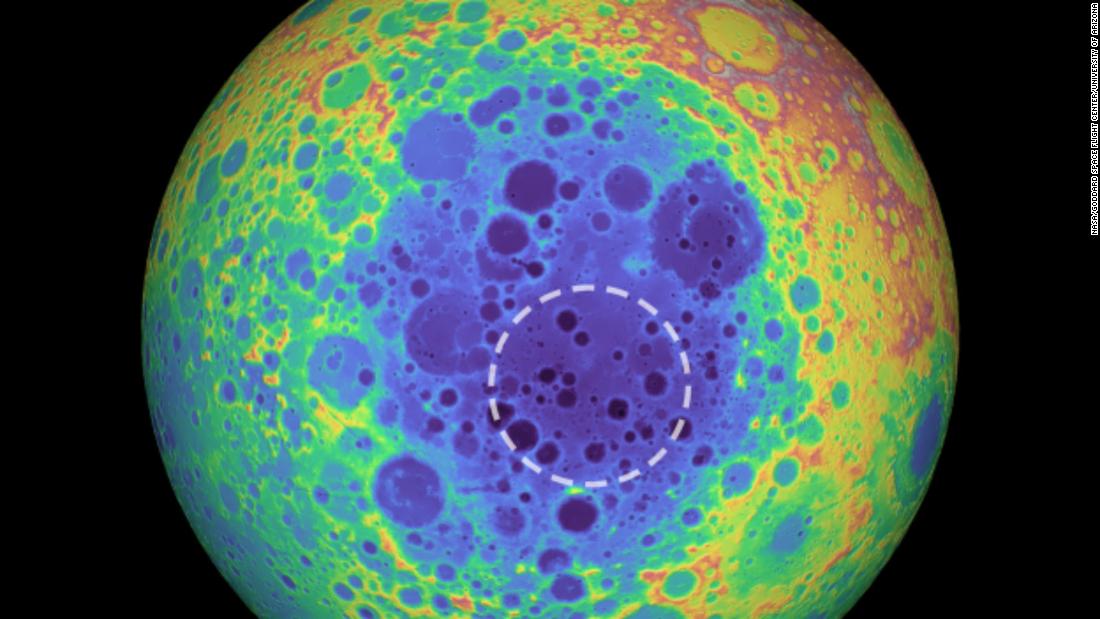
There's a huge mass embedded in the center of the moon, and astronomers aren't sure what it is
June 12, 2019

190611133457-moon-crater-mass-super-169.jpg


Earth's clingy best friend is also the site of one of the largest-known impact craters in our entire solar system. Essentially, something caused a giant hole on the moon billions of years ago, and astronomers have just discovered that there's something big -- really big -- buried underneath the surface.

https://edition.cnn.com/2019/06/11/us/moon-mass-crater-mystery-unexplained-trnd/index.html
 
2
•••
Delightful Study Finds Monkeys Hate Sunk Costs as Much as Humans Do

This "sunk costs" phenomenon can apply to our relationships, home improvements, books, video games, car repairs, side hustles, TV shows, and plenty more besides. We keep going because we're already invested, even when it becomes self-defeating.

That the same trait is noticeable in the capuchin monkeys and rhesus macaques in this study suggests there's something deep in our evolutionary past that convinces us to try and recover a reward from our sunk costs, no matter how unlikely it is to happen.

In this study, the animals were asked to follow a moving target on a computer screen with a joystick. If they managed to track it, they got a reward; if they didn't, a new round started, and they could try again.

Rounds lasted for 1, 3, or 7 seconds (a single second actually seems a lot longer to a monkey), and most rounds lasted for just 1 second. In other words, if the monkeys didn't get a treat after the first second, it was better to quit and start a new round to get a reward as soon as possible.

The monkeys typically carried on, though. This effect was especially noticeable for the seven macaques, but the 26 capuchins struggled to let go as well. If the animals got a signal that more work was needed for a reward, the sunk cost behaviour was less frequent, but it was still evident.


www.nature.com/articles/s41598-020-77301-w
 
Last edited:
1
•••
Anyway, I think I mentioned this a few months ago - Earth appears to be quite unique when compared to other planets, which is why I don't think that Drakes' Equation is accurate.

Just because there are likely billions of other planets in existence doesn't mean they have the same likely hood of harbouring life. First find planets like ours in the 'goldilocks zone' that also have active cores driving magnetospheres, with large-mass moons like ours, and large-mass gas giants protecting us in the outer solar system like ours, and redo the math.

The probabilities while still there, drop dramatically.
 
Last edited:
1
•••
Delightful Study Finds Monkeys Hate Sunk Costs as Much as Humans Do

This "sunk costs" phenomenon can apply to our relationships, home improvements, books, video games, car repairs, side hustles, TV shows, and plenty more besides. We keep going because we're already invested, even when it becomes self-defeating.

That the same trait is noticeable in the capuchin monkeys and rhesus macaques in this study suggests there's something deep in our evolutionary past that convinces us to try and recover a reward from our sunk costs, no matter how unlikely it is to happen.

In this study, the animals were asked to follow a moving target on a computer screen with a joystick. If they managed to track it, they got a reward; if they didn't, a new round started, and they could try again.

Rounds lasted for 1, 3, or 7 seconds (a single second actually seems a lot longer to a monkey), and most rounds lasted for just 1 second. In other words, if the monkeys didn't get a treat after the first second, it was better to quit and start a new round to get a reward as soon as possible.

The monkeys typically carried on, though. This effect was especially noticeable for the seven macaques, but the 26 capuchins struggled to let go as well. If the animals got a signal that more work was needed for a reward, the sunk cost behaviour was less frequent, but it was still evident.


www.nature.com/articles/s41598-020-77301-w

= Domain name investment and hours on this meaningless thread ;)
 
Last edited:
4
•••
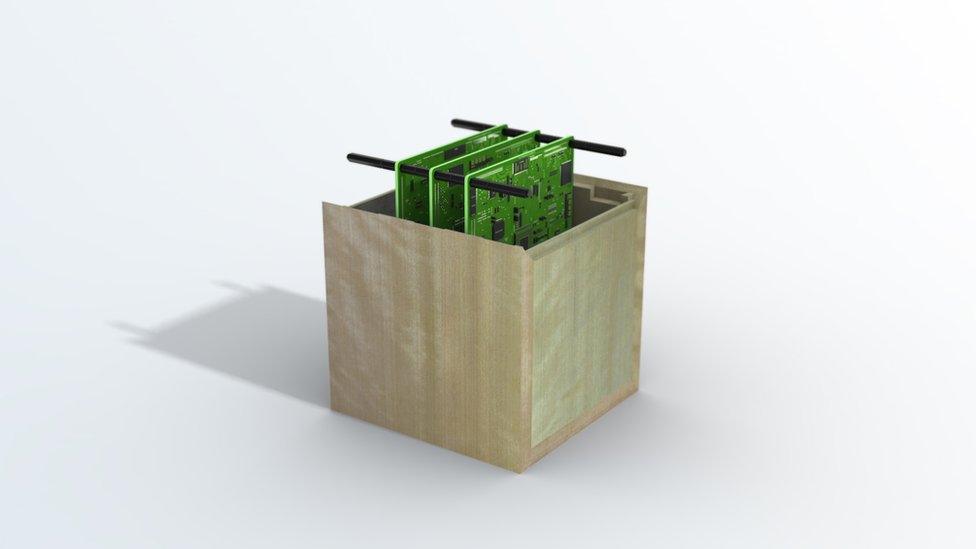
Japan developing wooden satellites to cut space junk
_116275242_woodensatellite.jpg


A Japanese company and Kyoto University have joined forces to develop what they hope will be the world's first satellites made out of wood by 2023.

Sumitomo Forestry said it has started research on tree growth and the use of wood materials in space.

The partnership will begin experimenting with different types of wood in extreme environments on Earth.

Space junk is becoming an increasing problem as more satellites are launched into the atmosphere.

Wooden satellites would burn up without releasing harmful substances into the atmosphere or raining debris on the ground when they plunge back to Earth.
 
1
•••
Japan developing wooden satellites to cut space junk
_116275242_woodensatellite.jpg


A Japanese company and Kyoto University have joined forces to develop what they hope will be the world's first satellites made out of wood by 2023.

Sumitomo Forestry said it has started research on tree growth and the use of wood materials in space.

The partnership will begin experimenting with different types of wood in extreme environments on Earth.

Space junk is becoming an increasing problem as more satellites are launched into the atmosphere.

Wooden satellites would burn up without releasing harmful substances into the atmosphere or raining debris on the ground when they plunge back to Earth.

Wow! I had no idea this was in development.

img_8516.jpg


Might as well cut to the chase and launch some rocks back into orbit ;)

Edit: I think Elon was onto something with Ms. Tree!
 
Last edited:
1
•••
Wow! I had no idea this was in development. Might as well cut to the chase and launch some rocks back into orbit ;)

LOL!

Like Aussies exporting camels to Middle east!:xf.wink:
 
1
•••
Last edited:

2
•••
Atlantic discovery: 12 new species 'hiding in the deep'

Almost five years of studying the deep Atlantic in unprecedented detail has revealed 12 species new to science.

The sea mosses, molluscs and corals had eluded discovery because the sea floor is so unexplored, scientists say. Researchers warn that the newly discovered animals could already be under threat from climate change.

https://www.bbc.com/news/science-environment-55427860


Edited
 
Last edited:
3
•••
Last edited:
6
•••
Spaceship
Domain Recover
CatchDoms
DomainEasy โ€” Zero Commission
  • The sidebar remains visible by scrolling at a speed relative to the pageโ€™s height.
Back