English translation to show the actual decision.
WIPO ARBITRATION AND MEDIATION CENTER
Alternative Dispute Resolution Proceeding
Case Number: DSE2026-0007
- The Complainant
The Complainant is Holmen AB, Sweden, represented internally.
- The Holder
The Holder is [Name Removed], Sweden.
- Domain Name and the Proceeding
Alternative dispute resolution proceeding concerning the domain name <skogsliv.se>.
The application was submitted in accordance with the Terms and Conditions of Registration for the “.se” top-level domain (“Registration Terms”) and the Rules for Alternative Dispute Resolution Proceedings for domain names in the “.se” top-level domain (“Rules”).
The WIPO Arbitration and Mediation Center (“WIPO Center”) verified that the application fulfilled the formal requirements contained in the Registration Terms and the Rules.
In accordance with paragraph 13 of the Rules, the WIPO Center formally notified the Holder of the application on March 13, 2026. The Holder submitted a response on April 11, 2026.
The WIPO Center appointed Johan Sjöbeck as sole Arbitrator in the present matter on April 16, 2026. The Arbitrator submitted a declaration of impartiality and independence, as required for the WIPO Center to ensure compliance with paragraph 1 of the Rules.
At the request of the Arbitrator, the WIPO Center communicated with the parties on April 17, 2026, requesting that the Complainant submit attachments that had previously been filed in corrupted format and therefore could not be opened. The Complainant subsequently submitted the requested attachments in readable form to the WIPO Center on April 24, 2026.
- Background
The Complainant owns the Swedish trademark SKOGSLIV with registration number 621292, application date March 25, 2022, and registration date April 26, 2022. The Complainant’s trademark is registered in classes 9, 16, and 41 for, among other things, electronic publications, printed magazines, publishing, and publication services.
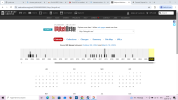
The disputed domain name <skogsliv.se> was registered by the Holder on October 14, 2025. However, the evidence in the case shows that the Holder had already possessed the disputed domain name since at least December 22, 2021, and had offered it for sale on its website.
- Claims
- The Parties’ Contentions
A. The Complainant
The Complainant, Holmen AB, has continuously used the trademark SKOGSLIV since at least 2019 for the printed magazine distributed to forest owners in Sweden who sell timber to the Complainant. The magazine is also available on the Complainant’s website.
The Holder of the disputed domain name <skogsliv.se> must have been aware of the Complainant’s trademark, which was registered on April 26, 2022. The purpose of the Holder’s registration of the disputed domain name must therefore be assumed to have been solely to sell it to the Complainant or another party. On the Holder’s website there is an opportunity to place bids on the disputed domain name. The Complainant states that it was orally offered the disputed domain name by the Holder for SEK 300,000 excluding VAT. The registration was made in bad faith.
The Holder does not own any registered trademark or right that is identical or similar to the disputed domain name. There is nothing indicating that the registration was made for the Holder to use the disputed domain name in its own business, or if such use were intended, that such use would occur in a business that does not infringe the Complainant’s earlier rights.
B. The Holder
The Holder, who conducts business within digital projects, domain management, and development through NordicDomains.se and Uppsala Direkt, contests the Complainant’s claims in their entirety.
The Holder’s business, which is registered for, among other things, programming, web portals, hosting, domain name sales, marketing, and brand development, is VAT registered and holds F-tax status. The Holder conducts a legitimate, registered business in which generic domain names constitute a natural part of the service offering, and therefore has a legitimate interest in the disputed domain name <skogsliv.se>.
The disputed domain name has been registered by various actors since 2004, including as a photography website, parked at Binero, and offered for sale via DomainBrokers.se. Archived versions of the website associated with the disputed domain name, available via the Internet Archive Wayback Machine, show that the Holder possessed and offered the disputed domain name for sale already in 2021, i.e., before the Complainant applied for trademark registration.
On the Holder’s standardized landing page, it was stated that no trademark-related obstacles existed according to checks in the Swedish Patent and Registration Office trademark database. This information was based on checks against available databases, which at that time showed no registered rights constituting an obstacle. The procedure is consistent with established industry practice within domain management and was not directed toward any specific actor.
The history of the disputed domain name, predating the Complainant’s trademark registration, strongly argues against the domain having been registered in bad faith or with the Complainant in mind, and instead demonstrates normal diligence, good faith at the time of registration, and legitimate use.
The word “skogsliv,” which constitutes the disputed domain name, is an old, generic, and descriptive Swedish word with established use in literature, academic texts, product names, and common language usage. The Swedish Academy Dictionary (SAOB) includes the word as a Swedish term, which argues against it being exclusively identifying for a single actor.
The Holder notes that the word “skogsliv” is used in various ways by parties other than the Complainant. One illustrative example is Ann-Cathrine Sigrid Ståhlberg’s textile pattern/collection named “VANDRING SKOGSLIV.” Another example is the Swedish edition of “Skogsliv vid Walden” from 1924, based on Henry David Thoreau’s work Walden, originally published in 1854. The Swedish title uses the word “skogsliv” as a deliberate, natural, and understandable Swedish translation long before the Complainant’s trademark registration.
Reference is also made to the book “Nature and Places – The Changing Spaces of Everyday Life During the 20th Century” (SLS, Appell), edited by Bo Lönnqvist et al. The word “skogsliv” appears at least ten times, including in the chapter “Forest Life and Cultural Patterns.” Here the term is used as an analytical concept for lifestyles and work cultures connected to forests.
It is therefore the Holder’s position that the word “skogsliv” has a generic and descriptive character and is an established expression in the Swedish language, with its own lexical meaning and documented historical usage.
The Holder has neither contacted nor otherwise targeted the Complainant. Rather, it is the Complainant that repeatedly initiated contact with the Holder, both directly and through third parties.
The disputed domain name has generated several independent and serious purchase inquiries from actors operating within, among other things, forestry, GIS, nature, and marketing sectors. This indicates that the disputed domain name is perceived as an attractive and generic industry designation rather than a designation exclusively associated with the Complainant.
The Holder has not accepted any offer to sell the disputed domain name.
- Discussion and Conclusions
According to the Registration Terms, a domain name shall be deregistered or transferred to the party requesting dispute resolution if:
- The domain name is identical or similar to:
(a) a trademark,
(b) a business identifier,
(c) a surname,
(d) an artistic name,
(e) the title of another’s protected literary or artistic work,
(f) a name protected under Swedish regulation,
(g) the name of a Swedish government authority,
(h) a geographical indication for handicraft or industrial products,
(i) a geographical indication for wines, spirits, or agricultural products,
which has legal basis in Sweden and to which the complainant can show rights; and
- The domain name has been registered or used in bad faith; and
- The Holder has no rights or legitimate interest in the domain name.
For the complainant to succeed in obtaining transfer of a domain name, all three conditions above must be fulfilled.
A. The Domain Name is Identical or Similar to a Right with Legal Basis in Sweden
The first condition is fulfilled because the disputed domain name contains the Complainant’s registered trademark SKOGSLIV in its entirety. Therefore, the Arbitrator concludes that the disputed domain name is similar to a trademark to which the Complainant can show rights.
B. The Domain Name Has Been Registered or Used in Bad Faith
In assessing whether the disputed domain name <skogsliv.se> has been registered or used in bad faith, an overall assessment of all relevant circumstances is made.
Initially, it may be noted that the Holder has submitted evidence showing possession and use of the disputed domain name since at least December 22, 2021, i.e., before the Complainant applied for the trademark on which the application is based.
The disputed domain name consists of the Swedish words “skogs” and “liv,” each of which is general and descriptive in nature and therefore has weak distinctiveness. Such designations should remain free for general use, provided the use does not occur in bad faith.
The Holder has shown through submitted evidence that the combination “skogsliv” appears descriptively in the Swedish Academy Dictionary (SAOB) and other dictionaries, in literary works, and as the name of a textile pattern. This supports the conclusion that the word, although limited in scope, has historically established linguistic use in the Swedish language and does not appear exclusively associated with the Complainant.
The Holder has further stated that it conducts business involving generic domain names and that the disputed domain name was registered with regard to its linguistic meaning, and that at the time of registration there was no corresponding trademark registration in the Swedish Patent and Registration Office trademark database.
The evidence supports that the registration occurred on this basis.
Accordingly, based on the above, it has not been shown that the Holder acted in bad faith in connection with the registration of the disputed domain name.
Are there circumstances showing that the Holder has used the disputed domain name in bad faith?
The evidence shows that the Holder, since at least 2021, has offered the disputed domain name for sale via its website. It further appears that the Holder has received inquiries from several actors regarding acquisition of the disputed domain name, all of which have been declined.
However, it has not been shown that the Holder, either at the time of registration or afterward, contacted the Complainant for the purpose of selling the disputed domain name. Rather, it appears that the Complainant initiated contact between the parties.
The Complainant has indeed stated that it was orally offered the disputed domain name for SEK 300,000 excluding VAT, but the mere fact that the parties could not agree on the conditions for a transfer, including the purchase price, is not in itself sufficient to show that the disputed domain name was used in bad faith.
Offering a domain name for sale, even at a high price, is not in itself sufficient to establish bad faith. The assessment must instead be based on an overall consideration of all relevant circumstances.
Following such an overall assessment, taking into account the linguistic characteristics of the disputed domain name and the evidence generally, the Arbitrator finds that the Complainant has not shown that the disputed domain name has been used in bad faith.
Accordingly, based on the evidence submitted and the circumstances of the case, the Arbitrator concludes that it has not been shown that the Holder registered or used the disputed domain name in bad faith.
C. The Holder Has Rights or Legitimate Interest in the Domain Name
Since the Arbitrator has found that it has not been shown that the Holder registered or used the disputed domain name in bad faith, there is technically no need to examine whether the Holder has rights or legitimate interest in the domain name.
However, for completeness, the Arbitrator addresses the matter.
It has not been shown that the Holder possesses any naming right corresponding to the disputed domain name, such as a trademark, business identifier, surname, artistic name, or title.
Nor has it been shown that the disputed domain name is generally known in relation to the Holder.
The Holder has stated that it conducts business involving generic domain names and that registration occurred with regard to the linguistic characteristics of the disputed domain name.
The disputed domain name consists of the words “skogs” and “liv,” which are general and descriptive in nature. The Holder has submitted evidence supporting that the combination “skogsliv,” although limited in scope, has established historical linguistic usage in Swedish.
Nothing in the case contradicts this.
Despite the existence of circumstances both supporting and opposing a conclusion that the Holder has rights or legitimate interest, the Arbitrator concludes, after an overall assessment of the parties’ arguments and evidence, that there are insufficient circumstances to conclude that the Holder lacks rights or legitimate interest in the disputed domain name.
Accordingly, the Holder shall be considered to have rights or legitimate interest in the disputed domain name.
- Decision
The Complainant’s request for transfer of the domain name <skogsliv.se> is denied.
- Summary
The disputed domain name is similar to a trademark relied upon by the Complainant, to which the Complainant can show rights.
Based on the evidence and circumstances of the case, the Arbitrator concludes that it has not been shown that the Holder registered or used the disputed domain name in bad faith.
Finally, it has not been shown that the Holder lacks rights or legitimate interest in the disputed domain name.
Johan Sjöbeck
Date: May 10, 2026