NameSilo

discuss Science & Technology news & discussion

SpaceshipSpaceship
Watch

CraigD

Top Member
Impact
11,745
Post and discuss interesting articles & videos about science and technology.

You don't need to be an expert - just interested in the wonders of modern science, technology, and the history of these fields.

Please keep it rational, and post articles from reputable sources.
Try not to editorialise headlines and keep the copy to just a paragraph with a link to the original source. When quoting excerpts from articles, I think the best method is to italicise the copy, and include a link to the source.

Have some fun with your comments and discussions... just keep the sources legitimate.

Other threads:
The Break Room has a number of other popular threads, so there is no need to post material here that is better suited to these other threads:

- Covid19-Coronavirus updates and news
- Conspiracy Thread Free For All
- The *religious* discussion thread


Please enjoy!
 
Last edited:
13
•••
The views expressed on this page by users and staff are their own, not those of NamePros.
GoDaddyGoDaddy
The science of siestas

How often a person takes daytime naps, if at all, is partly regulated by their genes, according to new research led by investigators at Harvard-affiliated Massachusetts General Hospital (MGH) and published in Nature Communications.

iStock-napper-1200x800.jpg


In this study, the largest of its kind ever conducted, the MGH team collaborated with colleagues at the University of Murcia in Spain and several other institutions to identify dozens of gene regions that govern the tendency to take naps during the day. They also uncovered preliminary evidence linking napping habits to cardiometabolic health.


Digging deeper into the data, the team identified at least three potential mechanisms that promote napping:

  • Sleep propensity: Some people need more shut-eye than others.
  • Disrupted sleep: A daytime nap can help make up for poor quality slumber the night before.
  • Early morning awakening: People who rise early may “catch up” on sleep with a nap.
“This tells us that daytime napping is biologically driven and not just an environmental or behavioral choice,” says Dashti.
 
3
•••
Longitudinal study links energy drink consumption to depression, anxiety and stress

Energy drinks are potent mixtures of ingredients like caffeine, guarana, sugar, ginseng, and aspartame. They are intended (and marketed) to improve mood, alertness and productivity—but may have long-term secondary effects that are decidedly less beneficial.

A variety of cross-sectional studies has already examined the relationship between energy drink consumption and mental health problems like anxiety, depression, and increased feelings of stress. Few to date, however, have done so longitudinally, meaning that causal relationships have been difficult to determine or demonstrTo remedy this, the present study looked at data from 897 individuals who have been followed from birth in the context of the previously published Raine study. Questionnaires were given at age 20 and again at age 22 regarding, among others, energy drink consumption and mood.

wet-drink-cans-picture-id93296103


After controlling for parental mental health, illicit drug use, dietary patterns, family income, parental alcohol consumption and cigarette use, BMI, physical activity and other factors, the researchers found that changes in energy drink consumption were positively associated with increased stress scores and, in young adult males, depression and anxiety.
 
Last edited:
2
•••
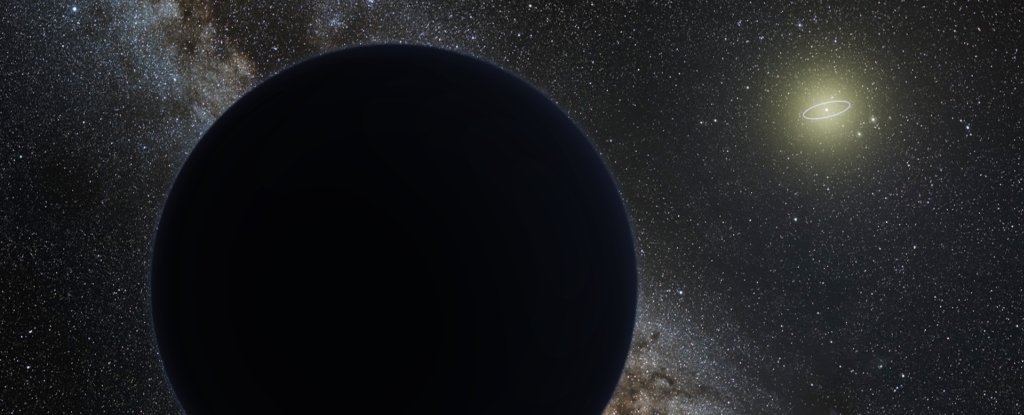
Planet Nine Might Be a Giant Illusion, Scientists Say, And Here's Why

A hypothetical mystery planet thought to be responsible for strange orbits in the outer Solar System just got dealt one of its biggest blows yet.
planet-nine_1024.jpg


According to a comprehensive analysis of extremely distant objects, led by physicist Kevin Napier of the University of Michigan, Planet Nine may not exist - because the evidence for its existence doesn't exist. Rather, what astronomers took to be the influence of a planet's gravity is instead selection bias in the observations.

Looking for ghosts - this argument has been ongoing for over 120-years.

When I was a kid it was called Planet X (roman numerals for 10) before Pluto got demoted leaving only 8 known planets. The term 'Planet X' was a great headline grabber back in the day for an undiscovered mystery planet, but I've noticed there is less hype surrounding the hypothetical planet since it was demoted to 'Planet 9'.
 
2
•••
prolonged Keto diet is bad for health.

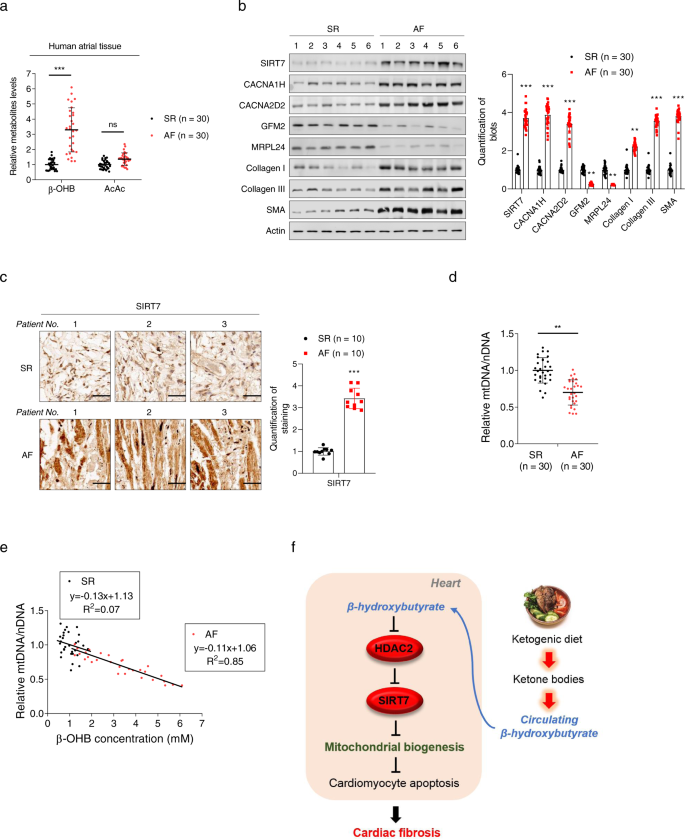
Ketogenic diets inhibit mitochondrial biogenesis and induce cardiac fibrosis


Abstract
In addition to their use in relieving the symptoms of various diseases, ketogenic diets (KDs) have also been adopted by healthy individuals to prevent being overweight. Herein, we reported that prolonged KD exposure induced cardiac fibrosis. In rats, KD or frequent deep fasting decreased mitochondrial biogenesis, reduced cell respiration, and increased cardiomyocyte apoptosis and cardiac fibrosis. Mechanistically, increased levels of the ketone body β-hydroxybutyrate (β-OHB), an HDAC2 inhibitor, promoted histone acetylation of the Sirt7 promoter and activated Sirt7 transcription. This in turn inhibited the transcription of mitochondrial ribosome-encoding genes and mitochondrial biogenesis, leading to cardiomyocyte apoptosis and cardiac fibrosis. Exogenous β-OHB administration mimicked the effects of a KD in rats. Notably, increased β-OHB levels and SIRT7 expression, decreased mitochondrial biogenesis, and increased cardiac fibrosis were detected in human atrial fibrillation heart tissues. Our results highlighted the unknown detrimental effects of KDs and provided insights into strategies for preventing cardiac fibrosis in patients for whom KDs are medically necessary.

41392_2020_411_Fig6_HTML.png


Last edited:
1
•••
Biotech fit for the Red Planet: New method for growing cyanobacteria under Mars-like conditions

NASA, in collaboration with other leading space agencies, aims to send its first human missions to Mars in the early 2030s, while companies like SpaceX may do so even earlier. Astronauts on Mars will need oxygen, water, food, and other consumables. These will need to be sourced from Mars, because importing them from Earth would be impractical in the long term. In Frontiers in Microbiology, scientists show for the first time that Anabaena cyanobacteria can be grown with only local gases, water, and other nutrients and at low pressure. This makes it much easier to develop sustainable biological life support systems.

"Here we show that cyanobacteria can use gases available in the Martian atmosphere, at a low total pressure, as their source of carbon and nitrogen. Under these conditions, cyanobacteria kept their ability to grow in water containing only Mars-like dust and could still be used for feeding other microbes. This could help make long-term missions to Mars sustainable," says lead author Dr. Cyprien Verseux, an astrobiologist who heads the Laboratory of Applied Space Microbiology at the Center of Applied Space Technology and Microgravity (ZARM) of the University of Bremen, Germany.

https://phys.org/news/2021-02-biotech-red-planet-method-cyanobacteria.html
 
3
•••
Scientists discover backward star, spinning in the opposite direction to its planets

In planetary systems, it's generally expected planets and their stars rotate in the same direction. Take our own solar system, for example.

Our sun spins in almost the exact same direction as Earth and the rest of the planets orbits, with a small six degree tilt. It was once assumed that all systems work in a similar way, but research has shown that isn't necessarily the case.
backwardsplanets.jpg


There have been a few stars discovered that spin differently to a planet that orbits them, but a recent study has found one star rotating in the opposite direction to not one, but two planets in its system.

The K2-290 system contains a total of three stars, with two planets orbiting its main star, K2-290 A. The interesting part? K2-290 A is rotating at a 124 degree tilt compared to the two planets that orbit it. Meaning it's rotating in the opposite direction.


3
•••
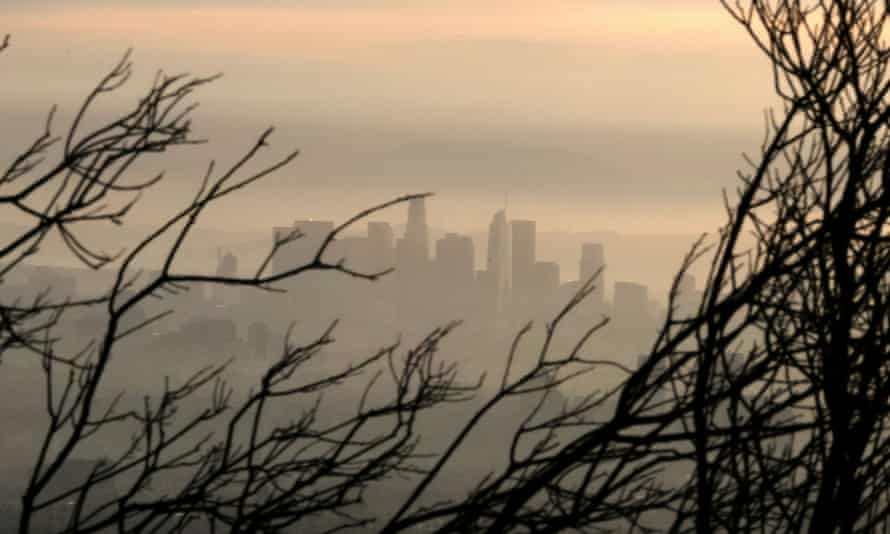
Weatherwatch: how typhoons in Korea made California wildfires worse

Last year California suffered its worst series of wildfires, including five of the most destructive six fires on record, all driven by unseasonal winds. New research suggests that the driving winds originated from an unexpected source: typhoons in Korea. The study highlights how events in one region can create a domino effect felt thousands of miles away.

3500.jpg


A paper by South Korean and American scientists in Geophysical Letters points the finger at three massive storms that hit the Korean peninsula in quick succession over August and September. The researchers say a single typhoon would have little effect, but the unusual combination of three of them over just 12 days was sufficient to perturb the jet stream. This resulted in an effect known as an atmospheric wave train, which crossed the Pacific and changed the pattern of air flow over North America.
 
2
•••
International research team begins uncovering Arctic mystery

Something lurks beneath the Arctic Ocean. While it’s not a monster, it has largely remained a mystery.

According to 25 international researchers who collaborated on a first-of-its-kind study, frozen land beneath rising sea levels currently traps 60 billion tons of methane and 560 billion tons of organic carbon. Little is known about the frozen sediment and soil — called submarine permafrost — even as it slowly thaws and releases methane and carbon that could have significant impacts on climate.

Permafrost_3.jpg


To put into perspective the amount of greenhouse gases in submarine permafrost, humans have released about 500 billion tons of carbon into the atmosphere since the Industrial Revolution, said Sandia National Laboratories geosciences engineer Jennifer Frederick, one of the authors on the study published in IOP Publishing journal Environmental Research Letters.
 
Last edited:
3
•••
Russian scientists probe prehistoric viruses dug from permafrost

https://phys.org/news/2021-02-russian-scientists-probe-prehistoric-viruses.html

"Russian state laboratory Vektor on Tuesday announced it was launching research into prehistoric viruses by analysing the remains of animals recovered from melted permafrost.

The Siberia-based lab said in a statement that the aim of the project was to identify paleoviruses and conduct advanced research into virus evolution.

The research in collaboration with the University of Yakutsk began with analysis of tissues extracted from a prehistoric horse believed to be at least 4,500 years old."
 
3
•••
Supercomputer turns back cosmic clock

https://phys.org/news/2021-02-supercomputer-cosmic-clock.html

"Astronomers have tested a method for reconstructing the state of the early universe by applying it to 4000 simulated universes using the ATERUI II supercomputer at the National Astronomical Observatory of Japan (NAOJ). They found that together with new observations, the method can set better constraints on inflation, one of the most enigmatic events in the history of the universe. The method can shorten the observation time required to distinguish between various inflation theories."
 
Last edited:
3
•••
2
•••
‘Blue fleet’ of nudibranchs including bluebottle and blue dragon flood Australia’s east coast

A marine biologist has captured footage of a “blue fleet” of bizarre sea creatures, including one that could carry a potentially deadly sting.

Last week he captured a number of different creatures sporting the similar blue colouring.

https://www.news.com.au/technology/...t/news-story/3902d9ab4eeedb355dcedd7d57ecc928


----

Glaucus atlanticus, Glaucillia marginata, Physalia utriculus, Porpita porpita, Velella velella & Janthina janthina. In other words Blue Dragons, Blue bottles, Blue Buttons, Salior by the wind & Violet snail.

These beautiful blue creatures got swept onto Sydney's shoreline today. Which ones your favourite?

https://www.instagram.com/reel/CLEPs6khgsW/
 
3
•••
‘Blue fleet’ of nudibranchs including bluebottle and blue dragon flood Australia’s east coast

A marine biologist has captured footage of a “blue fleet” of bizarre sea creatures, including one that could carry a potentially deadly sting.

Last week he captured a number of different creatures sporting the similar blue colouring.

https://www.news.com.au/technology/...t/news-story/3902d9ab4eeedb355dcedd7d57ecc928


----

Glaucus atlanticus, Glaucillia marginata, Physalia utriculus, Porpita porpita, Velella velella & Janthina janthina. In other words Blue Dragons, Blue bottles, Blue Buttons, Salior by the wind & Violet snail.

These beautiful blue creatures got swept onto Sydney's shoreline today. Which ones your favourite?

https://www.instagram.com/reel/CLEPs6khgsW/
Wow nice blue fleet... especially the Blue Dragon!
 
4
•••
Original 'Stonehenge' discovered, echoing a legend of the wizard Merlin

V39JDPxtQR4u2CWV5bLpom-1024-80.jpg.webp


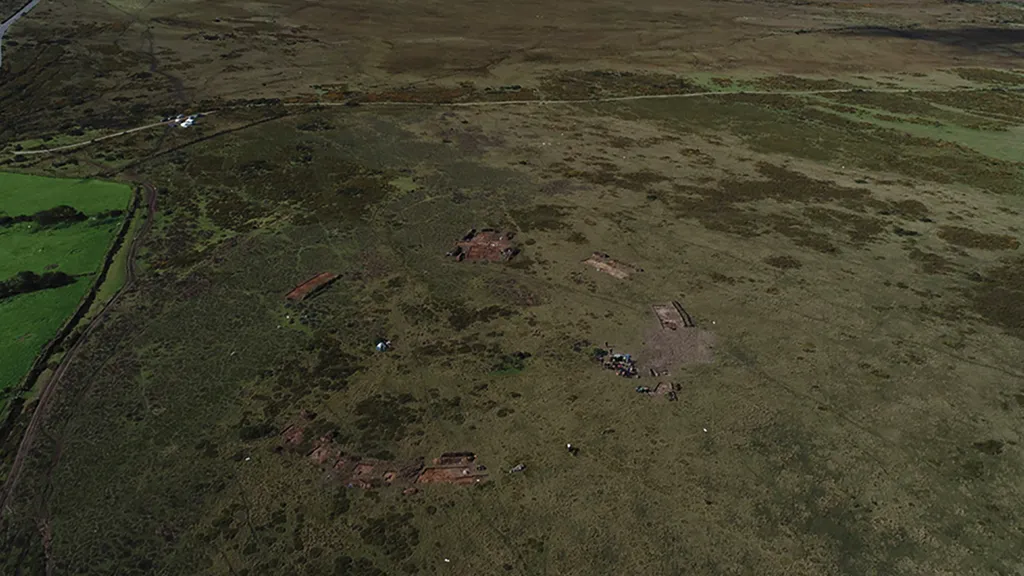
The earliest megalithic circle at Stonehenge was first built in the west of Wales more than 5,000 years ago, before its stones were dug up and dragged over 140 miles (225 kilometers) to its present site in the west of England, new research suggests.

The findings also support a wild legend that the mythical wizard Merlin ordered giants to move Stonehenge from Ireland and rebuild it in its current location.

Antiquity, suggests that the bluestones that formed the first stage of Stonehenge may have symbolized the ancestors or lineages of the Neolithic people who lived near the quarries, which may have been why they took the stones with them when they left for a far-off region.

https://www.livescience.com/original-stonehenge-discovered-in-wales.html

@NickB this may be of interest to you!
 
4
•••
Canada’s CHIME telescope detects second repeating fast radio burst
A Canadian-led team of scientists has found the second repeating fast radio burst (FRB) ever recorded. FRBs are short bursts of radio waves coming from far outside our Milky Way galaxy. Scientists believe FRBs emanate from powerful astrophysical phenomena billions of light years away.

The discovery of the extragalactic signal is among the first, eagerly awaited results from the Canadian Hydrogen Intensity Mapping Experiment (CHIME), a revolutionary radio telescope inaugurated in late 2017 by a collaboration of scientists from the University of British Columbia, McGill University, University of Toronto, Perimeter Institute for Theoretical Physics, and the National Research Council of Canada.


A new clue to the puzzle
Ever since FRBs were first detected, scientists have been piecing together the signals’ observed characteristics to come up with models that might explain the sources of the mysterious bursts and provide some idea of the environments in which they occur. The detection by CHIME of FRBs at lower frequencies means some of these theories will need to be reconsidered.

“Whatever the source of these radio waves is, it’s interesting to see how wide a range of frequencies it can produce. There are some models where intrinsically the source can’t produce anything below a certain frequency,” says team member Arun Naidu of McGill University.

“[We now know] the sources can produce low-frequency radio waves and those low-frequency waves can escape their environment, and are not too scattered to be detected by the time they reach the Earth. That tells us something about the environments and the sources. We haven’t solved the problem, but it’s several more pieces in the puzzle,” says Tom Landecker, a CHIME team member from the National Research Council of Canad
 
Last edited:
3
•••
High-altitude birds evolved thicker 'jackets'

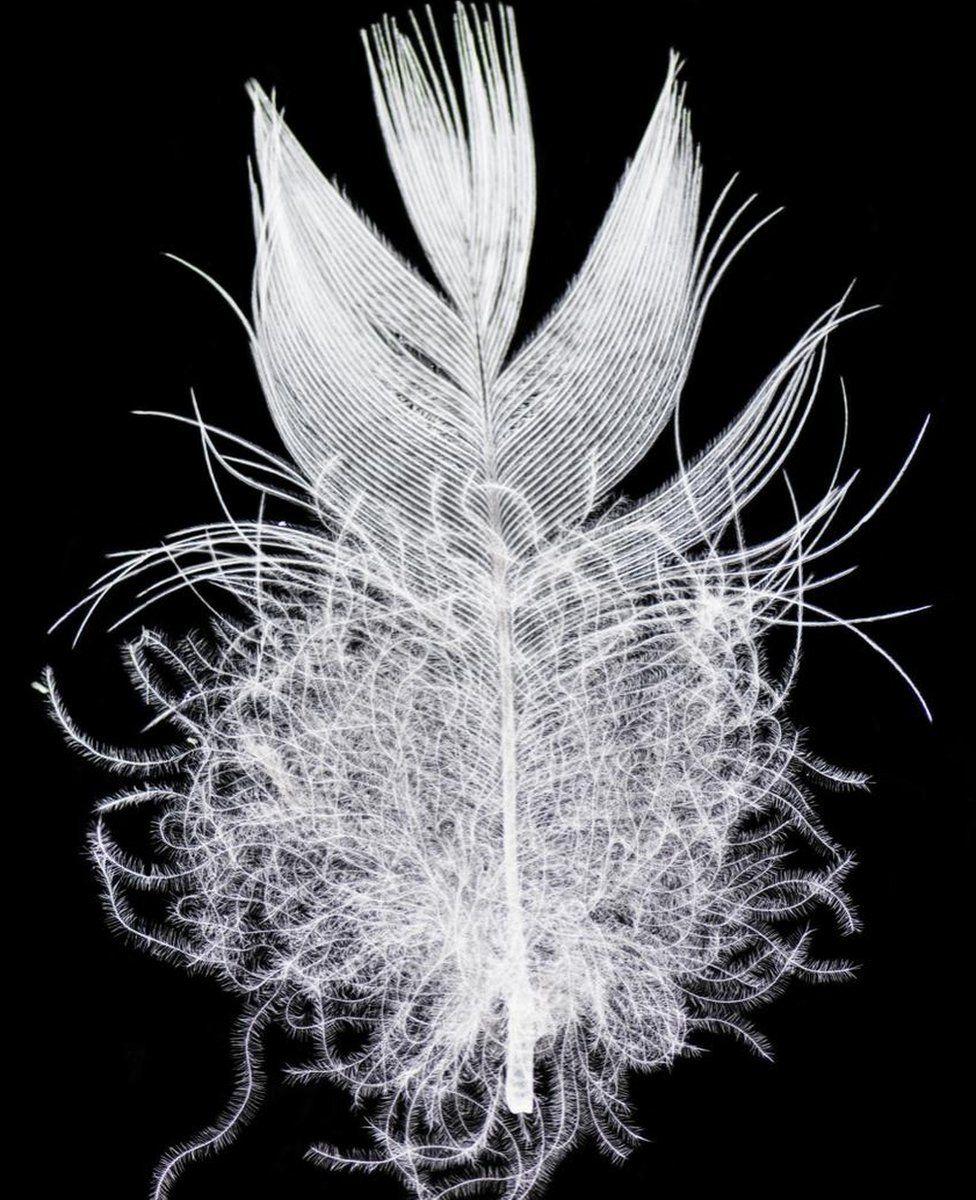
A study of 250 species of Himalayan songbirds has revealed how their feathers evolved for higher altitudes.

_116788246_robin2.jpg


The birds in colder, more elevated environments had feathers with more fluffy down - providing them with thicker "jackets".

The insight reveals how feathers provide the tiniest birds with such efficient protection from extreme cold.

It also provides clues about which species are most at risk from climate change, the scientists say.

_117002502_301850b5-3b89-4a11-a48e-e616e43e8573.jpg


Each feather has an outer part and a hidden downy portion.

And Dr Barve's measurements revealed those living at higher elevations had more of the lower fluffy down.

"They had fluffier jackets," he said.


Smaller birds, which lose heat faster, also tend to have longer feathers in proportion to their body size, revealing the little goldcrest's secret.
 
Last edited:
1
•••
New study suggests climate change, not overhunting by humans, caused the extinction of North America’s largest animals

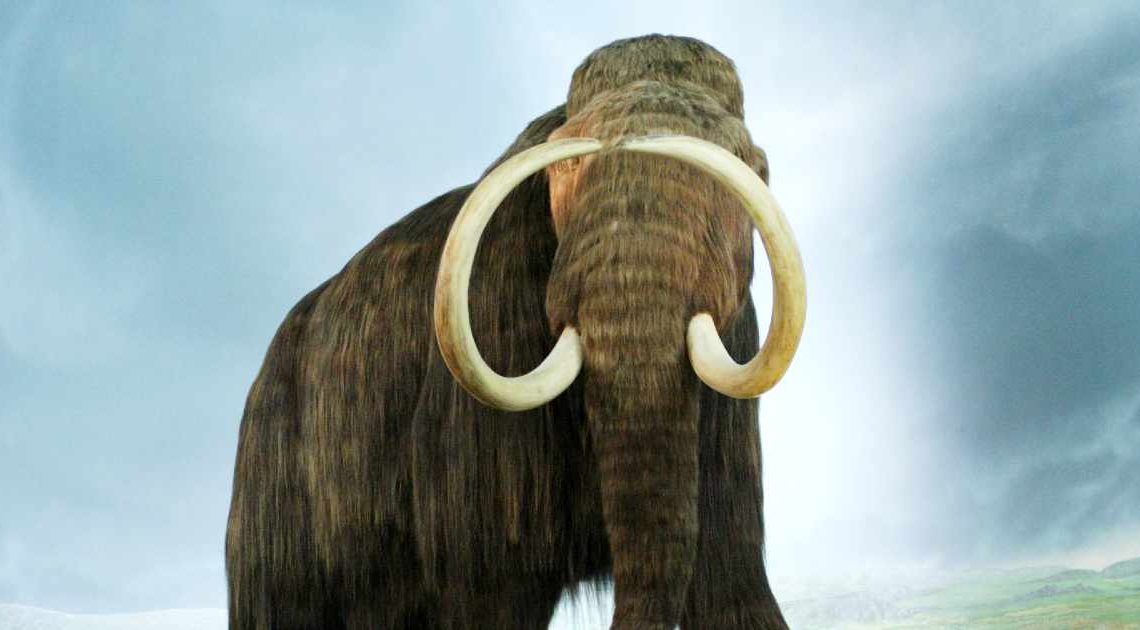
New research suggests that overhunting by humans was not responsible for the extinction of mammoths, ground sloths, and other North American megafauna.

overunting-an-extinct-mammoth-1140x630.jpg


A new study published in Nature Communications on February 16 suggests that the extinction of North America’s largest mammals was not driven by overhunting by rapidly expanding human populations following their entrance into the Americas.

Instead, the findings, based on a new statistical modeling approach, suggest that populations of large mammals fluctuated in response to climate change, with drastic decreases of temperatures around 13,000 years ago initiating the decline and extinction of these massive creatures.


Still, humans may have been involved in more complex and indirect ways than simple models of overhunting suggest.
 
Last edited:
2
•••
Meanwhile in China.

 
3
•••
Mysteries of massive holes forming in Siberian permafrost unlocked by scientists

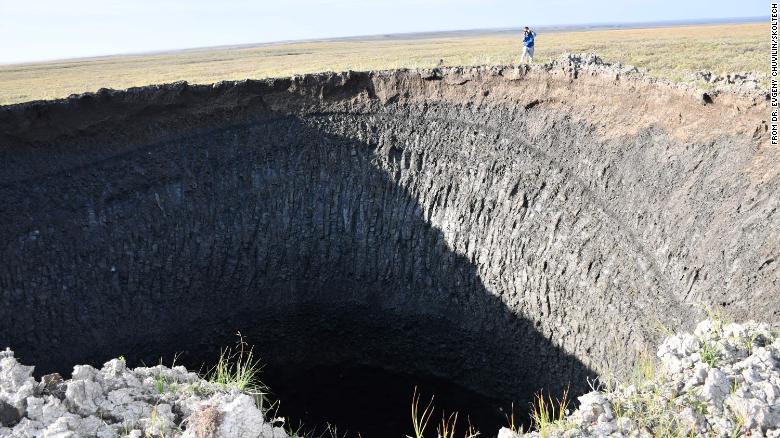
The massive crater appeared violently and explosively in the Siberian tundra last year -- a powerful blowout of methane gas throwing ice and rock hundreds of feet away and leaving a gaping circular scar in the empty and eerie landscape.

It was the 17th hole to appear in the remote Yamal and Gyda peninsulas in the Russian Arctic since the first was spotted in 2013, mystifying scientists. The craters are thought to be linked to climate change. Drone photography, 3D modeling and artificial intelligence are helping to reveal their secrets.


210215124742-02-siberian-craters-arctic-exlarge-169.jpg


The model, which showed unusual grottoes or caverns in the lower part of the crater, largely confirmed what scientists had hypothesized: Methane gas builds in a cavity in the ice, causing a mound to appear at ground level. The mound grows in size before blowing out ice and other debris in an explosion and leaving behind the massive crater.

What's still unclear is the source of the methane. It could come from deep layers within the Earth or closer to the surface -- or a combination of the two.


Permafrost is a huge natural reservoir of methane, a potent greenhouse gas much more effective than carbon dioxide at trapping heat and warming the planet. Warmer summers -- the Arctic is warming two times faster than the global average -- have weakened the permafrost layer, which acts as a cap, making it easier for gas to escape. Some experts estimate that soils in the permafrost region hold twice as much carbon as the atmosphere does, making the region extremely important in the fight against climate change.
 
Last edited:

3
•••
1
•••
Appraise.net

We're social

Spaceship
Domain Recover
CatchDoms
DomainEasy — Payment Flexibility
  • The sidebar remains visible by scrolling at a speed relative to the page’s height.
Back