Unstoppable Domains โ€” Expired Auctions

discuss Science & Technology news & discussion

SpaceshipSpaceship
Watch

CraigD

Top Member
Impact
11,745
Post and discuss interesting articles & videos about science and technology.

You don't need to be an expert - just interested in the wonders of modern science, technology, and the history of these fields.

Please keep it rational, and post articles from reputable sources.
Try not to editorialise headlines and keep the copy to just a paragraph with a link to the original source. When quoting excerpts from articles, I think the best method is to italicise the copy, and include a link to the source.

Have some fun with your comments and discussions... just keep the sources legitimate.

Other threads:
The Break Room has a number of other popular threads, so there is no need to post material here that is better suited to these other threads:

- Covid19-Coronavirus updates and news
- Conspiracy Thread Free For All
- The *religious* discussion thread


Please enjoy!
 
Last edited:
13
•••
The views expressed on this page by users and staff are their own, not those of NamePros.
AfternicAfternic
Viking DNA: Reexamining the Scandinavian Migration to Great Britain.

vikingsstedmund.jpg


In 1953, James Watson and Francis Crick published their first paper of what was to become the first of many in a series in the emerging field of molecular biology, The Molecular Structure of Nucleic Acids: A Structure for Deoxyribose Nucleic Acid (DNA).

Building upon this monumental discovery, science has, over the past seventy years had continued to examine, catalog and ultimately sequence the DNA of over sixty thousand plant and animal species. In regards to humans, this technology has allowed for the testing and diagnosis of numerous genetic diseases, genetic inheritance patters and questions of paternity. In the past two decades, there has been an increased use of genetic material in the examination of human migration patterns.

https://discoveringancienthistory.w...-the-scandinavian-migration-to-great-britain/
 
Last edited:
0
•••
1
•••
1
•••
Last edited:
1
•••
Climate change -- not Genghis Khan -- caused the demise of Central Asia's river civilizations, research shows

While Genghis Khan and Mongol invasion is often blamed for the fall of Central Asia's medieval river civilizations, new research shows it may have been down to climate change. Researchers conducted analysis on the region and found that falling water levels may have led to the fall of civilizations around the Aral Sea Basin, as they depended on the water for irrigation-based farming.

https://www.sciencedaily.com/releases/2020/12/201215112017.htm
 
1
•••
What?

Australia does not exist?

Where did I land back in 2013? That city with that Opera house and majestic bridge and harbour? It is all a hoax?

@koolishman did you enjoy your time in Australia?
Did you do the tethered-climb over the TOP of the Sydney Harbour Bridge?

Here's a long but interesting video using archival footage and interviews about the engineering history of the bridge. At the time it was the largest single span bridge in the world.


For those who have not seen it first hand, for scale here's a photograph of a huge four-engine Lancaster Bomber flying under the bridge in 1943.

DzMfWEBXgAABWNM


More information:
https://en.wikipedia.org/wiki/Sydney_Harbour_Bridge
 
Last edited:
3
•••
Glueball โ€“ A Particle Purely Made of Nuclear Force

Scientists from Vienna University believe they may have discovered the long-sought-after glueball, a particle composed of pure force.

For decades, scientists have been looking for so-called โ€œglueballsโ€. Now it seems they have been found at last. A glueball is an exotic particle, made up entirely of gluons โ€“ the โ€œstickyโ€ particles that keep nuclear particles together. Glueballs are unstable and can only be detected indirectly, by analyzing their decay. This decay process, however, is not yet fully understood.

https://scitechdaily.com/glueball-a-particle-purely-made-of-nuclear-force/


More information:
https://en.wikipedia.org/wiki/Glueball
https://en.wikipedia.org/wiki/Elementary_particle
https://en.wikipedia.org/wiki/List_of_particles
https://en.wikipedia.org/wiki/Standard_Model
 
Last edited:
4
•••
@koolishman did you enjoy your time in Australia?
Did you do the tethered-climb over the TOP of the Sydney Harbour Bridge?

Here's a long but interesting video using archival footage and interviews about the engineering history of the bridge. At the time it was the largest single span bridge in the world.


For those who have not seen it first hand, for scale here's a photograph of a huge four-engine Lancaster Bomber flying under the bridge in 1943.

DzMfWEBXgAABWNM


More information:
https://en.wikipedia.org/wiki/Sydney_Harbour_Bridge

Yes, I did.

Sydney bridge is awesome. Was in a hurry and did not get into the bridge.
 
1
•••
400 million km within 163 days, China's Mars probe heads for red planet

China's Mars probe Tianwen-1 has traveled more than 400 million km by Sunday morning and is expected to enter Mars orbit next month, according to the China National Space Administration (CNSA).
It was about 130 million km from Earth and about 8.3 million km from Mars.

According to the CNSA, the probe is functioning stably and is scheduled to slow down before entering Mars orbit in more than a month and preparing itself to land on the red planet.

https://english.cctv.com/2021/01/04/ARTI2T6AXv3hfoitYIk0KUNp210104.shtml


Last edited:

4
•••
โ€œStaggeringโ€ โ€“The Implications of Infinite Space

โ€œIf space is truly infinite,โ€ observes Dan Hooper, head of the Theoretical Astrophysics Group at the Fermi National Accelerator Laboratory, in At the Edge of Time, โ€œthe implications are staggering. Within an infinite expanse of space, it would be hard to see any reason why there would not be an infinite number of galaxies, stars, and planets, and even an infinite number of intelligent or conscious beings, scattered throughout this limitless volume. That is the thing about infinity: it takes things that are otherwise very unlikely and makes them all inevitable.โ€

https://dailygalaxy.com/2019/12/staggering-the-implications-of-infinite-space-2019-most-popular/


---

A thought provoking read about infinity and our universes construction, but I don't agree with the hypothesis that space is infinite.

I've been led to believe that our universe started expanding with the Big Bang and is finite in size. I'm not a fan of the many-worlds interpretation which implies that there are many or an infinite number of universes.

Just my opinion.
 
Last edited:
5
•••
Life Discovered in Deep Ocean Sediments at Temperatures Above Waterโ€™s Boiling Point

An international research team that included three scientists from the University of Rhode Islandโ€™s Graduate School of Oceanography has discovered single-celled microorganisms in a location where they didnโ€™t expect to find them.

โ€œWater boils on the (Earthโ€™s) surface at 100 degrees Celsius, and we found organisms living in sediments at 120 degrees Celsius,โ€ said URI Professor of Oceanography Arthur Spivack, who led the geochemistry efforts of the 2016 expedition organized by the Japan Agency for Marine-Earth Science and Technology and Germanyโ€™s MARUMโ€“Center for Marine and Environmental Sciences at the University of Bremen. The study was carried out as part of the work of Expedition 370 of the International Ocean Discovery Program.

https://scitechdaily.com/life-disco...s-at-temperatures-above-waters-boiling-point/
 
4
•••
SpaceX Plans to โ€˜Catchโ€™ Super Heavy Rockets With Launch Tower

Up until now, SpaceX rockets have always landed by deploying legs around the rocket as it returned to earth. If new remarks from Elon Musk are accurate, the company wants to get rid of that method to save weight. Future spacecraft may not sport legs at all.

starship-prototype-640x353.jpg


โ€œWeโ€™re going to try to catch the Super Heavy Booster with the launch tower arm, using the grid fins to take the loadโ€ doesnโ€™t sound like the kind of statement that gets people hot and bothered, but context is everything, and an awful lot of SpaceX fans are excited about the idea. An equally large group of them, including the author, are a bit puzzled by it. It isnโ€™t clear what it means to have the launch tower โ€œcatchโ€ the Super Heavy. Launch towers donโ€™t exactly fall down if you breathe on them, but Iโ€™ve never heard of using one directly to catch a rocket (even a depleted, first-stage rocket).

The implication seems to be that the rocket bears its own weight directly on the grid fins and that the โ€œcatchโ€ is more about lining up the rocket with the launch arm in a way that allows them to interlink again, as opposed to using the launch arm to somehow brake or control the Super Heavy as it descends.

 
4
•••
How Much Longer Until the Core of the Earth Runs Out of Fuel?

To determine how much nuclear fuel remains in the Earth, the researchers use advanced sensors to detect some of the tiniest subatomic particles known to scienceโ€”geoneutrinos. Geoneutrino particles are the byproducts generated from nuclear reactions that take place within stars, supernovae, black holes, and human-made nuclear reactors.

Detecting how much fuel is left
Detecting antineutrino particles is an immensely difficult task. Massive detectors the size of a small office building are buried over 0.6 miles (a kilometer) down into the Earth's crust. The depth may seem like overkill; however, it is necessary to create a shield from cosmic rays that can result in false positives.

earth-structures-beneath.jpg


In operation, the detector can detect antineutrinos when they collide with hydrogen atoms inside the apparatus. After the collision, two bright flashes can be detected, unequivocally announcing the event.

By counting the number of collisions, scientists can determine the number of uranium and thorium atoms that remain inside of our planet.


Unfortunately, the detectors KamLAND in Japan and Borexino in Italy only detect about 16 events per year, making the process painstakingly slow. However, with three new detectors projected to come online in 2020 โ€” the SNO+ detector in Canada and the Jinping and JUNO detectors in China โ€” researchers expect more than 500 more detected events per year.

โ€œOnce we collect three years of antineutrino data from all five detectors, we are confident that we will have developed an accurate fuel gauge for the Earth and be able to calculate the amount of remaining fuel inside Earth,โ€ said McDonough.
 
4
•••
Life Discovered in Deep Ocean Sediments at Temperatures Above Waterโ€™s Boiling Point

An international research team that included three scientists from the University of Rhode Islandโ€™s Graduate School of Oceanography has discovered single-celled microorganisms in a location where they didnโ€™t expect to find them.

โ€œWater boils on the (Earthโ€™s) surface at 100 degrees Celsius, and we found organisms living in sediments at 120 degrees Celsius,โ€ said URI Professor of Oceanography Arthur Spivack, who led the geochemistry efforts of the 2016 expedition organized by the Japan Agency for Marine-Earth Science and Technology and Germanyโ€™s MARUMโ€“Center for Marine and Environmental Sciences at the University of Bremen. The study was carried out as part of the work of Expedition 370 of the International Ocean Discovery Program.

https://scitechdaily.com/life-disco...s-at-temperatures-above-waters-boiling-point/
120 degrees Celsius? Hold my beer... 400 degrees Celsius here :xf.grin:

How to survive at 400 degrees C

https://www.chemistryworld.com/news/how-to-survive-at-400-degrees-c/3001998.article

"The Riftia tubeworm makes its home next to hydrothermal vents - living at temperatures ranging from freezing to a volcanic 400 degrees Celsius, and managing without a digestive system."
 
Last edited:
4
•••
SpaceX Plans to โ€˜Catchโ€™ Super Heavy Rockets With Launch Tower

Up until now, SpaceX rockets have always landed by deploying legs around the rocket as it returned to earth. If new remarks from Elon Musk are accurate, the company wants to get rid of that method to save weight. Future spacecraft may not sport legs at all.

starship-prototype-640x353.jpg


โ€œWeโ€™re going to try to catch the Super Heavy Booster with the launch tower arm, using the grid fins to take the loadโ€ doesnโ€™t sound like the kind of statement that gets people hot and bothered, but context is everything, and an awful lot of SpaceX fans are excited about the idea. An equally large group of them, including the author, are a bit puzzled by it. It isnโ€™t clear what it means to have the launch tower โ€œcatchโ€ the Super Heavy. Launch towers donโ€™t exactly fall down if you breathe on them, but Iโ€™ve never heard of using one directly to catch a rocket (even a depleted, first-stage rocket).

The implication seems to be that the rocket bears its own weight directly on the grid fins and that the โ€œcatchโ€ is more about lining up the rocket with the launch arm in a way that allows them to interlink again, as opposed to using the launch arm to somehow brake or control the Super Heavy as it descends.

My first thought on this is a technique that was tried with the Ryan X-13 Verti-Jet in 1957, where the aircraft latches onto a tower. The problem back then was that the pilot couldn't see where he was going. Space-X could easily overcome this now.


Fast forward to 03:20

https://en.wikipedia.org/wiki/Ryan_X-13_Vertijet

 
Last edited:
4
•••

My first thought on this is a technique that was tried with the Ryan X-13 Verti-Jet in 1957, where the aircraft latches onto a tower. The problem back then was that the pilot couldn't see where he was going. Space-X could easily overcome this now.


Fast forward to 03:20

https://en.wikipedia.org/wiki/Ryan_X-13_Vertijet

After a number of repetitive manouvers like shown above (when supended), using machine learning, computer guided control and autopilot, the spacecraft wouldn't require manual operation to attach to the tower. I'm sure there are even simpler ways to dock nowadays using self-guided return-home programming.
 
Last edited:
4
•••
I've actually only just heard about the 'Australia isn't a real country' conspiracy, but perhaps that's because I've been hoodwinked all my life about living in a fake country.

I once had a fortune teller tell me she saw Australia in my future. Therefore, even though going there hasn't happened yet (if ever), I know Australia is a real country. ;)
 
Last edited:
4
•••
SpaceX Plans to โ€˜Catchโ€™ Super Heavy Rockets With Launch Tower

Up until now, SpaceX rockets have always landed by deploying legs around the rocket as it returned to earth. If new remarks from Elon Musk are accurate, the company wants to get rid of that method to save weight. Future spacecraft may not sport legs at all.

starship-prototype-640x353.jpg


โ€œWeโ€™re going to try to catch the Super Heavy Booster with the launch tower arm, using the grid fins to take the loadโ€ doesnโ€™t sound like the kind of statement that gets people hot and bothered, but context is everything, and an awful lot of SpaceX fans are excited about the idea. An equally large group of them, including the author, are a bit puzzled by it. It isnโ€™t clear what it means to have the launch tower โ€œcatchโ€ the Super Heavy. Launch towers donโ€™t exactly fall down if you breathe on them, but Iโ€™ve never heard of using one directly to catch a rocket (even a depleted, first-stage rocket).

The implication seems to be that the rocket bears its own weight directly on the grid fins and that the โ€œcatchโ€ is more about lining up the rocket with the launch arm in a way that allows them to interlink again, as opposed to using the launch arm to somehow brake or control the Super Heavy as it descends.
 
Last edited:
3
•••
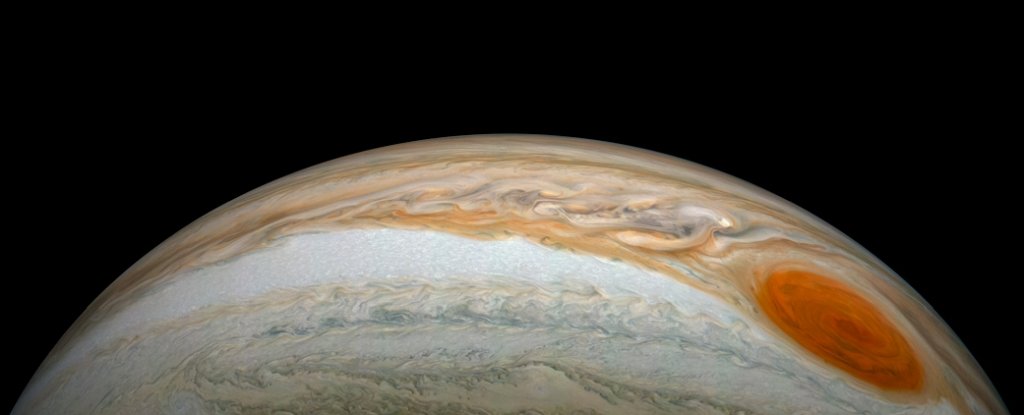
Jupiter Is Bigger Than Some Stars, So Why Didn't We Get a Second Sun?

jupiter-horizon_1024.jpg


The smallest known main-sequence star in the Milky Way galaxy is a real pixie of a thing.
It's called EBLM J0555-57Ab, a red dwarf 600 light-years away. With a mean radius of around 59,000 kilometres, it's just a smidge bigger than Saturn. That makes it the tiniest known star to support hydrogen fusion in its core, the process that keeps stars burning until they run out of fuel.

https://www.sciencealert.com/why-isn-t-jupiter-a-star
 
3
•••
https://en.wikipedia.org/wiki/Space_tourism

Nothing against Musk, but I don't really see him as (truly) being about 'space for humanity'. But maybe I'm wrong.

Speaking of space tourism and space for humanity: https://www.spaceforhumanity.org/

I think they were one of those who was wanting to buy my spaceforhumanity/com. But I'm saving it for now, in case I want to use it as a possible challenge of some type for my gamechangex and forhumanity projects.

upload_2021-1-4_19-19-57.png
 
4
•••
Dynadot โ€” .com TransferDynadot โ€” .com Transfer
Appraise.net
Spaceship
Domain Recover
DomainEasy โ€” Live Options
  • The sidebar remains visible by scrolling at a speed relative to the pageโ€™s height.
Back