NameSilo

discuss Have you ever been scammed by a domain broker?

SpaceshipSpaceship
Watch

mr.mu

Established Member
Impact
146
For example:

A broker comes to inquire about one of your domain names and closes the deal for $5,000 (and takes your 20% commission)
In reality, the buyer paid $10,000 for the domain
You end up netting $4,000 and the broker gets a $5,000 difference and a $1,000 commission.


Several friends around me have personally experienced this kind of thing. After the transaction was completed,
They found the contact information of the buyer, contacted the buyer and learned the amount the buyer finally paid for the domain name, and found that they were scammed by the broker.

This may be the rule of the game in the domain name industry.

May I ask if you have encountered or heard of similar things, welcome to discuss.
 
12
•••
The views expressed on this page by users and staff are their own, not those of NamePros.
AfternicAfternic
ITS CALLED FLIPPING ,SAME AS WITH HOUSES ,THEY CAN SAY WHATEVER THEY WANT TO YOU ,BUT BUYERS REALLY DONT CARE
 
0
•••
ITS CALLED FLIPPING ,SAME AS WITH HOUSES ,THEY CAN SAY WHATEVER THEY WANT TO YOU ,BUT BUYERS REALLY DONT CARE
Buyer probably didn't care how the money was split between broker and seller. But seller need to care about this, after all most of the profits are stolen.
 
Last edited:
7
•••
Its a form of front running and one reason many do not trust brokers or third parties to buy their domains.

Regular domainers do things like this as well which is more ethical than brokers pocketing from both ends.

Tell your friends when in doubt not to sell cheap when a broker comes calling.
 
12
•••
Its a form of front running and one reason many do not trust brokers or third parties to buy their domains.

Regular domainers do things like this as well which is more ethical than brokers pocketing from both ends.

Tell your friends when in doubt not to sell cheap when a broker comes calling.
Whats the definition of cheap at a wholesale site
 
1
•••
Sell then complain and prove if the case or try hosting the domain and dealing with own inquiry. I dislike when should have earned from own lead especially when parking the domain with a broker. A broker has to earn but a marketplace that you pay shouldn't intervene holding back when the domain brings the lead. The loss would be not handling own lead or negotiation.
 
Last edited:
6
•••
That's not a domain broker, just a crook in a broker's disguise.
 
11
•••
A company comes to a domain broker to help them buy a domain. If it's a big company, they may be afraid that contacting the seller directly would drive up the price expectations. They reveal their budget to the broker and trust they will negotiate accordingly. The broker then sends a lowball offer to the seller and slowly works towards the target, eventually securing the deal at half the budget. What will happen next? A decent human would close the deal at the agreed-upon price, take their commission and walk away. But greedy human will take the whole or maybe 90% of the budget from the buyer, pay the seller the negotiated amount and keep the difference, effectively scamming both sides. So it's important that not only sellers, but also buyers are aware of these practices and avoid dishonest "brokers".

Maybe the best course of action is to use services like escrow.com who show all the amounts (amount due, payout, commission, brokerage fee etc.) to all sides of the transaction.
 
17
•••
Yes. Once, after receiving a phone message, I had left a phone message that I was willing to sell for $XXX. The broker subsequently called and indicated that the buyer's budget was twice that much. From the standpoint of integrity, since I had agreed to sell it at the lower price, I indicated my willingness to still do so.
In retrospect, I could have, and perhaps should have demanded $XXXX amount.

I've always wondered whether the broker went ahead and charged the full amount anyhow for the buyer. I don't recall ever seeing an invoice for what the final price of the sale was. I simply receive a check for my side of the sale.

One point that would increase trust in brokers is an accounting trail, to see that the actual price paid by the buyer is in line with what the seller has received.
 
Last edited:
6
•••
Never heard of this but if it worries you, tell the broker that at the end of the transaction you will contact the buyer and tell him the final price he paid.
 
4
•••
Never heard of this but if it worries you, tell the broker that at the end of the transaction you will contact the buyer and tell him the final price he paid.
It happened quite a few years ago, and realize that the broker was probably simply trying to be helpful for me. My hope is that the broker did actually act in good faith, an honor my commitment to what I felt was a fair price for the sale.

My point here is that more transparency might be helpful in increasing trust in brokerages. In this case, it's certainly possible that everything went fine. For that broker, I did appreciate his honesty with me.
 
Last edited:
3
•••
It happened quite a few years ago, and realize that the broker was probably simply trying to be helpful for me. My hope is that the broker did actually act in good faith, an honor my commitment to what I felt was a fair price for the sale.

My point here is that more transparency might be extremely helpful in improving trust in brokerages.
agree.

"With more transparency we can stop questioning" - Einstein ?
 
7
•••
agree.

"With more transparency we can stop questioning" - Einstein ?
Exactly!
Maybe the best course of action is to use services like escrow.com who show all the amounts (amount due, payout, commission, brokerage fee etc.) to all sides of the transaction.
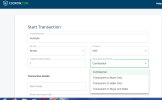
Thank you for bringing this up. In researching brokerage issues, Escrow.com clearly presents an OPTION of having full transparency.
 

Attachments

  • EscrowBrokerTransaction.PNG
    EscrowBrokerTransaction.PNG
    49.8 KB · Views: 225
9
•••
Exactly!

Thank you for bringing this up. In researching brokerage issues, Escrow.com clearly presents an OPTION of having full transparency.

Escrow is a trusted platform. I like it, It guarantees the transaction safety of participating parties and charges extremely low commissions.

But for those domain name broker platforms that charge high commissions, it is hard to say whether they will be greedy enough to cheat buyers and sellers.

They have participated in the entire process of domain name negotiation and transaction, and have complete control over the entire transaction. If they want to scam buyers and sellers, it is very easy to operate.
 
Last edited:
11
•••
In my opinion, this is not a scam, it's no different then if the broker made you an offer directly for the domain, you accept their offer, they purchase it and then turn around and sell it to the buyer whom they procured. This happens every day in the Sedo and Afternic Fast Transfer Networks. Look up any of your names at the secondary registrars in these networks and chances are your names have an extra few hundred to a few thousand dollar premiums added to them. Hindsight on a brokered domain sale is wasted energy!
 
0
•••
DNWon is correct. List your domain at most sellers and allow their network of registries to also list the domain. And you will see all range of prices from these affiliate sellers. Some of mine have been priced at well over double my asking price. Hence when I see the words " we will also list the domain at our associate sellers I always think Well that will be of no bloody help.

This isn't a case of undervaluing, I know the value (price they are asking) isn't there. Some of these domains I've held for 20 years so it's not a case of an old listing. I would imagine that some potential buyers may be put-off from ever looking at the domain (at other sites) again.
 
Last edited:
0
•••
My company insists on "principals only" to avoid this potential situation (and for other reasons).

You can see what transpired in the VPN.com / Dikian (ongoing) lawsuit, see:

https://onlinedomain.com/2022/07/28...s-26-million-lawsuit-against-domain-investor/

https://www.courtlistener.com/docket/63559525/vpncom-llc-v-george-dikian/

https://www.namepros.com/threads/vpn-com-llc-has-filed-a-multimillion-lawsuit.1279551/

for a public example of the inherent problems of "dual agency". See the response in the lawsuit:

https://storage.courtlistener.com/recap/gov.uscourts.cacd.855964/gov.uscourts.cacd.855964.33.0.pdf

which mentions it.
 
35
•••
In my opinion, this is not a scam, it's no different then if the broker made you an offer directly for the domain, you accept their offer, they purchase it and then turn around and sell it to the buyer whom they procured.
When a potential buyer signs on to a brokerage, and pays the brokerage fee, are they alerted to this possibility? That, in some instances, they could potentially pay much more than dealing with the buyer directly?

This happens every day in the Sedo and Afternic Fast Transfer Networks. Look up any of your names at the secondary registrars in these networks and chances are your names have an extra few hundred to a few thousand dollar premiums added to them.
Please note that the brokerage is a very different issue from the variable open, public network pricing. Isn't the concern here about the not so transparent pricing behind the scenes. Someone that hires a broker would reasonably presume that they would act in their best interest.

for a public example of the inherent problems of "dual agency". See the response in the lawsuit:
https://www.courtlistener.com/docket/63559525/vpncom-llc-v-george-dikian/
Wow! That's a very disturbing case. Thanks for sharing the court documents.
 
Last edited:
7
•••
When a potential buyer signs on to a brokerage, and pays the brokerage fee, are they alerted to this possibility? That, in some instances, they could potentially pay much more than dealing with the buyer directly?
That remains to be seen? If you agree to purchase a domain for "X" amount, why would you care how much the broker procured the domain for? Unless of course as the buyer, you had a contract with the broker that he would cap his commission at "X" amount/percent as well? I was assuming in the OP's example that he was complaining that an outside broker approached him as a seller of a domain, that the broker had a buyer for, and then brokered a deal with his buyer, at an agreed upon price, and the seller (OP) was upset that he missed out on the spread, once he found out what the buyer actually paid. The broker's contract is with the domain buyer in OP's case, thus there is no fuduciary duty to reveal to the seller what the buyer is paying for the domain. There is a cost involved in procuring a ready willing and able buyer with the funds and will to close a transaction, and that value should be of no concern to the domain seller, only that you received the price you originally asked for!
 
0
•••
For example:
A broker comes to inquire about one of your domain names and closes the deal for $5,000 (and takes your 20% commission)
In reality, the buyer paid $10,000 for the domain
You end up netting $4,000 and the broker gets a $5,000 difference and a $1,000 commission.


Several friends around me have personally experienced this kind of thing. After the transaction was completed,
They found the contact information of the buyer, contacted the buyer and learned the amount the buyer finally paid for the domain name, and found that they were scammed by the broker.
Another point here is who the brokers are, and with whom they claim to be affiliated.

It wouldn't be surprising if there are some Namepros members reading this that are brokers. And some of them may also be frustrated and disappointed in how some other brokers handle transactions. The honest brokers may have a challenge competing with the less reputable sorts.

What did your friends end up doing?
 
Last edited:
1
•••
Appraise.net
Spaceship
Domain Recover
DomainEasy โ€” Live Options
  • The sidebar remains visible by scrolling at a speed relative to the pageโ€™s height.
Back